INTERNATIONAL CHILDREN'S FUND, INC.
Yemen - Complex Emergency Fact Sheet #7, Fiscal Year (FY) 2018
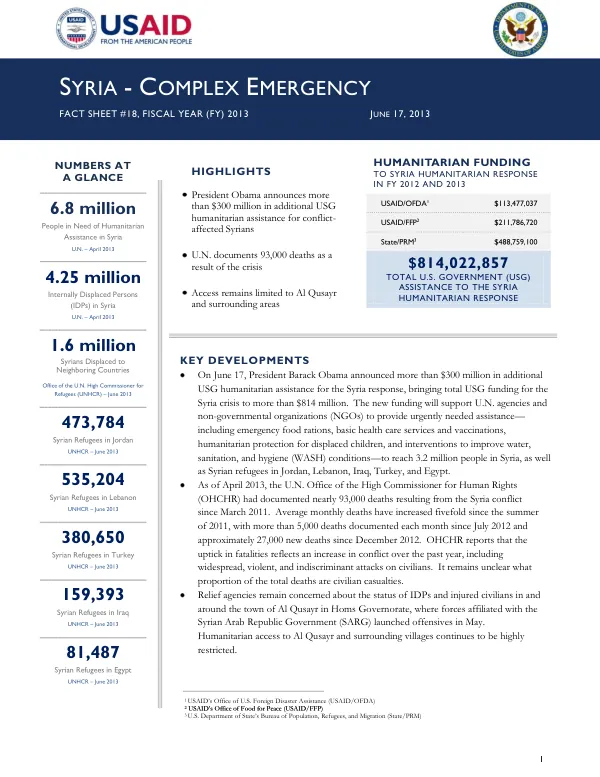
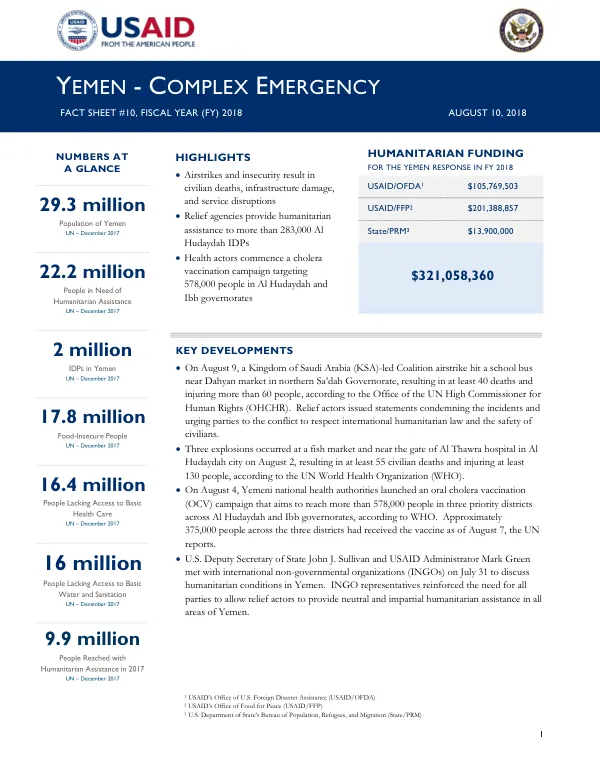
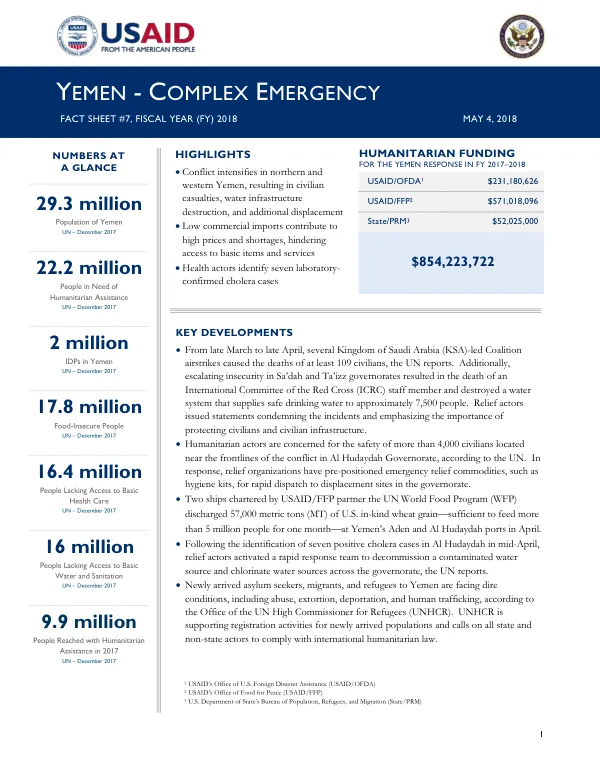
Conflict in Yemen has resulted in significant humanitarian needs, with the United Nations reporting that 29.3 million people reside in the country, and 22.2 million are in need of humanitarian assistance.
2018 · 8 pages
Sign in to readA free account is required to download.
Abstract
The conflict has led to the displacement of 2 million internally displaced persons (IDPs), with approximately 147,000 IDPs living in more than 850 IDP sites across Yemen. The UN reports that fighting in Al Hudaydah and Ta'izz has displaced more than 130,000 people since December 2017. Humanitarian actors are concerned for the safety of more than 4,000 civilians near the frontlines in Al Hudaydah, including populations in the governorate's Hays District. In response to escalating insecurity near Hays District, humanitarian actors have pre-positioned emergency relief items, including high-energy biscuits, hygiene kits, safe drinking water, and transitional shelter supplies, for distribution to IDP service delivery points within Hays and neighboring Al Khawkhah District. The conflict has also resulted in significant food insecurity, with 17.8 million people in Yemen facing food insecurity, according to the World Food Programme (WFP). Low commercial food imports continue to limit access to basic food items, and food commodity prices have increased in March, hindering vulnerable populations from purchasing basic food items. A significant proportion of Yemeni people will continue to face Crisis or Emergency levels of acute food insecurity through May, according to the Famine Early Warning Systems Network (FEWS NET). In response to significant food needs throughout Yemen, WFP continues to provide emergency food assistance to vulnerable households. During March, WFP reached more than 6.2 million beneficiaries in Yemen with food assistance, including in-kind food rations and food vouchers. Two WFP-chartered ships delivered approximately 57,000 metric tons of USAID/FFP-funded in-kind wheat grain to Yemen's Aden and Al Hudaydah ports in April for onward distribution in the coming months. Collectively, the food commodities are sufficient to feed more than 5 million people for one month under the UN agency's emergency operation plan. The conflict has also resulted in a massive cholera outbreak, with nearly 1.1 million suspected cases and 2,277 related deaths reported. Relief actors continue to respond to the outbreak, with the UN World Health Organization (WHO) providing life-saving treatment for severe acute malnutrition patients with medical complications. USAID/OFDA partners have admitted nearly 1,700 children ages five years and younger and pregnant and lactating women experiencing moderate acute malnutrition and more than 300 children experiencing severe acute malnutrition for treatment at fixed and mobile health units in several governorates.
Related documents