SAVE THE CHILDREN FUND
Peer Pressure Resistance and Assertiveness
Peer pressure and assertiveness are crucial concepts for young people to understand and develop.
2 pages
Sign in to readA free account is required to download.
Abstract
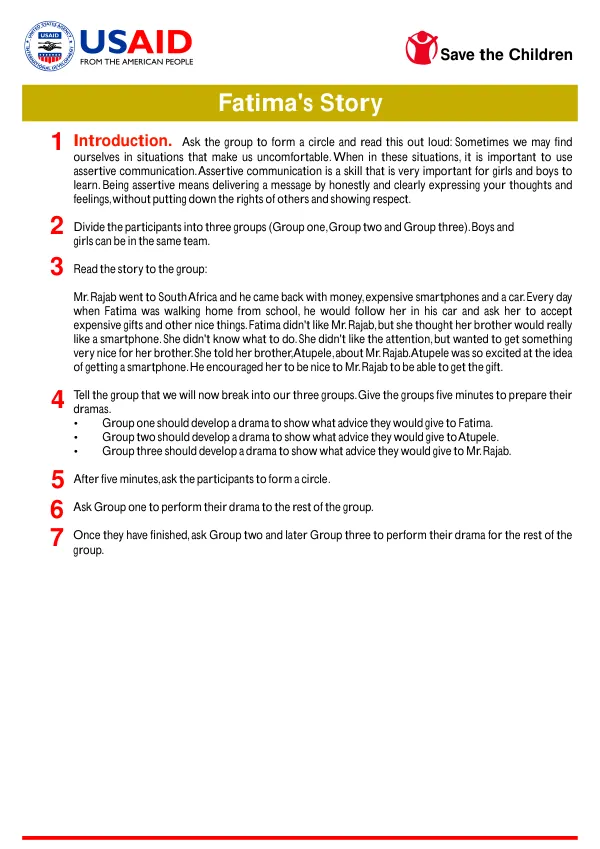
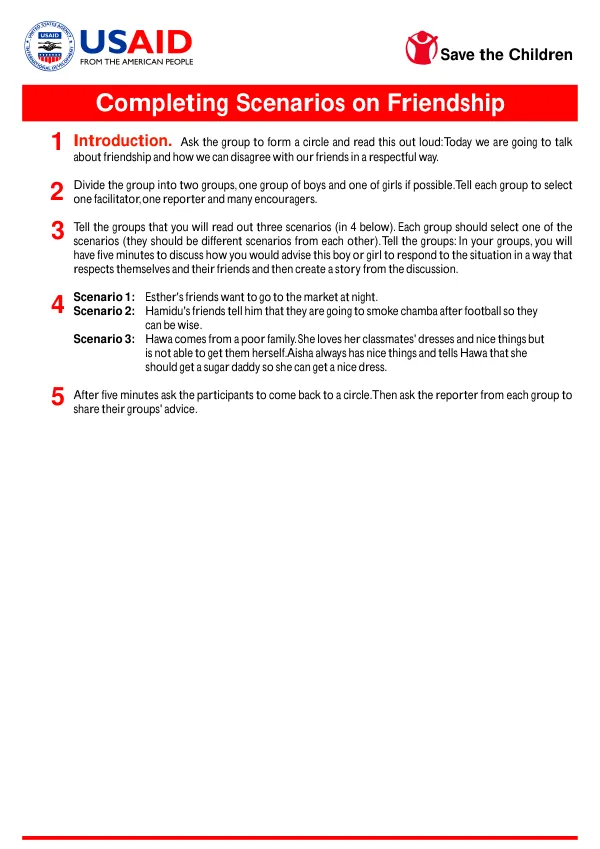
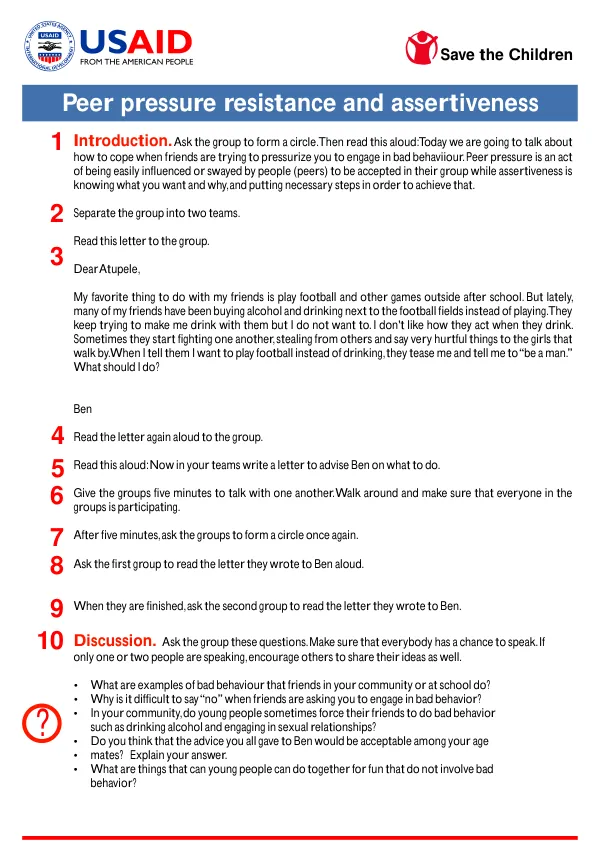
When friends are trying to pressure individuals to engage in bad behavior, it can be challenging to resist. However, assertiveness is the ability to know what one wants and why, and to take necessary steps to achieve that goal. In a group setting, individuals may feel pressure to conform to certain behaviors in order to be accepted by their peers. This can lead to a range of negative consequences, including substance abuse, violence, and exploitation. For example, a young person may be pressured to drink alcohol or engage in other risky behaviors, despite their reservations. Assertiveness is a key strategy for resisting peer pressure. By being clear and direct, individuals can communicate their boundaries and expectations to their friends. This can involve saying "no" to certain behaviors, or suggesting alternative activities that are more positive and safe. In a letter to a friend, a young person may express their concerns about being pressured to engage in bad behavior. For instance, a friend may write about feeling uncomfortable when their peers are drinking and acting aggressively, and may ask for advice on how to resist this pressure. The friend may suggest alternative activities, such as playing football or other sports, that are more positive and safe. When discussing this scenario with a group, individuals may share their own experiences of being pressured by their peers. They may also suggest strategies for resisting this pressure, such as being clear and direct, or finding alternative activities. For example, a group may discuss the importance of saying "no" to certain behaviors, or suggesting alternative activities that are more positive and safe. In some communities, young people may be more likely to engage in bad behavior due to peer pressure. This can include substance abuse, violence, and exploitation. However, it is also possible for young people to resist this pressure and engage in more positive behaviors. For example, a group may suggest that young people can do together for fun, such as playing sports, going to the movies, or participating in community service. Ultimately, assertiveness is a key strategy for resisting peer pressure. By being clear and direct, individuals can communicate their boundaries and expectations to their friends. This can involve saying "no" to certain behaviors, or suggesting alternative activities that are more positive and safe. By developing this skill, young people can make positive choices and avoid negative consequences. In a group setting, individuals can work together to develop their assertiveness skills. This can involve practicing saying "no" to certain behaviors, or suggesting alternative activities. By doing so, young people can build their confidence and develop the skills they need to resist peer pressure.