SAVE THE CHILDREN FUND
Male and Female Roles Game
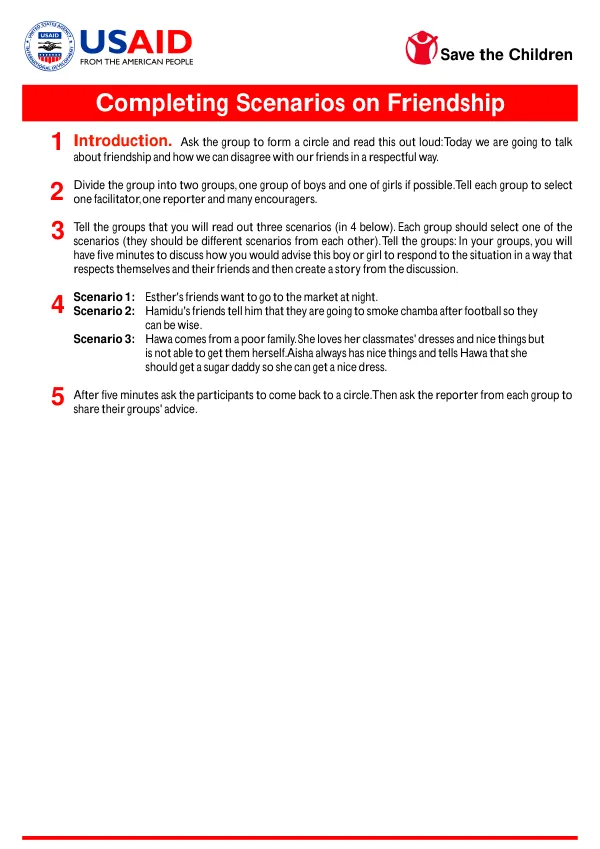
The agricultural development initiative in Save the Children's Male and Female Game began with a discussion on gender roles and stereotypes.
2 pages
Sign in to readA free account is required to download.
Abstract
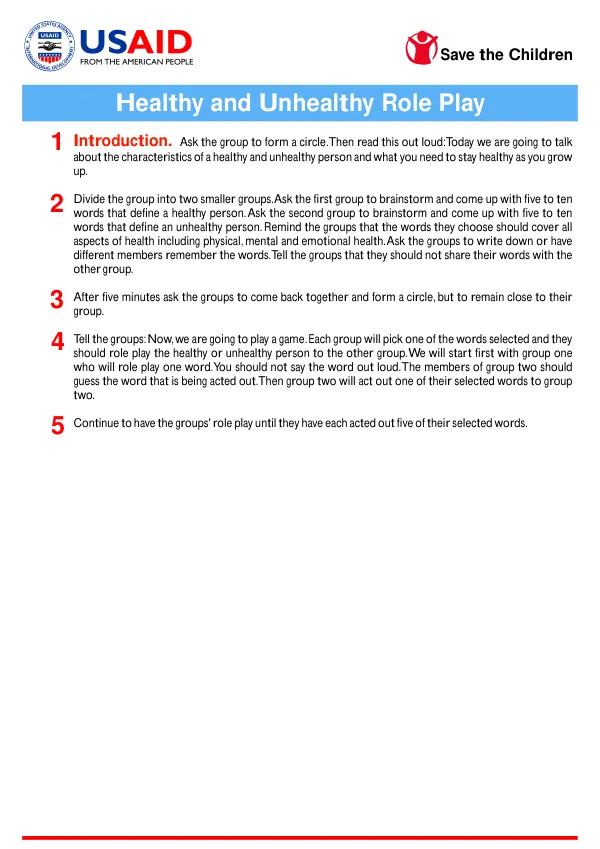
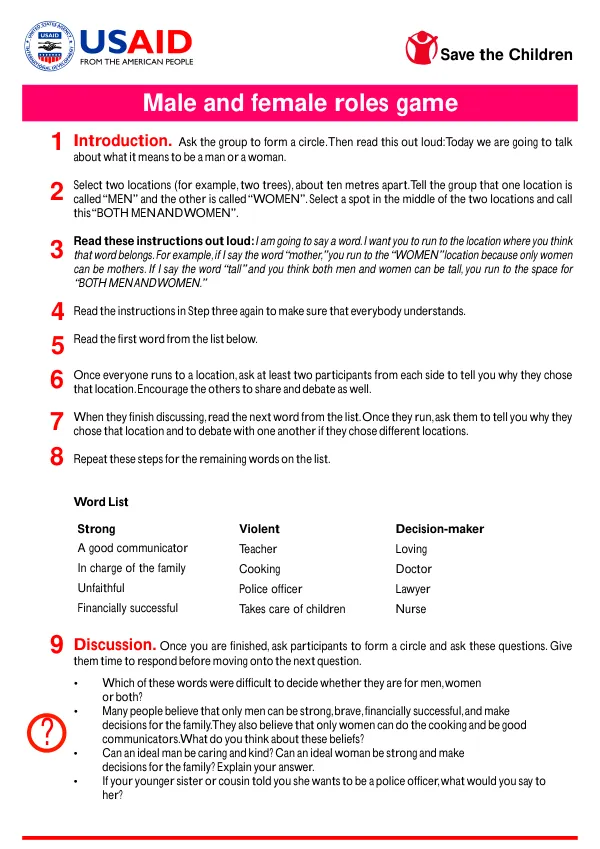
The game aimed to challenge participants' perceptions of what it means to be a man or a woman. The facilitator divided the group into three categories: "MEN", "WOMEN", and "BOTH MEN AND WOMEN". The facilitator then presented a list of words, including "strong", "violent", "decision-maker", "good communicator", "loving", "in charge of the family", "cook", "doctor", "unfaithful", "police officer", "financially successful", and "takes care of children". Participants were asked to run to the location where they thought each word belonged. The facilitator read the words aloud, and the group discussed and debated the correct categorization. For example, when the facilitator read the word "strong", some participants ran to the "MEN" location, while others ran to the "BOTH MEN AND WOMEN" location. The facilitator encouraged discussion and debate on the correct categorization. The discussion revealed that many people believe that only men can be strong, financially successful, and make decisions for the family, while only women can do the cooking and be good communicators. However, the game challenged these stereotypes by showing that both men and women can possess these qualities. The facilitator asked participants to consider whether an ideal man can be caring and make decisions for the family, and whether an ideal woman can be strong and caring. The game concluded with a commitment from each participant to try something that members of their sex do not typically do. This commitment aimed to promote equality and challenge traditional gender roles. The facilitator emphasized that both men and women can be police officers, carpenters, cooks, and market vendors, and that they should not be limited by societal expectations. The game aimed to promote a more inclusive and equitable society by challenging gender stereotypes and challenging participants to think critically about their perceptions of gender roles.