THE WORLD FOOD PROGRAMME
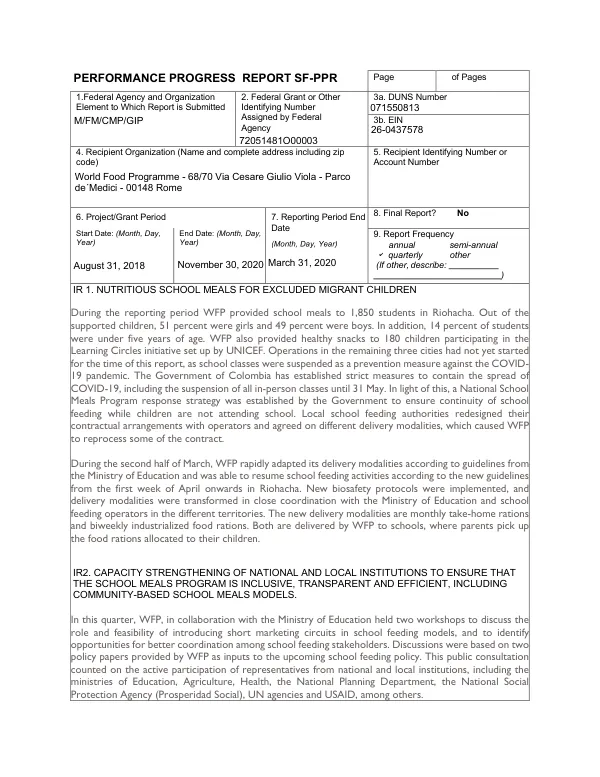
Performance Progress Report SF-PPR
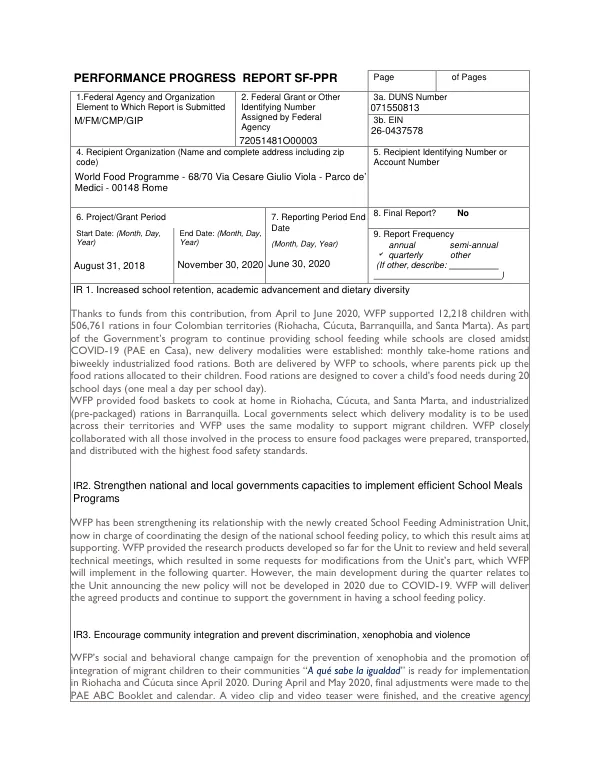
The World Food Programme (WFP) supported 12,218 children in Colombia with 506,761 rations from April to June 2020.
2020 · 2 pages
Sign in to readA free account is required to download.
Abstract
The support was part of the Government's program to continue providing school meals amidst the COVID-19 pandemic. New delivery modalities were established, including monthly take-home rations and biweekly industrialized food rations. Food rations were designed to cover a child's food needs for 20 school days. WFP collaborated with local governments and ensured food safety standards were met. The WFP collaborated with the newly created School Feeding Administration Unit to support the design of the national school feeding policy. The Unit reviewed research products developed by WFP and held technical meetings to discuss modifications. However, the Unit announced that the new policy would not be developed in 2020 due to COVID-19. WFP will deliver the agreed products and continue to support the government in having a school feeding policy. WFP's social and behavioral change campaign for the prevention of xenophobia and the promotion of integration of migrant children to their communities, "A qué sabe la igualdad", was ready for implementation in Riohacha and Cúcuta since April 2020. The campaign included a video clip, video teaser, and other deliverables. WFP's Country Representative approved the use of the campaign videos, and a one-pager was produced for partnership and engagement purposes. The implementation of the SBCC strategy in Riohacha and Cúcuta was adapted to the COVID-19 context, with remote training for teachers through a webinar. The WFP's efforts led to improved school retention, academic advancement, and dietary diversity. The organization's efforts also aimed to strengthen local governments' capacities to implement efficient school meals programs. The WFP's social and behavioral change campaign aimed to encourage community integration and prevent discrimination, xenophobia, and violence. The WFP's efforts in Colombia were supported by funds from the contribution. The organization worked closely with local governments and ensured that food safety standards were met. The WFP's efforts were aimed at improving the lives of children in Colombia and promoting a more equitable society.