CATHOLIC RELIEF SERVICES ORGANIZATION
Philippines Success Story: Meeting Immediate Water Needs
The USAID-supported water, sanitation, and hygiene (WASH) initiative in Cagayan de Oro City, Philippines, was launched in response to the devastating effects of Tropical Storm Washi, also known as Sendong, which struck the region in December 2011.
2012 · 1 pages
Sign in to readA free account is required to download.
Abstract
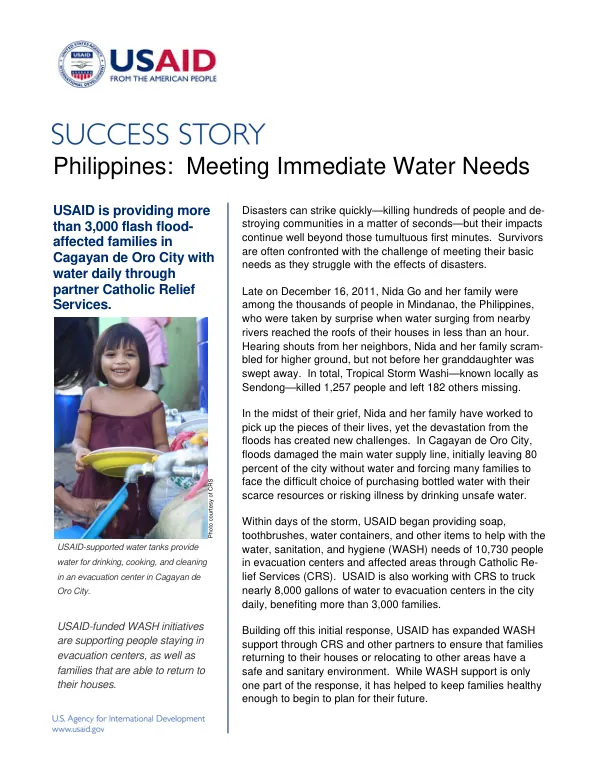
The storm caused widespread flooding, killing 1,257 people and leaving 182 others missing. The disaster also damaged the main water supply line, leaving 80 percent of the city without access to safe drinking water. Initial USAID support, provided through partner Catholic Relief Services (CRS), focused on meeting the immediate WASH needs of 10,730 people in evacuation centers and affected areas. This included the distribution of essential items such as soap, toothbrushes, water containers, and other hygiene supplies. Additionally, USAID-funded trucks transported nearly 8,000 gallons of water to evacuation centers in the city daily, benefiting more than 3,000 families. The WASH initiative has since been expanded to support families returning to their homes or relocating to other areas. USAID is working with CRS and other partners to ensure that these families have access to a safe and sanitary environment. This includes the provision of water tanks, which provide a reliable source of drinking water, as well as support for the repair and maintenance of damaged water infrastructure. The WASH initiative has played a critical role in keeping families healthy and enabling them to begin planning for their future. In the aftermath of the disaster, many families were forced to make difficult choices between purchasing bottled water or risking illness by drinking unsafe water. The USAID-supported WASH initiative has helped to alleviate this burden, providing a vital lifeline to those affected by the storm. The geographic focus of the USAID-supported WASH initiative is Cagayan de Oro City and surrounding areas, which were severely impacted by Tropical Storm Washi. The initiative is part of a broader response to the disaster, which has involved multiple stakeholders and partners working together to support affected communities. The USAID-supported WASH initiative is a key component of this response, providing critical support to families in need and helping to promote a safe and healthy environment in the aftermath of the disaster.
Related documents