CATHOLIC RELIEF SERVICES ORGANIZATION
PHILIPPINES - TROPICAL STORM
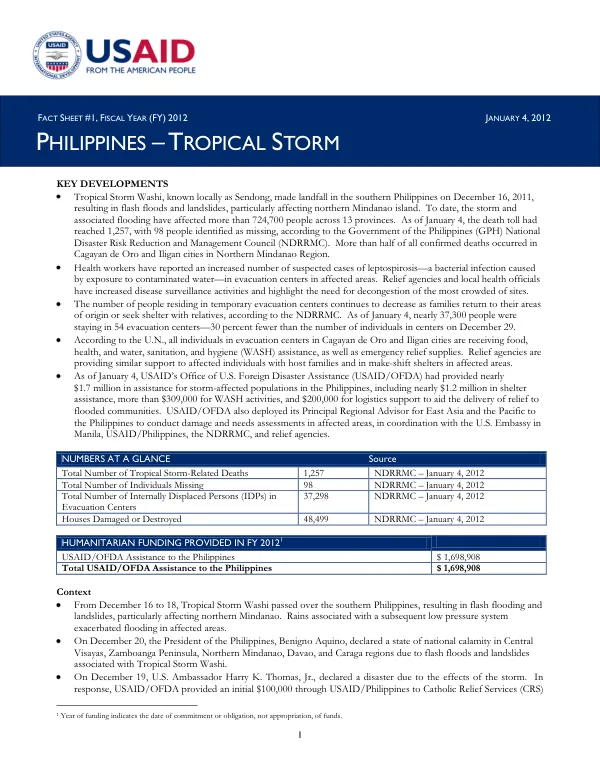
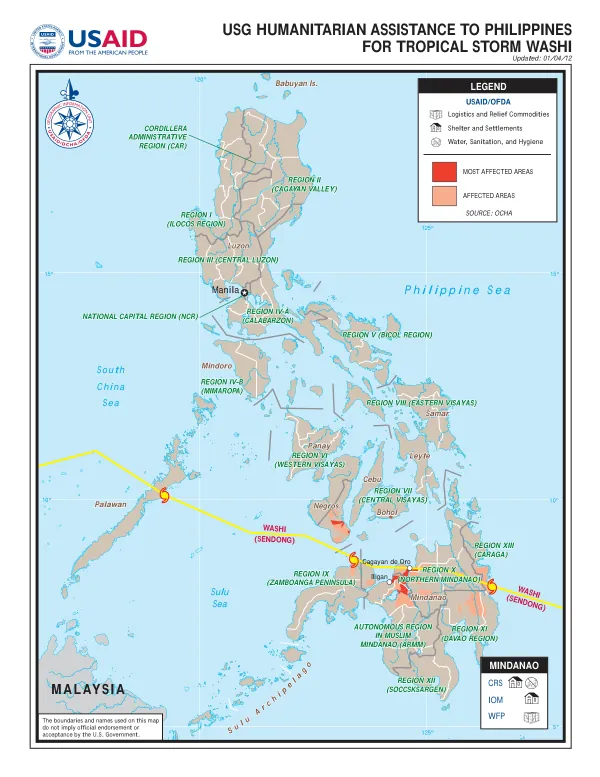
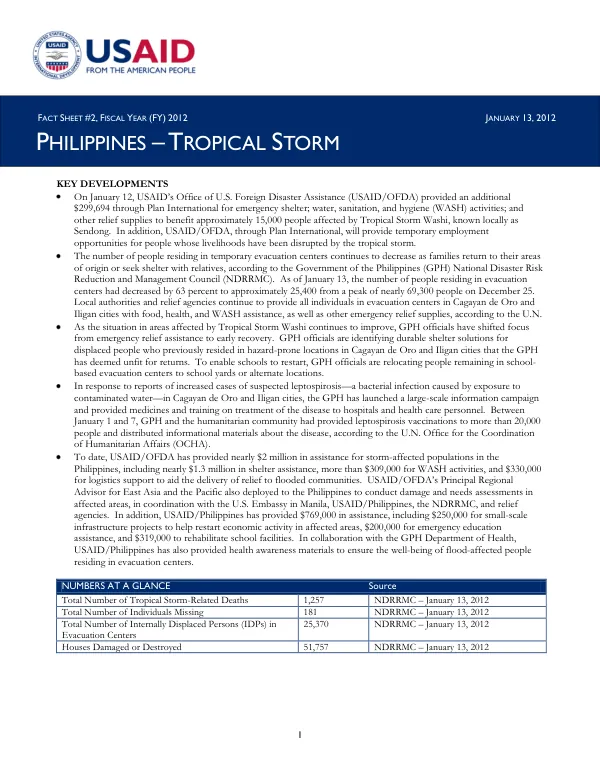
Tropical Storm Washi, also known as Sendong, passed over the southern Philippines from December 16 to 18, 2011, resulting in flash flooding and landslides, particularly affecting northern Mindanao.
2012 · 4 pages
Sign in to readA free account is required to download.
Abstract
The storm caused widespread destruction, with over 51,757 houses damaged or destroyed, and displaced approximately 25,370 individuals who were residing in evacuation centers. The Government of the Philippines (GPH) declared a state of national calamity in Central Visayas, Zamboanga Peninsula, Northern Mindanao, Davao, and Caraga regions due to the flash floods and landslides associated with the storm. The U.S. Ambassador to the Philippines, Harry K. Thomas, Jr., also declared a disaster due to the effects of the storm. In response, USAID's Office of U.S. Foreign Disaster Assistance (USAID/OFDA) provided an initial $100,000 through USAID/Philippines to Catholic Relief Services (CRS) for the distribution of emergency water, sanitation, and hygiene (WASH) supplies to the most affected people in Mindanao. As of January 12, the WASH Cluster had overseen the distribution of more than 10,000 hygiene kits and 12,400 water containers to flood-affected people in Cagayan de Oro and Iligan cities. With new USAID/OFDA funding, Plan International will continue efforts to provide safe drinking water by distributing water purification kits and promote hygiene by providing family hygiene kits. The Cagayan de Oro City Water District had restored the water supply to 95 percent of the eastern side of the city, with water trucking continuing in areas where repairs remain ongoing. GPH officials, in coordination with the Emergency Shelter Cluster and Camp Coordination and Camp Management Cluster, have identified Calaanan and Lumbia in Cagayan de Oro City as sites for the relocation of people displaced by flooding, including people who previously resided in hazard-prone areas. The Government of Iligan City Task Force on Rehabilitation, Relocation, and Resettlement has developed a six-step Rehabilitation and Resettlement Plan to address the relocation of displaced individuals who previously resided in hazard-prone locations in Iligan. As of January 10, nearly 600 suspected cases of leptospirosis had been reported in flood-affected areas, resulting in 16 deaths. The Northern Mindanao Medical Center (NMMC) had treated 231 cases of leptospirosis, of which 77 were receiving treatment as of January 13. Through mobile health teams, members of the Health Cluster had provided medical care to 300,000 flood-affected people, including 10,000 pregnant and lactating women, 20,000 children, and 5,000 family planning professionals as of January 12. USAID/OFDA partner the U.N. World Food Program (WFP) continues to increase warehouse capacity in Cagayan de Oro and Iligan cities and assist relief agencies with transport and delivery of relief supplies to affected areas. As of January 10, WFP had set up 3,000 square meters of warehouse space in the two cities to store commodities until they are ready for distribution. International donors, private companies, and other groups have provided an estimated $22.4 million in cash, in-kind assistance, and pledges for the Tropical Storm Washi response to date.
Related documents