CRS
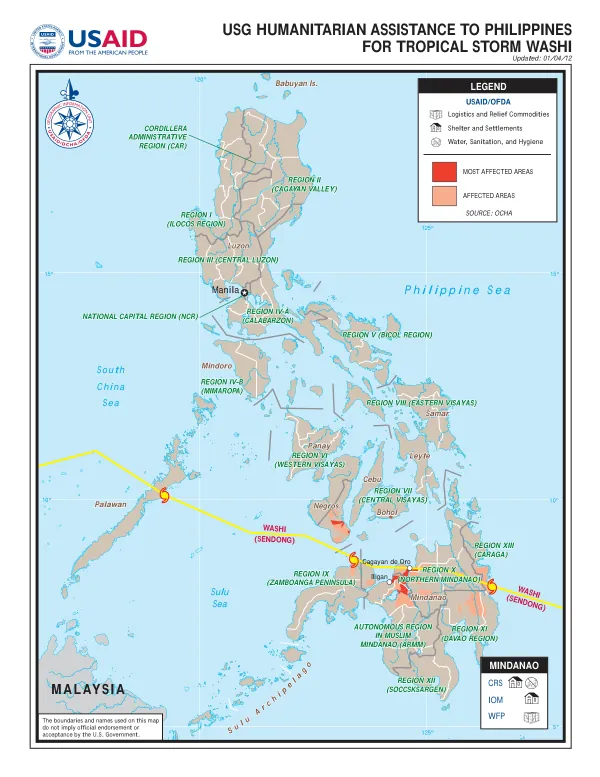
USG HUMANITARIAN ASSISTANCE TO PHILIPPINES FOR TROPICAL STORM WASHI
The Philippines was severely affected by Tropical Storm Wasi, also known as Sendong, in December 2011.
2012 · 1 pages
Sign in to readA free account is required to download.
Abstract
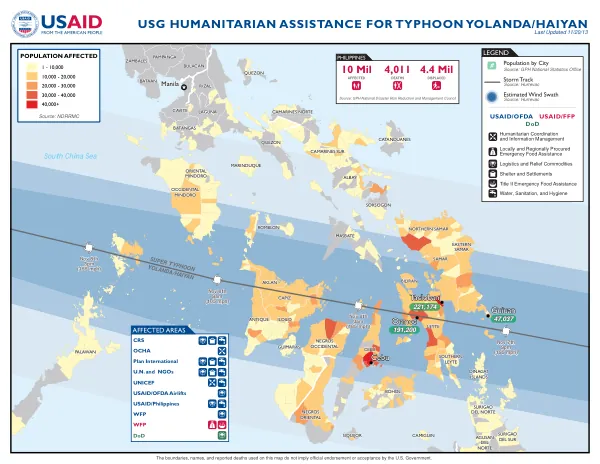
The storm made landfall in Mindanao, causing widespread flooding and landslides. The most affected areas included Cagayan Valley, Caraga, and Northern Mindanao, with the cities of Cagayan de Oro and Iligan experiencing significant damage. Logistics and relief commodities were in high demand, with emergency responders requiring assistance to reach affected communities. Shelter and settlements were also a major concern, as thousands of people were left homeless due to the storm. Water, sanitation, and hygiene (WASH) services were severely impacted, with many communities lacking access to clean water and sanitation facilities. The United States Agency for International Development (USAID) Office of U.S. Foreign Disaster Assistance (OFDA) provided significant support to the relief efforts, working closely with other humanitarian organizations such as the United Nations High Commissioner for Refugees (UNHCR), the International Organization for Migration (IOM), and the World Food Programme (WFP). The USAID/OFDA support included provision of emergency shelter materials, food, and non-food items, as well as funding for logistics and relief commodities. The affected areas included the provinces of Misamis Oriental, Lanao del Norte, and Bukidnon, among others. The storm caused significant damage to infrastructure, including roads, bridges, and buildings, and resulted in the loss of life and property. The humanitarian response efforts were focused on providing emergency assistance to affected communities, with a particular emphasis on supporting the most vulnerable populations, including women, children, and the elderly.
Related documents