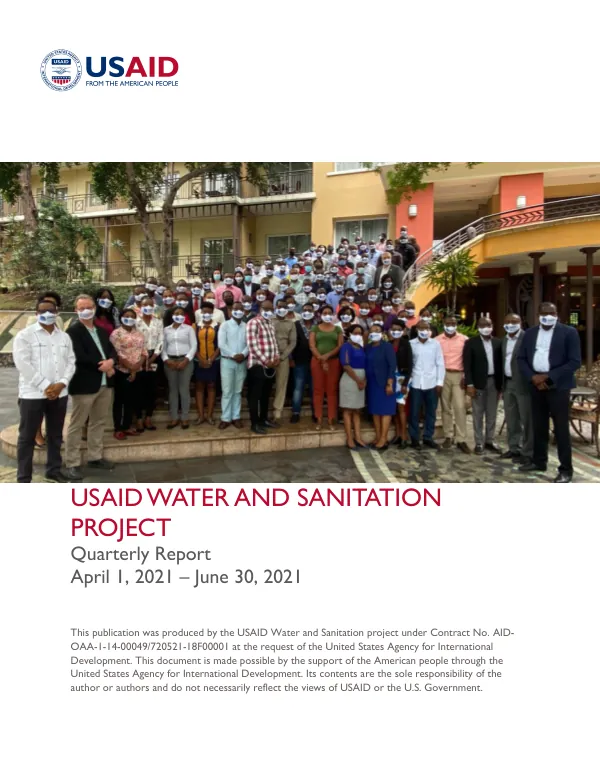
USAID DEC
Plan de développement communal de l'Acul du Nord
The commune of l'Acul du Nord is located in a region with a diverse geography, featuring a mix of hills, valleys, and coastal areas.
2009 · 88 pages
Sign in to readA free account is required to download.
Abstract
The commune's population is comprised of various ethnic groups, with a total of 12,345 inhabitants, as reported in the 2009 census. The population is predominantly rural, with a high percentage of people engaged in agricultural activities. The commune's infrastructure is characterized by a network of roads, including the main road that connects the commune to the regional capital. The Port of l'Acul is a significant economic hub, facilitating trade and commerce between the commune and other regions. However, the commune faces challenges in terms of access to basic services, including healthcare, education, and sanitation. The sector of education in the commune is comprised of several schools, including primary and secondary institutions. The schools face challenges in terms of infrastructure, with many buildings in need of repair or replacement. The sector of healthcare is also underdeveloped, with limited access to medical facilities and personnel. The commune's healthcare system is primarily based on traditional medicine, with limited access to modern medical facilities. The sector of infrastructure and habitat in the commune is characterized by a mix of modern and traditional buildings. The commune's housing stock is comprised of a range of structures, including wooden houses, concrete buildings, and makeshift shelters. However, many of the commune's residents lack access to basic amenities, including electricity, water, and sanitation. The sector of economy in the commune is primarily based on agriculture, with a focus on crops such as rice, maize, and beans. The commune's agricultural sector faces challenges in terms of soil degradation, limited access to markets, and inadequate irrigation systems. The sector of commerce is also underdeveloped, with limited access to markets and trade facilities. The sector of environment in the commune is characterized by a mix of natural and human-made features. The commune's soil is primarily composed of clay and silt, with limited areas of fertile land. The commune's water resources are primarily based on rainfall, with limited access to groundwater. The commune's natural resources are also under threat from deforestation, soil erosion, and pollution. The commune's potentialities and constraints are summarized in the following sectors: education, healthcare, infrastructure, economy, and environment. The commune faces challenges in terms of access to basic services, infrastructure, and economic opportunities. However, the commune also has potentialities in terms of its natural resources, agricultural sector, and tourism industry. The commune's conclusion highlights the need for sustainable development and community-led initiatives to address the commune's challenges and capitalize on its potentialities. The commune's development plan aims to improve access to basic services, infrastructure, and economic opportunities, while also promoting sustainable development and environmental conservation.