USAID DEC
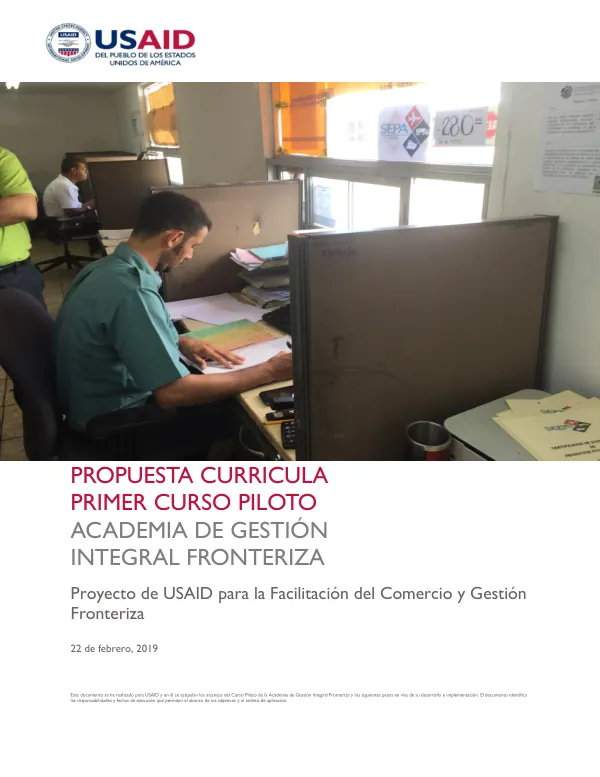
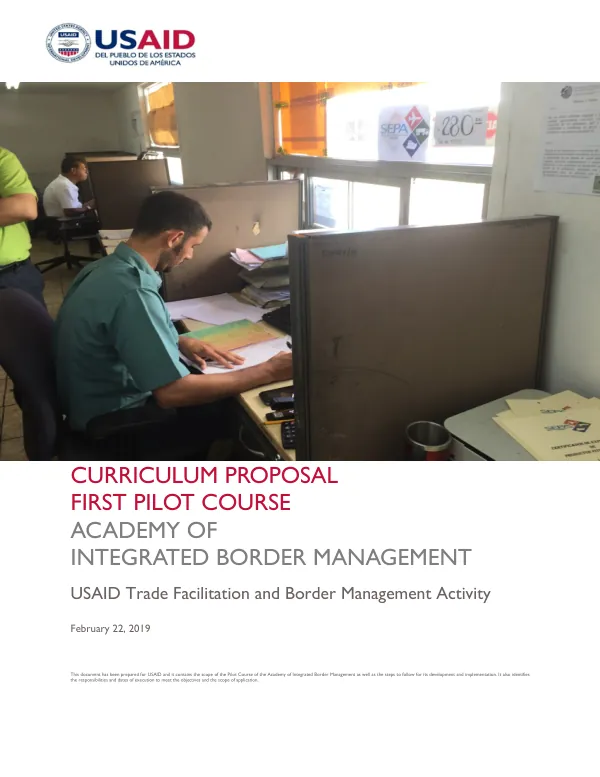
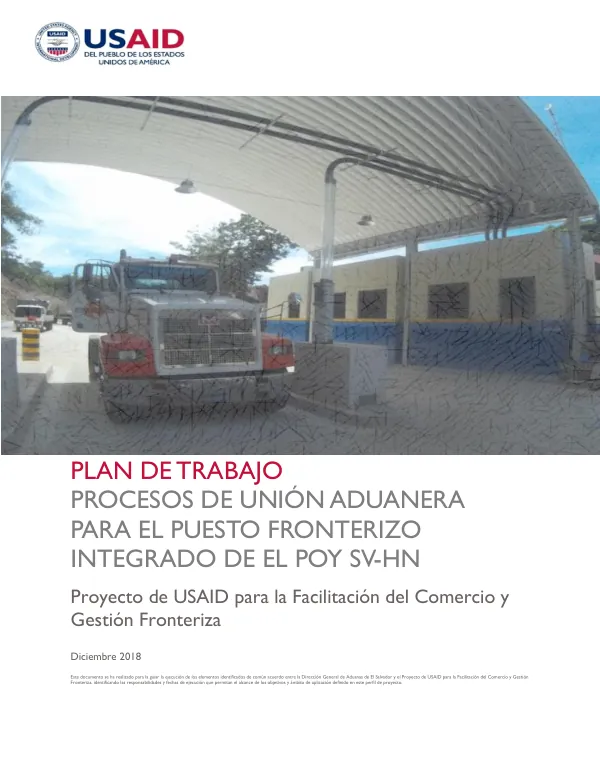
PLAN DE TRABAJO PROCESOS DE LA UNIÓN ADUANERA PARA EL PUESTO FRONTERIZO INTEGRADO DE EL POY SV-HN
Sign inROBERT NATHAN ASSOCIATES
PLAN DE TRABAJO PROCESOS DE LA UNIÓN ADUANERA PARA EL PUESTO FRONTERIZO INTEGRADO DE EL POY SV-HN
The Unión Aduanera (UA) process for the Integrated Border Post of El Poy SV-HN is a critical component of the Facilitación del Comercio y Gestión Fronteriza (FCGF) project, funded by USAID.
2018 · 13 pages
Sign in to readA free account is required to download.
Abstract
The project aims to strengthen the commercial capacity and competitiveness of countries in Central America, with a focus on the implementation of key elements in the framework of the Acuerdo de Facilitación de Comercio of the Organización Mundial de Comercio (OMC). The El Poy border crossing is a vital trade route between El Salvador and Honduras, with a significant volume of cargo passing through it. In 2017, the value of merchandise traded through El Poy exceeded $1.1 billion, with a total weight of over 671 million kilograms. The border crossing is also a key component of the Corredor Logístico identified by the Banco Interamericano de Desarrollo (BID) as the third most important logistics corridor in the region. The Salvadoran government has taken steps to integrate El Poy into the UA process, with the Asamblea Legislativa approving the country's adherence to the Protocolo Habilitante for the Proceso de Integración Profunda towards the Libre Tránsito de Bienes y Personas Naturales. The cruce de El Poy has been defined as a Puesto Fronterizo Integrado, with the Dirección General de Aduanas (DGA) leading a $1.3 million investment to remodel and adapt the infrastructure to meet the requirements of the UA process. The objective of the Plan de Trabajo is to create the operational processes of the UA in an Integrated Border Post within the framework of the UA of the Triángulo Norte, and to conduct studies of the times of dispatch of the cargo through the crossing, which will provide the Línea Base using the methodology of the Organización Mundial de Aduanas (OMA). The plan aims to create the processes of dispatch of the border crossing using the regulation created by the Instancia Ministerial, taking into account the particularity of the distribution of the infrastructure and the flow of the circulation of cargo that transits through El Poy. The study of the times of dispatch of the Línea Base will be conducted using the OMA methodology, with the aim of measuring the impact of the current processes and those that will be delivered by the project to the governments of El Salvador and Honduras. The project will coordinate and validate the methodology in the field with the DGA, and will produce the Línea Base of measurement of the projects in execution. The implementation of the UA process at El Poy will require the creation of operational processes, including the distribution of infrastructure and the flow of cargo circulation. The project will work closely with the DGA to develop the operational processes, and will provide training and technical assistance to ensure the successful implementation of the UA process. The project will also conduct a midterm evaluation to assess the impact of the UA process on the trade and economic development of the region. The evaluation will provide recommendations for the improvement of the UA process and the implementation of additional initiatives to support the development of the region. The geographic focus of the project is the El Poy border crossing, which is located in the noroccidente of El Salvador and the suroccidente of Honduras. The project will work closely with the governments of El Salvador and Honduras to implement the UA process and to support the development of the region. The project will be implemented over a period of 12 months, with the following milestones: * Month 1-3: Development of the operational processes of the UA in an Integrated Border Post * Month 4-6: Conduct of the study of the times of dispatch of the Línea Base * Month 7-9: Implementation of the UA process at El Poy * Month 10-12: Midterm evaluation and assessment of the impact of the UA process The project will be implemented by a team of experts from the USAID project, in collaboration with the DGA and other stakeholders. The project will provide training and technical assistance to ensure the successful implementation of the UA process, and will conduct a midterm evaluation to assess the impact of the project.