USAID DEC
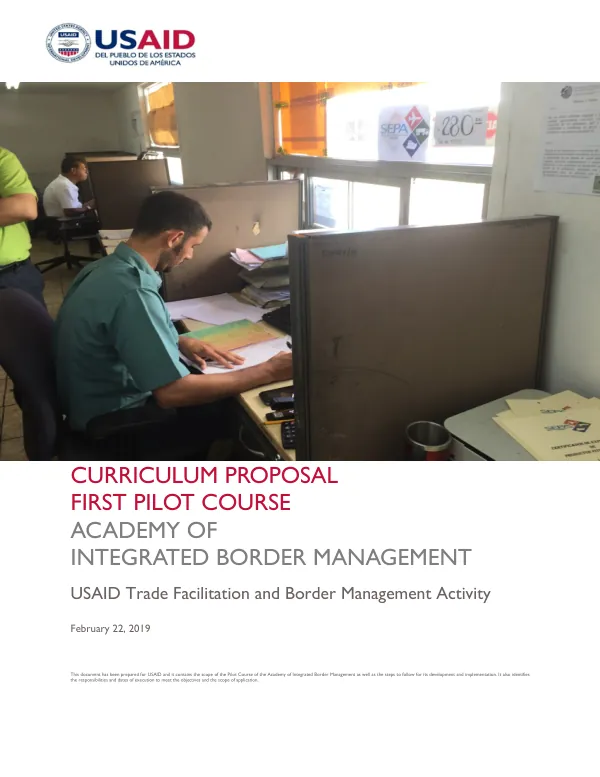
Curriculum Proposal for the 1st Pilot Course of the Academy of Integrated Border Management
Sign inROBERT NATHAN ASSOCIATES
Curriculum Proposal for the 1st Pilot Course of the Academy of Integrated Border Management
The Pilot Course of the Academy of Integrated Border Management is a four-week training program designed to strengthen the capacity and trade competitiveness of developing countries in Central America.
2019 · 39 pages
Sign in to readA free account is required to download.
Abstract
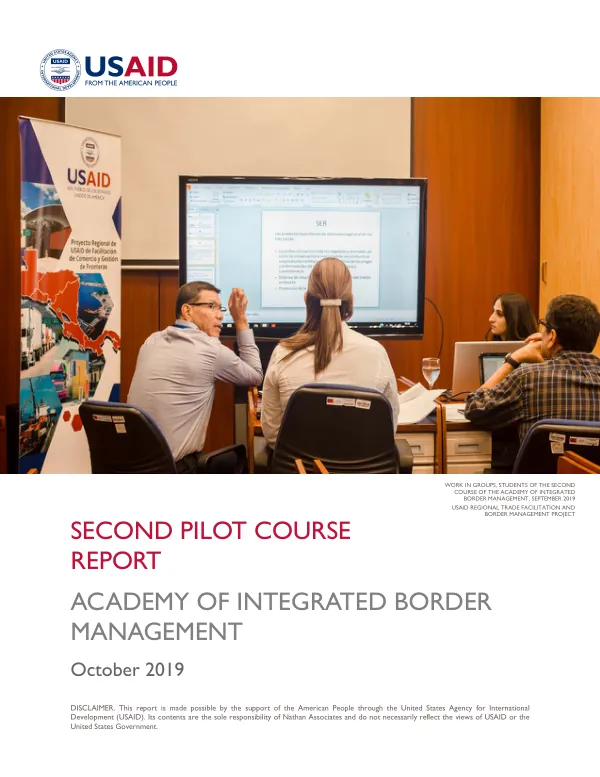
The course is aimed at managers responsible for the administration of borders for Customs, Tax, Migration, Agriculture, and Economy agencies of El Salvador, Guatemala, and Honduras. The course will be held from March 4 to March 29 at the Centre for Studies on Economic Integration (CEIE) of SIECA located in the City of Guatemala. The Pilot Course has been designed to provide participants with a common space that fosters best practices knowledge and learning, coordination and exchange of inter and intra institutional information, and strengthening of leadership and negotiation capacities. The course includes a series of sessions with border management technical skills, context on the surroundings in which international trade is developed, and dynamic work tables that promote dialog and coordination among peers. Its content includes examples and approaches that reflect the role of the private sector in the region's economic growth and job creation, placing them in the context of international commitments and best practices. The strategic objectives of the Pilot Course are to strengthen the integration process through the professionalization of customs, taxes, migration, and agriculture officers, build trust between authorities and encourage coordination at government, bilateral, and regional levels, generate knowledge on the impact officials' work has in terms of economic growth and country and region prosperity, and generate knowledge on the role of the private sector/users in the economy and prosperity of the region. The tactical objectives of the Pilot Course are to avoid duplication of documents and procedures through the knowledge of operations and responsibilities of each of the border authorities, coordination, and exchange of information, adopt new procedures and operations related to the implementation of the Customs Union Agreement, provide tools to support the adoption of internationally standardized processes and best practices, reduce barriers to international trade, considering the challenges of the private sector, and ensure that technology is within reach of the officials to ensure its full potential. The curriculum of the Pilot Course has been designed as a syllabus, which includes four weeks of technical sessions that aim to enable participants to acquire skills in Integrated Border Management. The curriculum has been developed through gradual improvements, from the selection/evaluation of the main themes for each of the 4 weeks, identifying objectives, expected results, identifying target employees, adapting topics to the level of participants, building technical sessions sequence, identifying best practices or experiences, reviewing the timetable of the technical sessions, among others. The Pilot Course is part of the Academy of Integrated Border Management, which plans to open more courses in the next two and a half years. The Project aims to foster the coordination among international agencies and support the creation of the Academy, so that, in the long run, the Academy becomes responsible for coordinating all the training provided in the region by different governments and international agencies on issues of border management. The course will be implemented in partnership with USAID, SIECA, and main partners, and will be evaluated to learn lessons and obtain feedback for the improvement of subsequent courses. The Academy of Integrated Border Management plans to use the Pilot Course as a platform for training sessions on topics linked to the improvement of the Integrated Border Management for the region, and to build a complete reference file on border management issues. The Pilot Course has been designed to provide participants with a comprehensive understanding of Integrated Border Management, including the role of the private sector in the region's economic growth and job creation, and the impact of officials' work on economic growth and country and region prosperity. The course will also provide participants with the skills and knowledge necessary to adopt new procedures and operations related to the implementation of the Customs Union Agreement, and to reduce barriers to international trade, considering the challenges of the private sector. The course will be taught by experienced instructors who have expertise in Integrated Border Management, and will include a combination of lectures, discussions, and practical exercises. The course will also include dynamic work tables that promote dialog and coordination among peers, and will provide participants with the opportunity to share their experiences and best practices. The Pilot Course is an important step towards the creation of the Academy of Integrated Border Management, which will provide training and capacity-building programs for officials responsible for the management of borders in Central America. The course will help to strengthen the integration process, build trust between authorities, and generate knowledge on the impact of officials' work on economic growth and country and region prosperity.