USAID DEC
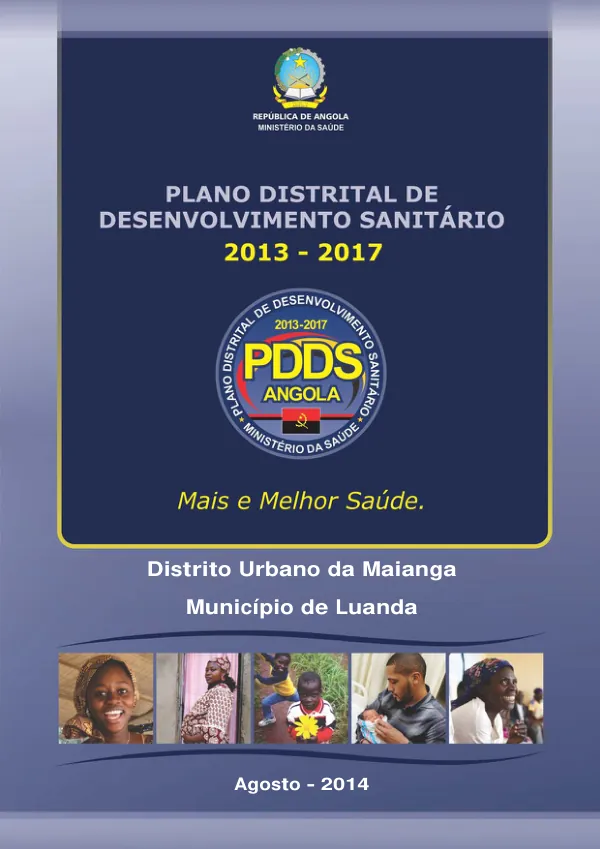
Plano Distrital de Desenvolvimento Sanitário (PDDS) 2012-2017 do Distrito Urbano da Maianga
Sign inUSAID DEC
Plano Distrital de Desenvolvimento Sanitário (PDDS) 2012-2017 do Distrito Urbano da Maianga
The Plano Distrital de Desenvolvimento Sanitário (PDDS) 2012-2017 for the Distrito Urbano da Maianga in Luanda, Angola, was developed by a multisectorial commission in response to the presidential initiative outlined in Despacho Presidencial nº 84/11 of October 27, 2011.
2014 · 162 pages
Sign in to readA free account is required to download.
Abstract
The PDDS is a strategic-operational instrument aimed at materializing the orientations set forth in the Estratégia de Desenvolvimento a Médio Prazo "Angola 2017" and the Política Nacional de Saúde, within the framework of the reform of the Sistema Nacional de Saúde. The PDDS was developed in a context of political stability, socioeconomic growth, and democratic consolidation, and is considered a fundamental pillar in the process of sustainable development underway in the country. The Angolan government has made significant efforts to improve the country's economic and social indicators, including the consolidation of the right to health enshrined in the Constitution. Notable advances have been achieved, particularly in the reduction of maternal and infant mortality and the increase in life expectancy. However, the challenges are enormous, particularly in suburban areas, where health indicators are lower than in urban areas. The PDDS aims to promote health as a factor in the global development of the country and social justice, ensuring access to healthcare, equity in attention, and improvement of management and financing mechanisms of the Sistema Distrital de Saúde. The PDDS presents ambitious objectives in all domains of the Sistema Distrital de Saúde, including the reinforcement of the fight against priority diseases. The PDDS foresees the reinforcement of the institutional framework of the sector, the search for adapted financing forms, the dynamization of the policy of formation of cadres, the establishment of a fruitful relationship with the private sector of health, and the active participation of local administrations, communities, and families in the process of improvement of health. The PDDS will be translated into Annual Action Plans at all levels of the system. The PDDS creates opportunities for the strengthening of the Sistema Distrital de Saúde, enabling it to respond more efficiently and effectively to the needs of our populations, with a common purpose and a convergent vision, so that together we can do more and better for the health of all Angolans. The PDDS was developed by a team of 28 members, including representatives from various sectors and institutions, such as the Repartição de Saúde da Cidade de Luanda, the Repartição de Saúde do Distrito Urbano da Maianga, the GEPE, the MINSA, and the ForçaSaúde/USAID. The PDDS is structured into two main chapters: the first chapter presents an analysis of the situation of health in the municipality, including the characterization of the physical and demographic environment, the institutional characterization, the social determinants of health, the sanitary profile of the municipality, the services of health and the system of management, and the framework of the PMDS. The second chapter presents the programs and projects of the PDDS 2013-2017 of the Distrito Urbano de Maianga, including the Programa 1: Programa de Prevenção e Luta Contra as Doenças, which includes projects such as the Prevenção e controlo das doenças imunopreveníveis, the Prevenção, controlo e eliminação da Malária, the Prevenção e controlo do VIH/SIDA e da Sifilis, and others. The PDDS is a comprehensive plan that aims to improve the health situation in the municipality of Maianga, and its implementation will require the active participation of all stakeholders, including the government, the private sector, the communities, and the families.