USAID DEC
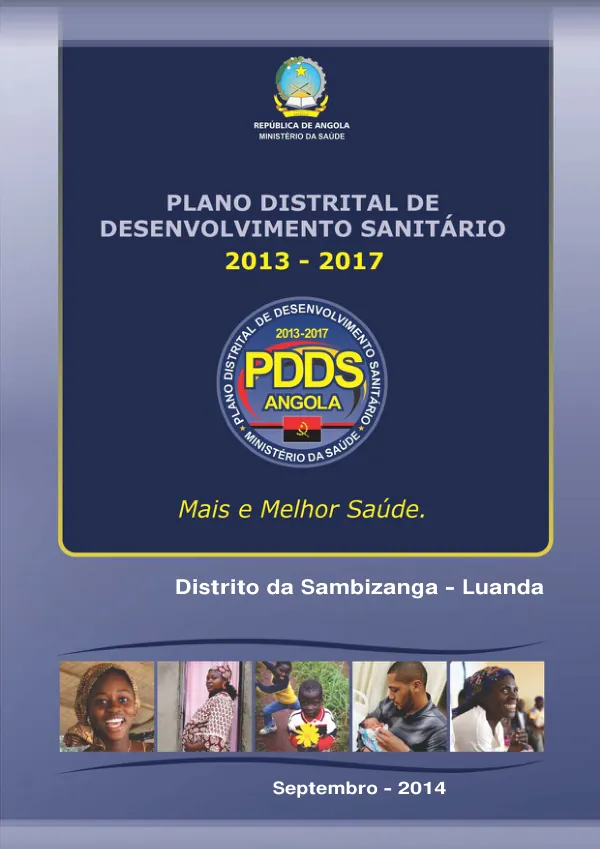
Plano Distrital de Desenvolvimento Sanitário (PDDS) 2013 a 2017 do Distrito da Sambizanga
Sign inUSAID DEC
Plano Distrital de Desenvolvimento Sanitário (PDDS) 2013 a 2017 do Distrito da Sambizanga
The Plano Distrital de Desenvolvimento Sanitário (PDDS) for the Distrito da Sambizanga in Luanda, Angola, was developed in 2013 as a strategic operational document to address the health needs of the district.
2014 · 151 pages
Sign in to readA free account is required to download.
Abstract
The PDDS is a result of a multisectoral commission established by the President of Angola, aiming to materialize the orientations set forth in the Estratégia de Desenvolvimento a longo prazo "Angola 2025" and the Política Nacional de Saúde. The PDDS aims to improve the health status of the district by promoting universal access to healthcare, ensuring equity in attention, and improving management and financing mechanisms. The document focuses on the district's physical and demographic characteristics, institutional framework, social determinants of health, and health profile. It also outlines programs and projects to address various health issues, including infectious diseases, chronic diseases, and non-communicable diseases. The PDDS identifies several key areas for intervention, including the prevention and control of infectious diseases such as polio, malaria, HIV/AIDS, and tuberculosis. It also focuses on the prevention and control of non-communicable diseases, such as diabetes and cancer. Additionally, the document emphasizes the importance of promoting healthy habits and lifestyles, as well as providing primary care and services to the population. The PDDS is structured around several programs and subprograms, including the Programa de Prevenção e Luta Contra as Doenças, which focuses on the prevention and control of infectious diseases. Other programs and subprograms address the promotion of healthy habits and lifestyles, the development of primary care and services, and the management and development of the national network of laboratories. The document also highlights the importance of human resources development, including the training and capacity-building of healthcare workers. It emphasizes the need for a well-planned and managed healthcare system, with a focus on equity, quality, and access to healthcare services. The PDDS is a comprehensive document that outlines a strategic plan for improving the health status of the Distrito da Sambizanga in Luanda, Angola. It provides a framework for addressing various health issues and promoting healthy habits and lifestyles among the population. The document's implementation is expected to be carried out through a series of projects and programs, which will be coordinated by the Administradora Distrital do Sambizanga. The PDDS is a key instrument for achieving the health goals set forth in the Estratégia de Desenvolvimento a longo prazo "Angola 2025" and the Política Nacional de Saúde. The PDDS is a result of a collaborative effort between various stakeholders, including the government, healthcare professionals, and community members. It reflects the commitment of the government and the healthcare sector to improving the health status of the population and promoting a culture of health and well-being. The document's success will depend on the effective implementation of its programs and projects, as well as the commitment of all stakeholders to working together to achieve the health goals set forth in the PDDS.