USAID DEC
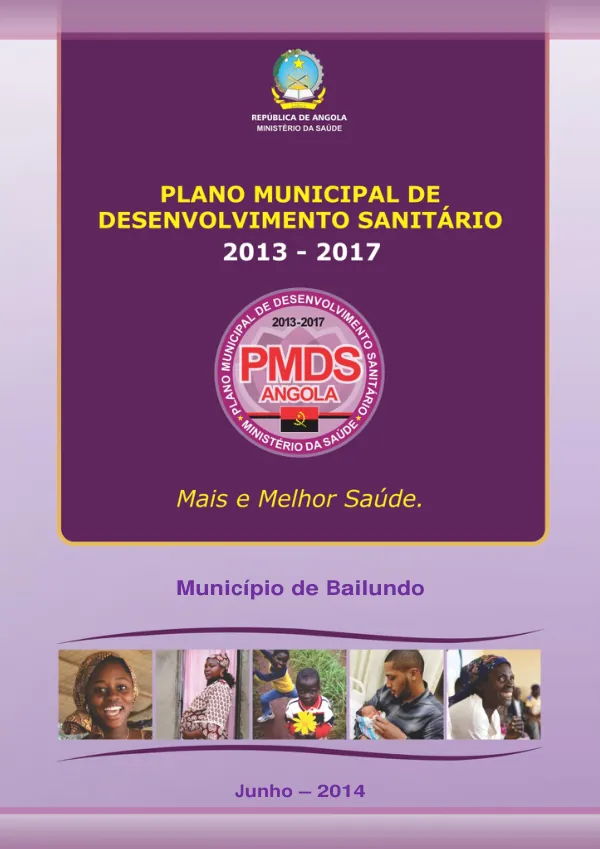
Plano Municipal de Desenvolvimento Sanitário (PMDS) do Município de Bailundo, Huambo
Sign inUSAID DEC
Plano Municipal de Desenvolvimento Sanitário (PMDS) do Município de Bailundo, Huambo
The Município de Bailundo, located in the Huambo Province of Angola, is the focus of a comprehensive health development plan.
2014 · 164 pages
Sign in to readA free account is required to download.
Abstract
The plan, known as the Plano Municipal de Desenvolvimento Sanitário (PMDS), aims to improve the health and well-being of the population, particularly in the areas of maternal and child health, and to reduce morbidity and mortality rates. The PMDS was established in response to the Angolan government's efforts to improve the country's economic and social indicators, as outlined in the Constitution of the Republic of Angola. The plan is designed to address the specific health needs of the Bailundo population, which faces significant challenges in terms of access to healthcare, sanitation, and other essential services. The PMDS is guided by a vision that considers health as a primary factor in the growth and development of the municipality, with a focus on social justice. The plan prioritizes the needs of vulnerable populations, including women, children, and the elderly, and seeks to address the root causes of health problems through a comprehensive approach that involves multiple sectors and stakeholders. The plan's implementation is led by the Direcção Municipal de Saúde (Municipal Health Directorate), which is responsible for coordinating the efforts of various institutions, including traditional authorities, civil society organizations, and the private sector. The plan also involves partnerships with international organizations, such as the USAID, which provided funding and technical assistance for the development of the PMDS. The PMDS is based on a thorough analysis of the health situation in Bailundo, which identified a range of health problems, including malaria, diarrheal diseases, respiratory infections, tuberculosis, and HIV/AIDS. The plan also highlights the importance of addressing the social determinants of health, including education, housing, water, sanitation, energy, and social protection. The PMDS includes a range of programs and projects aimed at improving healthcare services, increasing access to healthcare, and promoting healthy behaviors. These initiatives include the development of healthcare infrastructure, the training of healthcare workers, and the implementation of disease prevention and control programs. The plan also emphasizes the importance of community participation and involvement in the planning and implementation of health services. This approach is seen as essential for ensuring that the needs of the population are met and that health services are responsive to the local context. Overall, the PMDS represents a significant effort to improve the health and well-being of the population in Bailundo, and to address the complex health challenges facing the municipality. The plan's comprehensive approach and commitment to social justice make it a valuable model for health development in other parts of Angola and beyond. The PMDS is structured around several key components, including the characterization of the physical and demographic environment of the municipality, the characterization of the institutional framework, and the identification of the main health problems and priorities. The plan also includes a detailed analysis of the health situation in Bailundo, which highlights the importance of addressing the social determinants of health and the need for a comprehensive approach to health development. The PMDS is guided by a set of principles and values that emphasize the importance of social justice, equity, and community participation. The plan also recognizes the need for a multisectoral approach to health development, which involves the collaboration of multiple stakeholders and institutions. The implementation of the PMDS is expected to have a significant impact on the health and well-being of the population in Bailundo, and to contribute to the overall development of the municipality. The plan's comprehensive approach and commitment to social justice make it a valuable model for health development in other parts of Angola and beyond.