ARIZONA STATE UNIVERSITY
Power of Exchange: Proximity Creates Possibilities
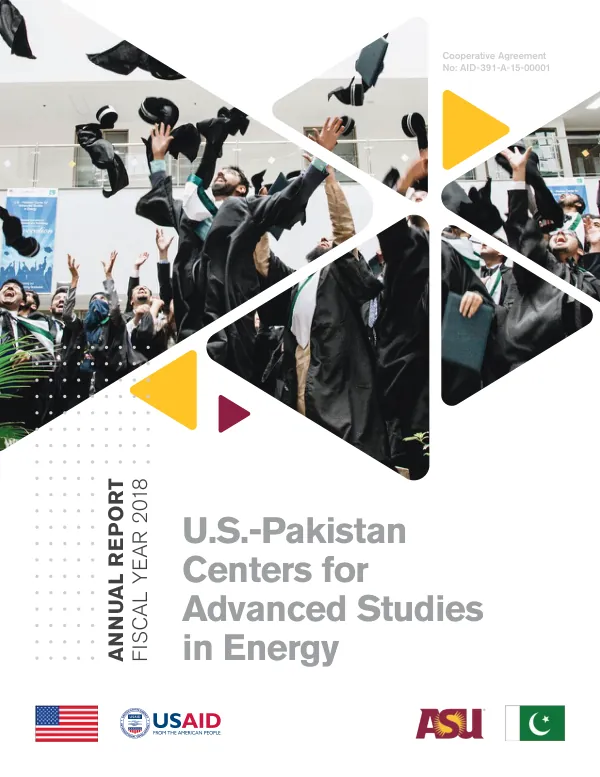
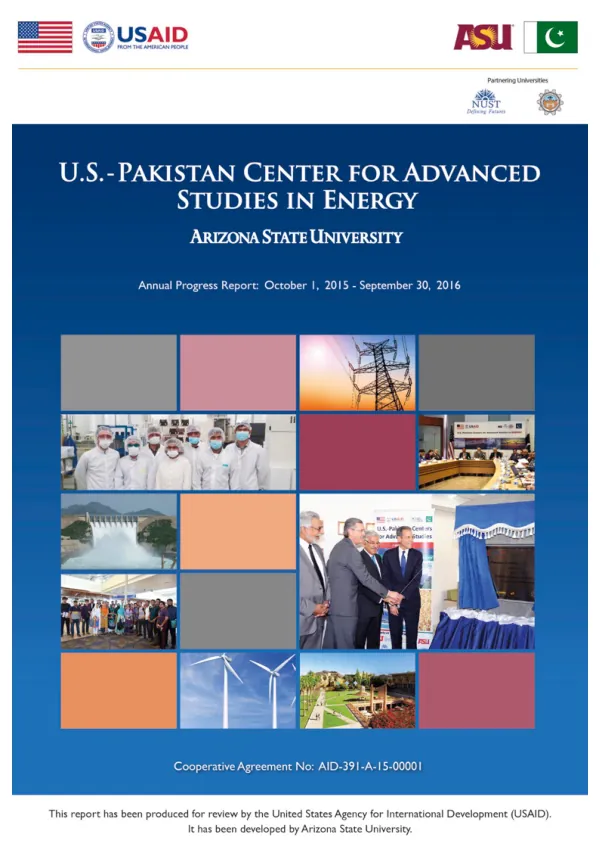
The U.S.-Pakistan Centers for Advanced Studies in Energy (USPCASE) is a collaborative initiative between Arizona State University (ASU) and Pakistani universities, funded by the U.S.
2018 · 4 pages
Sign in to readA free account is required to download.
Abstract
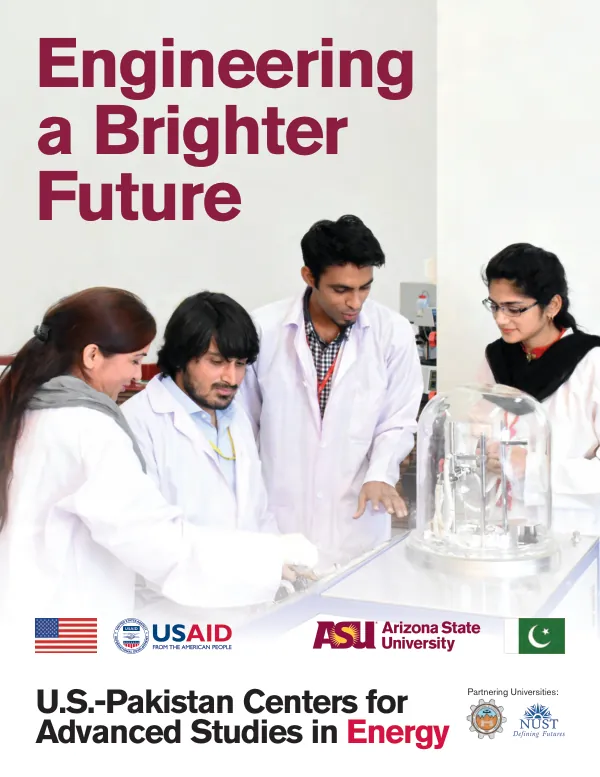
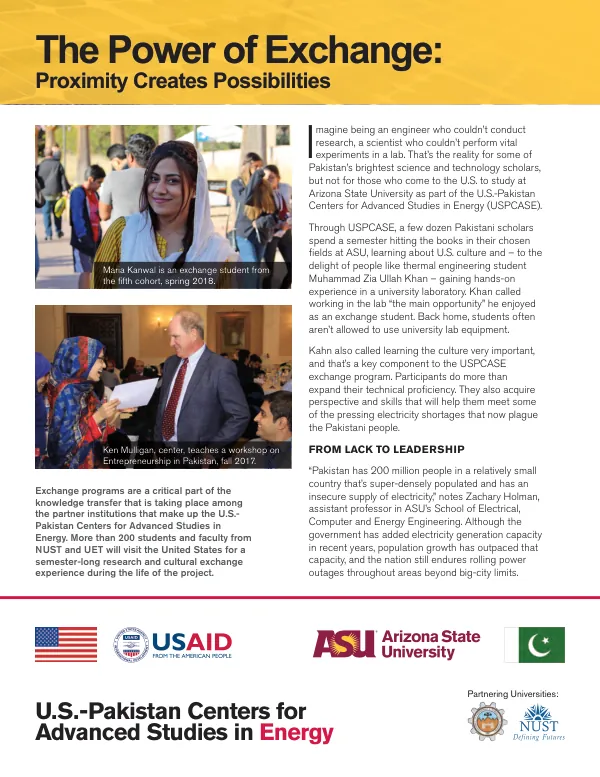
Agency for International Development (USAID). The program aims to address the pressing issue of electricity shortages in Pakistan by providing Pakistani scholars with advanced training and research opportunities in energy-related fields. Through the USPCASE program, a few dozen Pakistani scholars spend a semester at ASU, where they engage in hands-on research and learning experiences in university laboratories. This exposure is particularly valuable for Pakistani students, who often lack access to laboratory equipment and resources in their home country. The program's emphasis on hands-on learning and research enables students to develop practical skills and expertise in areas such as energy policy, entrepreneurship, and materials science. One of the key components of the USPCASE program is the cross-cultural exchange between Pakistani students and ASU faculty. This exchange involves Pakistani students studying in the U.S., Pakistani faculty conducting research at ASU, and ASU professors teaching in-country workshops in Pakistan. The program's international visits coordinator, Andrew Sarracino, notes that this cross-cultural exchange is essential for building relationships and fostering research and education collaborations between ASU and Pakistani universities. Professional development is another critical aspect of the USPCASE program. Students are required to take classes in energy policy and entrepreneurship, which equip them with skills to drive economic growth and innovation in Pakistan. Ken Mulligan, an ASU professor who teaches entrepreneurship classes, emphasizes the importance of changing mindsets among Pakistani engineers, who are often trained as problem solvers rather than job creators. Mulligan's mission is to empower students to have a vision for value creation and understand their role in driving positive change in Pakistan. The USPCASE program also provides Pakistani students with opportunities to engage in hands-on research and learning experiences in university laboratories. Maria Kanwal, an exchange student from Pakistan's National University of Science and Technology (NUST), notes that her time in the materials science lab has enhanced her research proficiency and broadened her knowledge of materials science. Lab work is a new experience for many Pakistani students, who often lack access to laboratory equipment and resources in their home country. In addition to laboratory experiences, the USPCASE program provides students with opportunities to engage in cultural and social activities, such as weekly presentations and stateside travel. Sarracino arranges and chaperones a week-long trek across the Western U.S., which enables students to see the potential for implementing tourism, land conservation, and economic development in their home country. This exposure helps students to develop a broader perspective on the possibilities for growth and development in Pakistan. Overall, the USPCASE program is a critical initiative that addresses the pressing issue of electricity shortages in Pakistan by providing Pakistani scholars with advanced training and research opportunities in energy-related fields. The program's emphasis on hands-on learning, cross-cultural exchange, and professional development enables students to develop practical skills and expertise, which they can apply to drive economic growth and innovation in Pakistan.