ARIZONA STATE UNIVERSITY
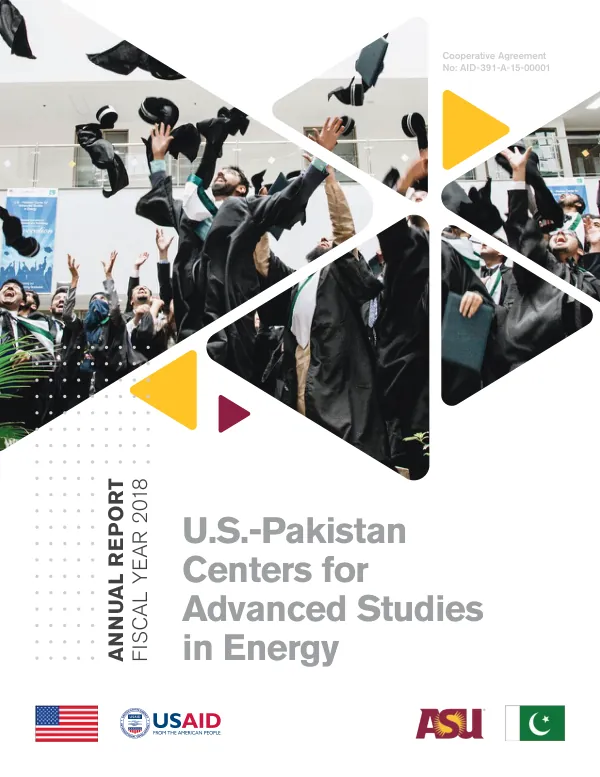
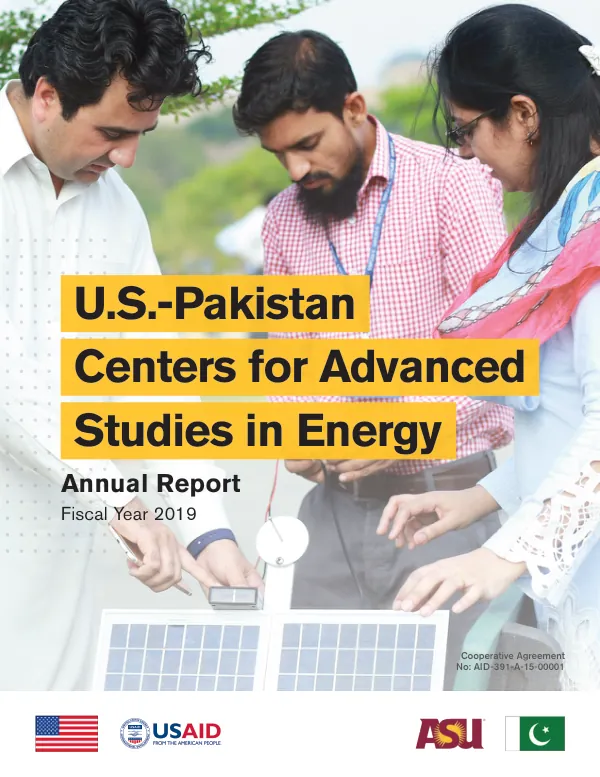
USPCAS-E Annual Report Fiscal Year 2019
Securing Pakistan's energy future is a critical challenge that requires innovative solutions.
2019 · 92 pages
Sign in to readA free account is required to download.
Abstract
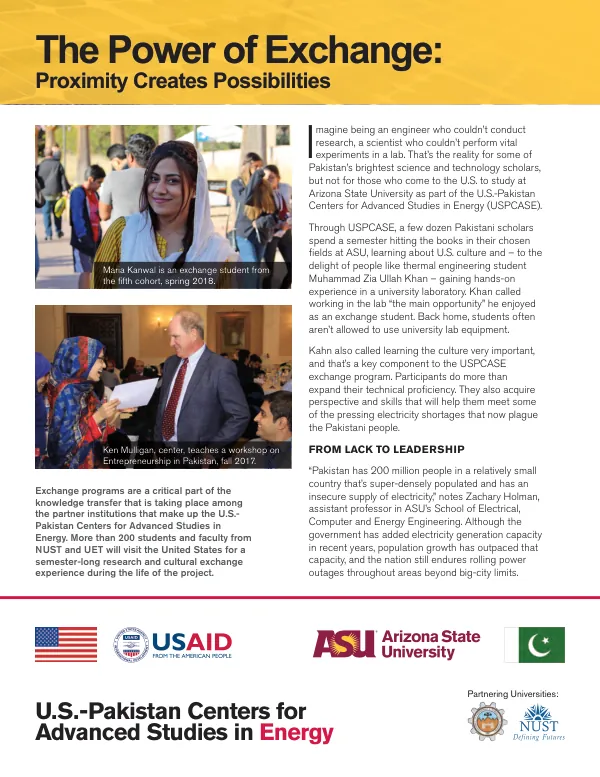
The U.S.-Pakistan Centers for Advanced Studies in Energy (USPCAS-E) project was established to address this challenge through a comprehensive approach that includes governance, curriculum, research, exchange, and sustainability. The project's governance component focused on building the capacity of the centers to operate independently after the project's completion. This involved hosting stakeholder meetings and Think Tank Dialogues, which helped to establish the centers as connectors and thought leaders in Pakistan's energy landscape. The centers also organized international conferences, such as the joint conference with UET Peshawar and NUST, which brought together over 550 attendees to discuss pressing issues and opportunities in renewable energy. The curriculum component of the project involved ongoing review and revision to ensure that the programs at NUST and UET Peshawar remained relevant and effective. ASU conducted detailed curriculum reviews and provided pedagogy training to USPCAS-E faculty, enabling them to create the best possible learning environments for their students. The training included classroom observations, pedagogy training, online modules, and virtual Zoom sessions, focusing on the scholarship of teaching and learning. Research was a critical component of the project, with funding provided for 36 applied and 12 joint (U.S.-Pakistan) research projects to address pressing energy problems in Pakistan. These research projects fostered a culture of research and created directly applicable results that helped communities and individuals flourish. The project also worked with Pakistan's Higher Education Commission, industry, and government agencies to identify solutions critical to grand challenges in energy. The exchange component of the project involved sending Pakistani scholars to top labs at ASU and OSU, where they spent the semester working on research projects and learning about U.S. culture. The exchange program was critical to jump-starting new ways of thinking about energy problems in Pakistan, and the project exceeded its target of 200 exchange visitors. Many of the exchange scholars reported that the opportunity to work in U.S. university labs and learn more about U.S. culture was transformational. The sustainability component of the project focused on creating a virtuous cycle of funding and support. The centers have already reached their fund-raising targets of $1 million each through public-private partnerships, and the new Technology Centers offer the opportunity to create multiple revenue streams. The Technology Centers create a critical mass of high-tech capabilities that can be used by faculty and students for future research endeavors. The USPCAS-E project has made significant progress in securing Pakistan's energy future. The centers have developed 13 new degree programs and more than 150 graduate-level courses in cutting-edge energy fields, with over 1000 students enrolled and more than 300 degrees earned to date. The project has also supported the development of 16 state-of-the-art labs, two libraries, and two Technology Centers, providing 114,000 square feet of research and classroom space. The project's impact extends beyond its original goals, with the centers continuing to work on research that addresses Pakistan's energy needs. The project has planted seeds that will continue to grow, and the centers will continue to work on research that will make an impact on Pakistan's energy landscape for the benefit of all.