AFRICARE, INC.
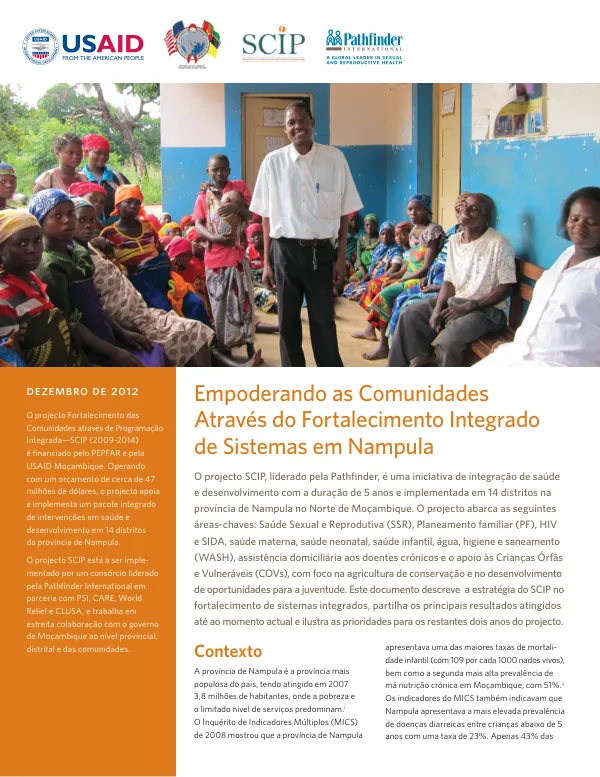
Projecto SCIP: Fortalecimento das Comunidades através de Programação Integrada
The agricultural development initiative in Mozambique, known as Projecto SCIP: Fortalecimento das Comunidades através de Programação Integrada, aims to strengthen communities through integrated programming.
2012 · 4 pages
Sign in to readA free account is required to download.
Abstract
The project is implemented in 14 districts of the Nampula Province, with a focus on agricultural development, water and sanitation, health, and social action. The SCIP project is implemented by a consortium of organizations, including Pathfinder, Clusa, PSI, and CARE, in collaboration with the SANA/MYAP program. The project's approach is based on capacity building for local government actors, such as the SDSMAS and US, as well as other stakeholders in the value chain. The project also focuses on community-based approaches, aiming to empower communities through the strengthening of inclusive Community Leader Committees (CLLs) and Local Councils of Localities. The SCIP project has defined three implementation packages, differentiated according to progress indicators: basic, strategic, and complementary. The basic package includes the establishment of youth agricultural clubs and training in conservation agriculture, while the strategic package focuses on developing clubs that work with Orphan and Vulnerable Children (OVC). The complementary package aims to strengthen the capacity of local actors, including farmers, women, and youth, to improve their livelihoods and access to markets. The SANA program, implemented by the MYAP consortium, aims to reduce food insecurity among households in the Nampula Province. The program has three strategic objectives: increasing the adoption of market-oriented products and services, improving the capacity of communities to mitigate, prepare, and respond to disasters, and increasing the adoption of fundamental health and nutritional practices. The SCIP and SANA programs have the potential to reach a total of 97,000 beneficiaries. To maximize complementarity, the two teams have established a coordination structure, including a district coordinator and an assistant for each district. The coordination involves the sharing of technical expertise, participation in training sessions, joint meetings with other partners, and the exchange of information and experiences. The SCIP project has established a structure for the development of youth agricultural clubs, including a coordinator, supervisors, and extension assistants. The project also aims to create a network of partners in the agricultural sector, including SDAEs, to promote the development of rural areas through associativism. The project's approach to agricultural development is based on the creation of youth agricultural clubs, which will serve as a source of future members for producer associations. The project also aims to strengthen the capacity of local actors, including farmers, women, and youth, to improve their livelihoods and access to markets. The project's coordination with the SANA program aims to maximize the impact of both initiatives and to promote the development of rural areas in the Nampula Province.