USAID DEC
Protecting Activists from Cyber Attacks in MENA
Digital security training programs have been implemented in the Middle East and North Africa (MENA) region to protect civil society activists and vulnerable groups from cyber security threats.
2019 · 1 pages
Sign in to readA free account is required to download.
Abstract
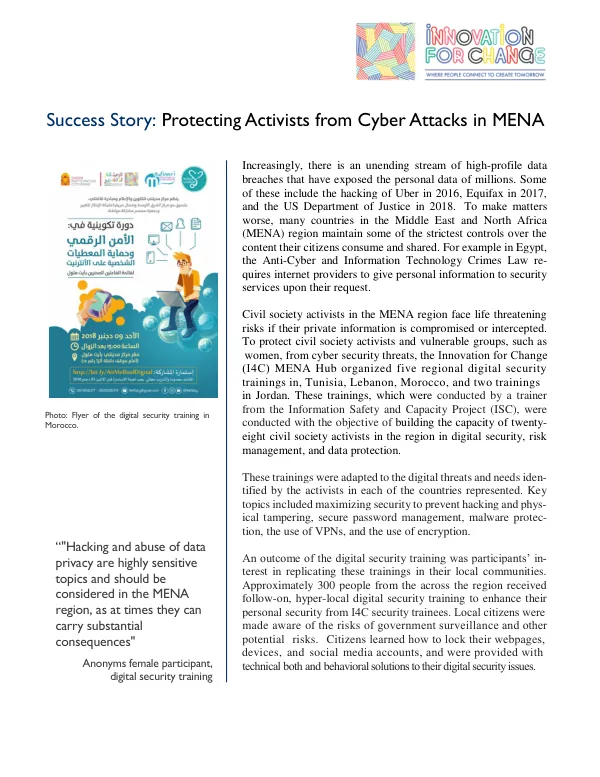
The Innovation for Change (I4C) MENA Hub organized five regional digital security trainings in Tunisia, Lebanon, Morocco, and two trainings in Jordan. These trainings aimed to build the capacity of civil society activists in digital security, risk management, and data protection. The trainings were conducted by a trainer from the Information Safety and Capacity Project (ISC) and were adapted to the digital threats and needs identified by the activists in each country. Key topics covered included maximizing security to prevent hacking and physical tampering, secure password management, malware protection, the use of virtual private networks (VPNs), and the use of encryption. The trainings were designed to equip participants with the knowledge and skills necessary to protect themselves from cyber security threats. The digital security training programs were highly successful, with participants showing a strong interest in replicating the trainings in their local communities. As a result, approximately 300 people from across the region received follow-on, hyper-local digital security training to enhance their personal security from I4C security trainees. The trainings not only provided technical solutions to digital security issues but also raised awareness about the risks of government surveillance and other potential threats. The MENA region is characterized by strict controls over the content consumed and shared by citizens, with some countries requiring internet providers to give personal information to security services upon request. This has created a high-risk environment for civil society activists, who face life-threatening consequences if their private information is compromised or intercepted. The digital security training programs have played a critical role in mitigating these risks and empowering activists to protect themselves from cyber security threats. The success of the digital security training programs has also led to the development of a network of digital security trainers and experts in the region. These trainers are now equipped to provide hyper-local digital security training to citizens, enhancing their personal security and promoting a culture of digital security awareness in the MENA region. The programs have demonstrated the importance of digital security training in protecting vulnerable groups and promoting human rights in the region.
Related documents