USAID DEC
Provide Support to District Assemblies for planning Anti- CLaT Intervention in MTDPs
Sign inCOASTAL RESOURCES CENTER
Provide Support to District Assemblies for planning Anti- CLaT Intervention in MTDPs
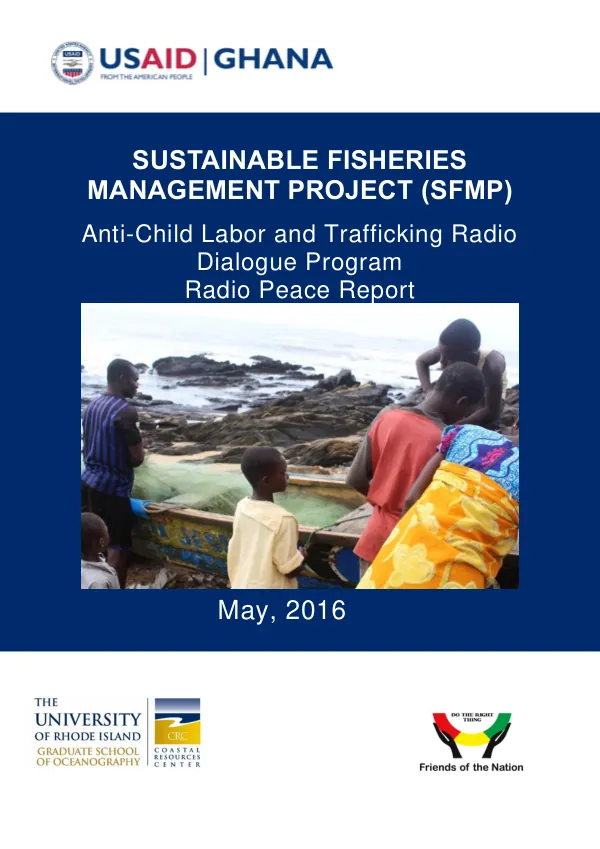
The Sustainable Fisheries Management Project (SFMP) in Ghana aims to address the issue of Child Labor and Trafficking (CLaT) in the country's coastal fishing areas.
2019 · 43 pages
Sign in to readA free account is required to download.
Abstract
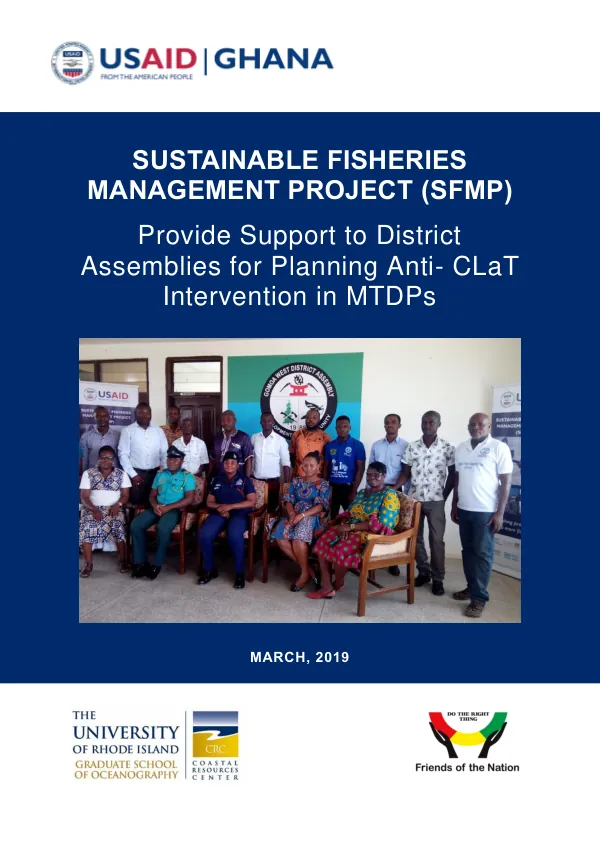
The project is a five-year initiative funded by the United States Agency for International Development (USAID) and implemented by the University of Rhode Island's Coastal Resources Center in partnership with Friends of the Nation. The project's primary objective is to reduce the incidence of CLaT through Behaviour Change Communication (BCC) and other interventions. The project's approach involves providing support to District Assemblies for planning anti-CLaT interventions in their Medium-Term Development Plans (MTDPs). In March 2019, Friends of the Nation organized nine separate District Child Protection Committees (DCPCs) meetings to facilitate this process. The meetings brought together various stakeholders, including the Fisheries Commission, Department of Social Welfare, Ghana Police Service, Ghana Immigration Service, Ghana Education Service, Information Services Department, National Commission for Civic Education, Traditional Leaders, and Civil Society Organizations. The meetings aimed to synchronize the action plans and community outreach programs of the District Assemblies and DCPCs to increase efficiency, reduce duplication, and pool resources together to maximize efforts and results. The collective efforts of all stakeholders are crucial in maintaining law and order, promoting socio-economic well-being, and ensuring the sustainable management of fisheries resources. One of the major challenges in Ghana's fisheries sector is weak governance, which has contributed to CLaT in the coastal fishing areas of the Central Region. Many households are desperately poor and unable to provide food and other basic needs for themselves, making them vulnerable to child traffickers who promise them relief from their precarious situation but end up exploiting them in illegal fishing ventures. The project's anti-CLaT component aims to address this issue by promoting voluntary compliance among fishers and other stakeholders. The project's approach involves Behaviour Change Communication (BCC) and other interventions to reduce the incidence of CLaT and promote sustainable fisheries resource management. The project's implementation involves several key stakeholders, including the District Assemblies, DCPCs, Fisheries Commission, Department of Social Welfare, Ghana Police Service, Ghana Immigration Service, Ghana Education Service, Information Services Department, National Commission for Civic Education, Traditional Leaders, and Civil Society Organizations. The project's success depends on the collective efforts of these stakeholders to promote voluntary compliance, reduce CLaT, and ensure the sustainable management of fisheries resources. The project's geographic focus is on the coastal fishing areas of the Central Region, where CLaT is a significant issue. The project's timeframes are not specified, but it is a five-year initiative that aims to contribute to the reduction of CLaT in Ghana's fisheries sector. The project's recommendations and conclusions are not explicitly stated in the provided text, but the project's approach and objectives suggest that it aims to promote sustainable fisheries resource management, reduce CLaT, and promote voluntary compliance among fishers and other stakeholders.
Related documents