USAID/ARD, INC.
Annual Performance Report, FY2019
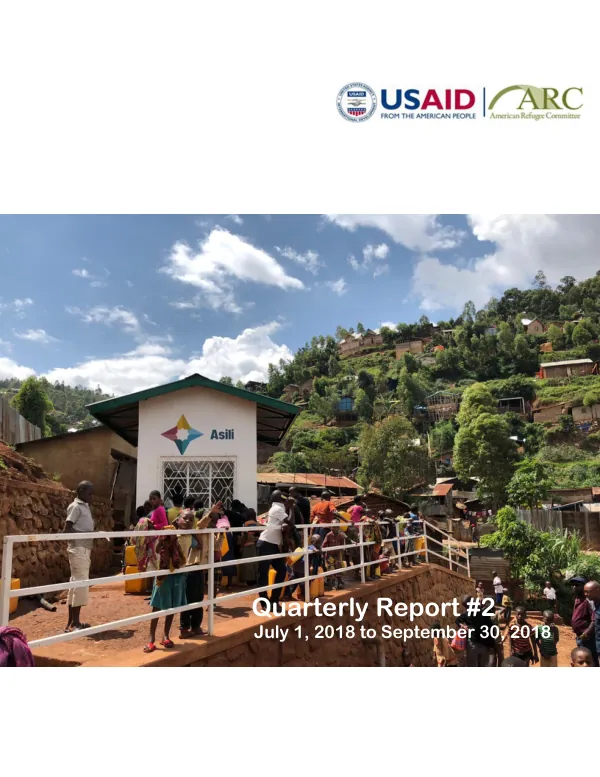
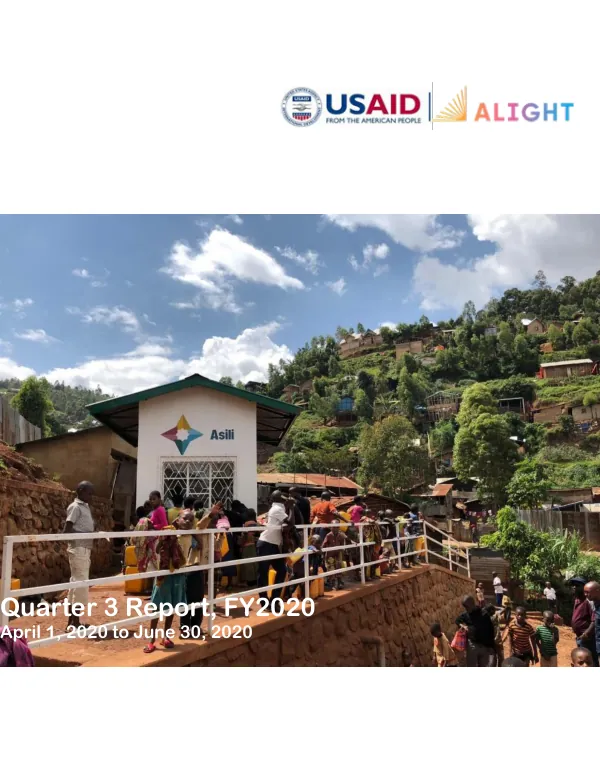
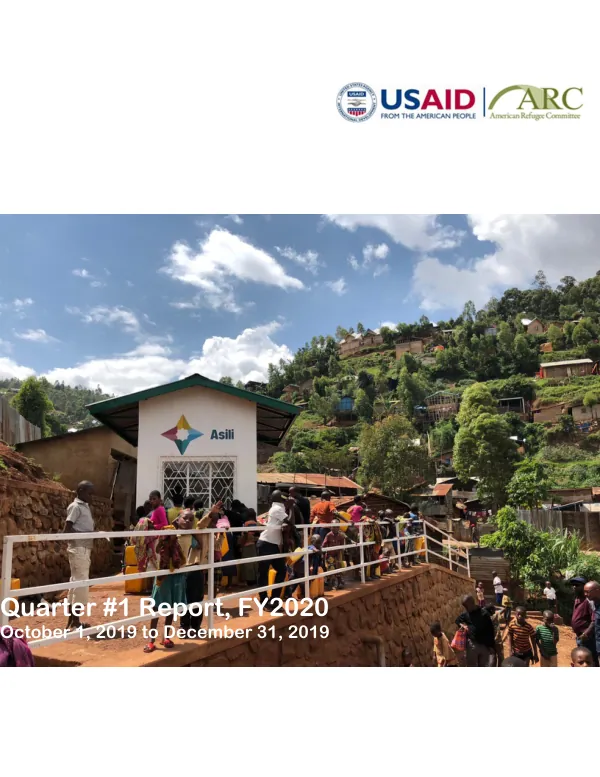
Asili 2.0 is a co-creation project between USAID, private sector partners, communities of eastern Congo, and the American Refugee Committee (ARC).
2019 · 21 pages
Sign in to readA free account is required to download.
Abstract
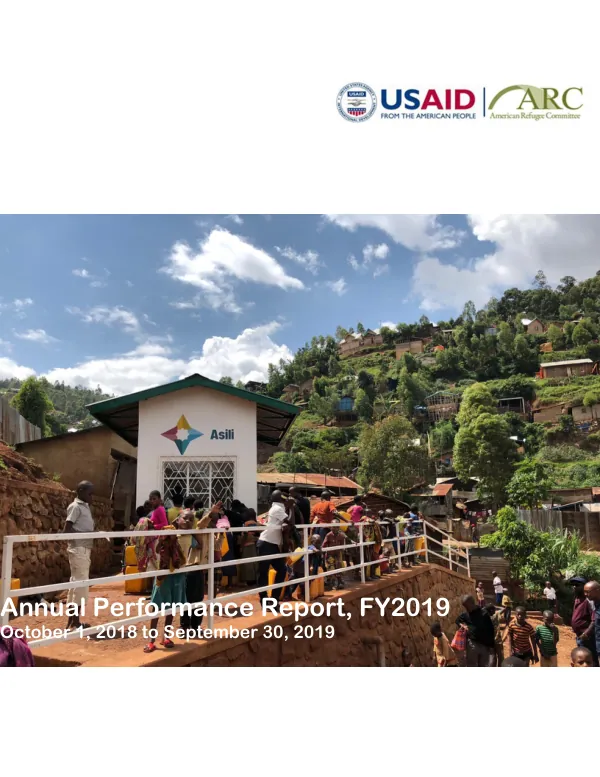
The project aims to create empowered communities through the provisioning of meaningful, high-quality services. Asili was designed to address the needs of communities in eastern Congo, where state institutions are unable to provide adequate support. The project's goal is to scale a sustainable social enterprise platform to create healthier, more resilient, economically-empowered, and functional communities in South Kivu. To achieve this, Asili is developing viable business models for the delivery of bundled social services through a platform at scale. The project's core business lines are healthcare and clean water sales, which are expected to generate $7,700/month of profit per zone. Asili is a member-driven hub of complementary social businesses located within zones of approximately 25,000 people. The initial businesses – agriculture, healthcare, and clean water – were selected due to their potential to immediately contribute to healthier, more resilient, and economically empowered communities. Asili will continue to expand and grow using the frameworks and tools developed within the initial pilot phase. During FY2019, Asili completed the water business lines in Zone 1 (Ciriri) and Zone 2 (Camp TV), both covering customers in Bukavu urban and peri-urban areas. Each zone has 7 water points, all supplied by a reservoir of 300 m3. An energy situation analysis was also conducted with the community, and Asili is preparing to further research the energy use and energy spending practices in several Asili zones to establish the entry threshold for solar energy prototypes. Asili's health team developed a new marketing plan for health services, rooted in marketing to the bottom of the pyramid. The plan aims to increase customer trust to use Asili's health services. The team also conducted testing of a "very minimum viable product" (VMVP) of the new electronic medical record (EMR) system co-designed by technology partner, VecnaCares. The acquisition of the SOS health facility was a major challenge for Asili during FY2019. Despite several site visits and meetings between Asili and SOS, no agreement was reached. Asili is waiting for a response from SOS, which has been delayed. The acquisition of the SOS facility was planned to implement a clinic-in-a-backpack approach in Zone 1 to allow Asili to reach more patients at the household level. Asili's dependence on the SOS administrative chain has been a significant challenge this year. The 2020 implementation plan no longer considers the acquisition of SOS installations as an obligation, but still an option for both healthcare and sanitation services. Asili is exploring alternative options to achieve its targets. The project's implementation challenges include the acquisition of the SOS health facility, the development of a new marketing plan for health services, and the testing of the EMR system. Despite these challenges, Asili remains committed to its goal of creating empowered communities through the provisioning of meaningful, high-quality services.