PACT
Quarterly Conflict Assessment for Sajhedari Bikaas Project in Nepal
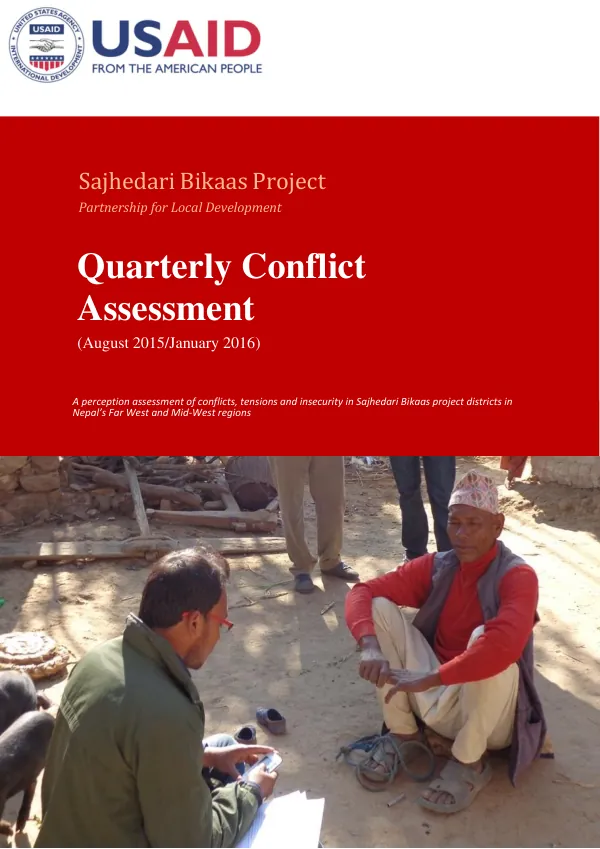
The Sajhedari Bikaas Project, a partnership for local development, conducted a quarterly conflict assessment in six districts of Nepal's Far West and Mid-West regions between August 2015 and January 2016.
2016 · 59 pages
Sign in to readA free account is required to download.
Abstract
The assessment aimed to understand the conflict environment and identify changes in the context to inform the project's implementation. The project, funded by the United States Agency for International Development (USAID), aimed to improve the ability of targeted communities to direct local development. It focused on establishing an enabling environment for community development, improving access to resources, and increasing the effectiveness of government units. The conflict assessment was conducted through 117 key informant interviews and 24 focus group discussions with representatives from various sectors, including administration, security, justice, civil society, business, and local communities. The data collection took place after the promulgation of Nepal's Constitution on September 20, 2015, and was not affected by the protests and blockade imposed along the Indo-Nepal border. The assessment found that identity-based tensions increased in all six districts, particularly after the promulgation of the Constitution. Political tensions related to ethnic identity issues sparked violence, resulting in the deaths of 13 people in Kailali, Surkhet, and Bardiya. Respondents expressed apprehension about the effective implementation of the Constitution and the extent of political will to coordinate its implementation. The assessment also highlighted concerns about Sexual and Gender-Based Violence (SGBV), including rape, sexual harassment, domestic violence, prostitution, and suicide. Reported rates of these forms of violence increased over the assessment period, particularly in Surkhet and Bardiya. The findings suggest that the drivers of conflict, particularly those around identity, remain unaddressed. The assessment recommends that the Sajhedari Bikaas project and USAID consider key issues and priorities in the upcoming project phases, including addressing identity-based tensions, improving the implementation of the Constitution, and reducing SGBV. The assessment was conducted by Saferworld under contract no. AID-367-C-13-00003, with the generous support of the American people through USAID. The contents of the assessment are the responsibility of Saferworld and do not necessarily reflect the views of USAID or the United States Government. The assessment provides a comprehensive understanding of the conflict environment in the six districts, highlighting the need for continued support to address the drivers of conflict and promote inclusive development. The findings and recommendations of the assessment can inform the implementation of the Sajhedari Bikaas project and other development initiatives in the region. The assessment was conducted in six districts: Kailali, Kanchanpur, Banke, Bardiya, Dang, and Surkhet. The district-specific chapters provide detailed information on key issues and developments, focusing on the past year with specific emphasis from August 2015 to January 2016. The assessment concludes with a list of acronyms, methodology, and guiding questions used in the assessment. The report provides a valuable resource for policymakers, practitioners, and researchers interested in understanding the conflict environment in Nepal's Far West and Mid-West regions.