FAMILY HEALTH INTERNATIONAL
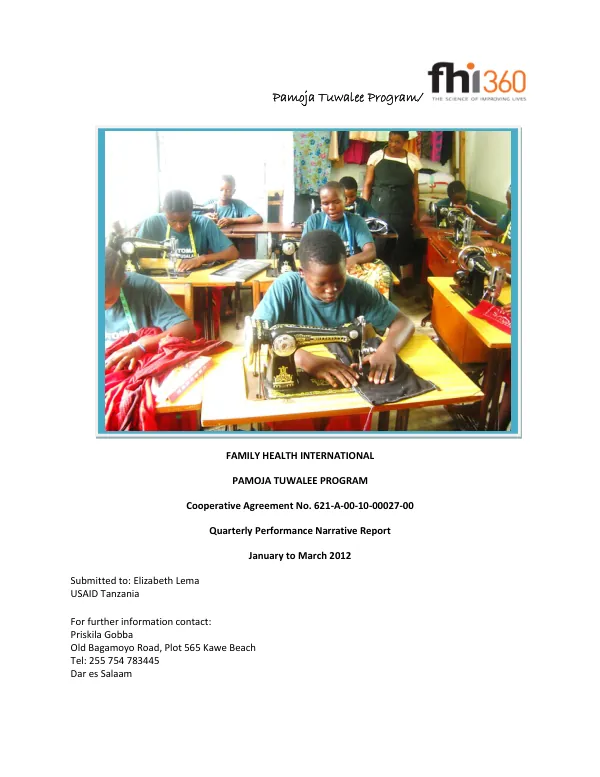
Quarterly Performance Narrative Report. Pamoja Tuwalee
The Pamoja Tuwalee Program is a five-year initiative implemented by four partners in five zones of Tanzania, including Coast, Central, Lake, Northern, and Southern.
2012 · 62 pages
Sign in to readA free account is required to download.
Abstract
The program is funded by the United States Agency for International Development (USAID) and aims to improve the quality of life and well-being of Most Vulnerable Children (MVC) and their households by empowering households and communities to provide comprehensive and sustainable care, support, and protection. The program is being implemented in 25 districts, with a focus on building the capacity of Local Government Authorities (LGAs) at the district and community level to support MVC. During the reporting period, the program participated in the development of district plans and budgets, resulting in a tentative increase in allocation of activities and budgets for MVC support within their respective districts. The program has also strengthened the Most Vulnerable Children Committees (MVCCs) to lead community support for MVC, with a 13% increase in the number of volunteers who have become MVCC members during the quarter. As a result, 65% of the 575 community volunteers within the program are also MVCC members. The program has also established village MVC funds, with 75 villages/streets establishing funds in all program areas. Support to MVC and their households was provided through 10 sub-grantees and in collaboration with other local partners. The program reached 21,127 MVC (10,688M, 10,439F) in six months, which is 49% of this year's target. The supports provided include education, psychosocial support, referral for nutritional support, child protection, and healthcare. The program also established 59 Saving and Internal Lending Community (SILC) groups, which have supported MVC households to improve their economic well-being through loans with low interest rates or direct support from SILC group funds. The program is being implemented in the Coast zone, which includes regions of Dar es Salaam, Morogoro, and Coast in mainland Tanzania, and Unguja and Pemba islands in Zanzibar. The program covers a total of 25 districts, with a projected population of 7,759,310 in 2011. The estimated proportion of children (0-18 years) is 51% of the general population, which equates to an estimate of 3,957,248 children in the Coast zone. The program inherited approximately 38,282 MVC from the TUNAJALI OVC program in 162 wards of Morogoro and Coast regions and 182 Shehias in Zanzibar. However, following a verification exercise, many children had dropped out due to different reasons, bringing the actual current number of MVC supported in the whole program area to 23,477 (12,021M, 11,456F). The program target is to reach 43,283 MVC this year, and selection of new MVC to be served by the program will be done in the next quarter to reach the set target. The program has made significant progress in reaching MVC and their households, with a 23% increase in the number of MVC reached with one core service compared to the last quarter. The program has also established a strong network of partners and stakeholders, including the MVC Implementing Partners Group (IPG) at national and district levels.