ADRA
Quarterly Performance Report: FY2016-Q2 January- March- FFP-A-11-00006
The Jenga Jamaa II program is implemented in South Kivu Province, specifically in the territories of Fizi, Uvira, and Kalehe.
2016 · 28 pages
Sign in to readA free account is required to download.
Abstract
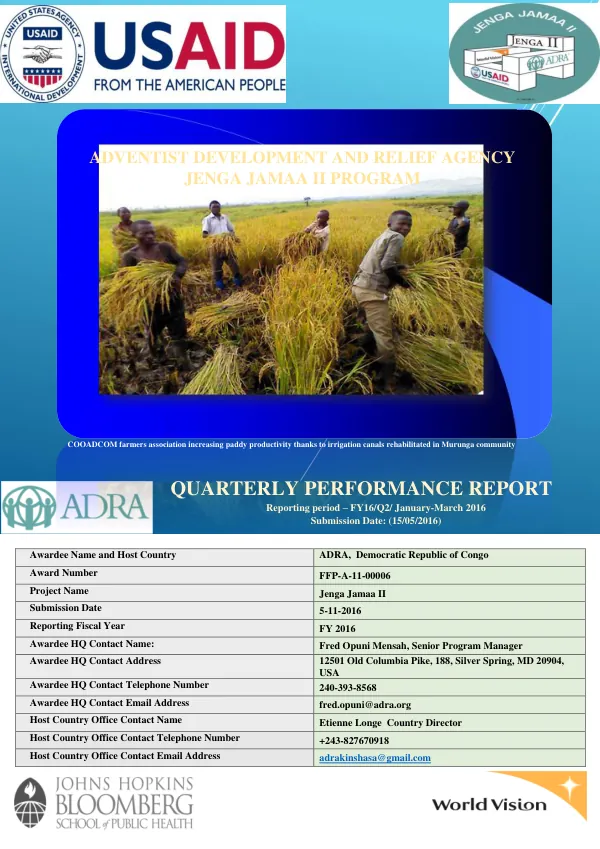
The program's geographic focus is on these three territories, where it aims to sustainably reduce food insecurity among vulnerable households. The program's goal is to increase agricultural productivity and diversified production of smallholder farmers, enhance commercialization of agricultural products, and improve health and nutritional status of children under 5. The program's strategic objectives are to increase farming households' living standards, improve health and nutritional status of children under 5, increase women's socio-economic empowerment, and strengthen community resilience to food security shocks. The program's intermediate results include increased agricultural productivity, enhanced commercialization of agricultural products, improved maternal health status, improved infant and young child feeding practices, improved management of childhood illnesses, increased women's control over household resources, reduced gender-based violence, and increased participation of women in community leadership. The program's target beneficiaries include farmers participating in Food for Work and Farmer Business Association, Leader Mothers and Mother of Children under 5, and Women Empowerment Groups. The program is led by ADRA, which ensures overall coordination and management of the consortium and implements activities in the two districts of Uvira and Fizi. World Vision implements the program in the district of Kalehe. The security context in the project area is relatively stable, with few security concerns. However, the project continuously monitors the security situation and has noted incidents of armed group activism in the territories of Fizi and Uvira. In Fizi, armed groups have been tracked by the FARDC, and direct attacks on NGOs have been recorded. In Uvira, armed group activism has resurfaced, affecting the Kalungwe and Luberizi localities and the city of Sange. The implementation context is characterized by good crop yields in the Lemera health zone due to average rainfall. However, insufficient water for fields located outside the irrigation canal zones has affected crops such as rice, lemons, and orange fruits. In Kalehe, the road between Goma and Minova has improved, but the road system south of Minova towards Kalehe continues to deteriorate due to heavy rains. The program's quarterly performance report for FY2016-Q2 highlights the achievements and challenges faced during the reporting period. The report notes that the COOADCOM farmers association has increased paddy productivity thanks to irrigation canals rehabilitated in Murunga community. The report also highlights the challenges faced during the quarter, including security concerns and limited access to water for some farms. The plans for the next quarter include continuing to implement the program's activities and addressing the challenges faced during the reporting period.
Related documents