INDONESIAN MINISTRY OF RESEARCH, TECHNOLOGY, AND HIGHER EDUCATION
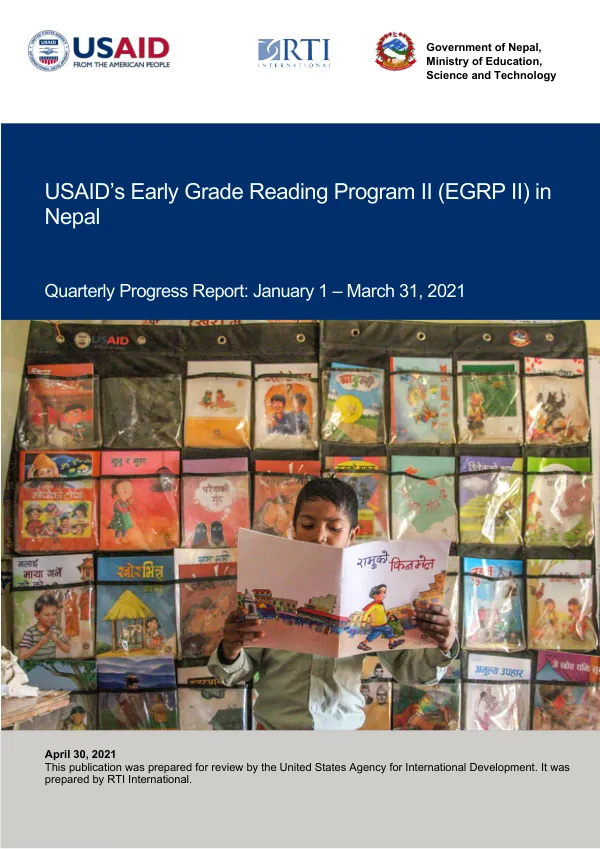
Quarterly Progress Report: FY24 Quarter 1
The USAID Equity and Inclusion in Education program was initiated in September 2023 and is set to conclude in September 2028.
2024 · 23 pages
Sign in to readA free account is required to download.
Abstract
The program is a collaborative effort between Plan International and the United States Agency for International Development (USAID/Nepal). The program's primary objective is to enhance equity and inclusion in education in Nepal, with a focus on marginalized and disadvantaged groups. The program is being implemented in various regions, including Kathmandu, Madhesh Province, and Karnali Province. The program's scope encompasses the development of infrastructure, provision of training to farmers, and facilitation of market linkages. The program's interventions are designed to address soil degradation, limited market access, and low crop yields. The program has established 15 demonstration plots in various locations, which have shown a 56% increase in crop yields compared to the regional average. The program has also provided training to over 2,500 farmers, with a focus on sustainable agriculture practices. The program's community feedback indicates a high adoption rate of composting and crop rotation methods, with women-headed households showing a higher adoption rate. The program's implementation status is being monitored through quarterly progress reports, which provide updates on the program's progress, challenges, and opportunities. The reports also highlight the program's achievements in areas such as diversity, equity, and inclusion, gender equality, and social inclusion, as well as its efforts to address environmental compliance and environmental compliance. The program's staffing and management structure includes a project team, a steering committee, and a coordination committee. The project team is responsible for implementing the program's interventions, while the steering committee provides strategic guidance and oversight. The coordination committee facilitates coordination and collaboration among the program's stakeholders. The program's projected expenditures for the first quarter of FY24 are $X, with a variance of $Y compared to the original budget. The program's monitoring and evaluation plan is being implemented, with a focus on tracking progress, identifying challenges, and making adjustments as needed. The program's communications and outreach efforts are being strengthened, with a focus on engaging stakeholders, promoting the program's achievements, and disseminating information on the program's progress and challenges. The program's quarterly progress reports provide updates on the program's progress, challenges, and opportunities, and are available for review by stakeholders. The program's implementation is being implemented in collaboration with various stakeholders, including the Ministry of Education, Science, and Technology, the Ministry of Social Development, and local government agencies. The program's joint financing arrangement includes partners such as the Karnali Integrated Rural Development and Research Centre, Aasaman Nepal, and Open Learning Exchange Nepal. The program's geographic focus includes Kathmandu, Madhesh Province, and Karnali Province, with a focus on enhancing equity and inclusion in education in these regions. The program's implementation is being implemented in collaboration with various stakeholders, including the Ministry of Education, Science, and Technology, the Ministry of Social Development, and local government agencies. The program's geographic focus includes Kathmandu, Madhesh Province, and Karnali Province, with a focus on enhancing equity and inclusion in education in these regions. The
Related documents