USAID DEC
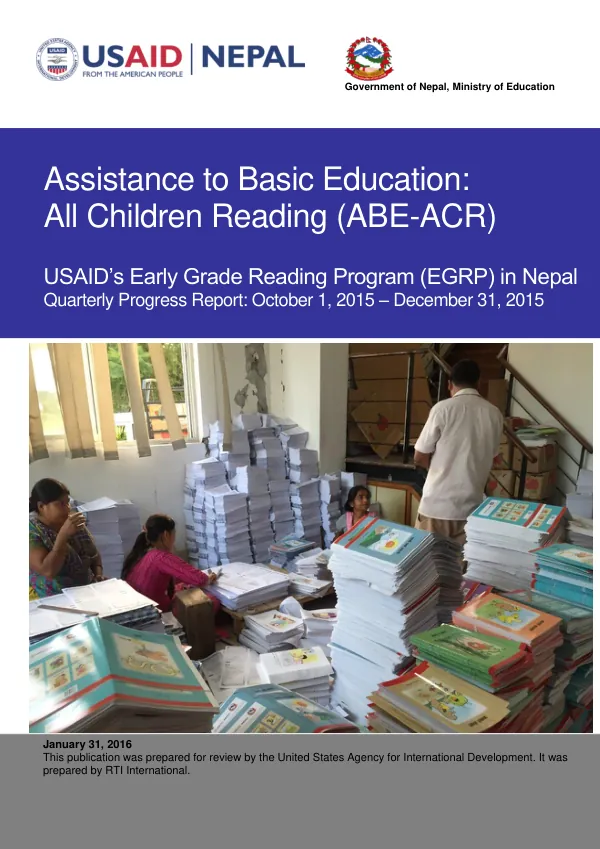
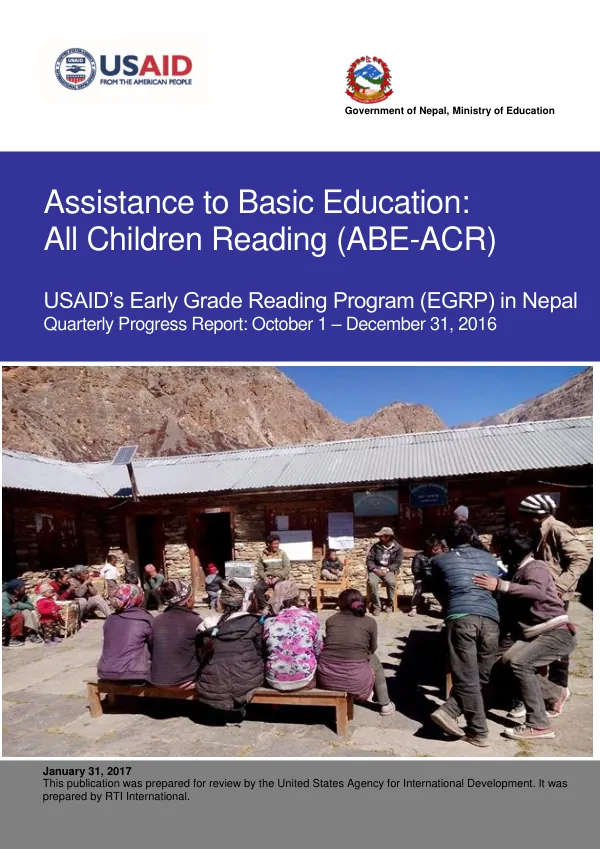
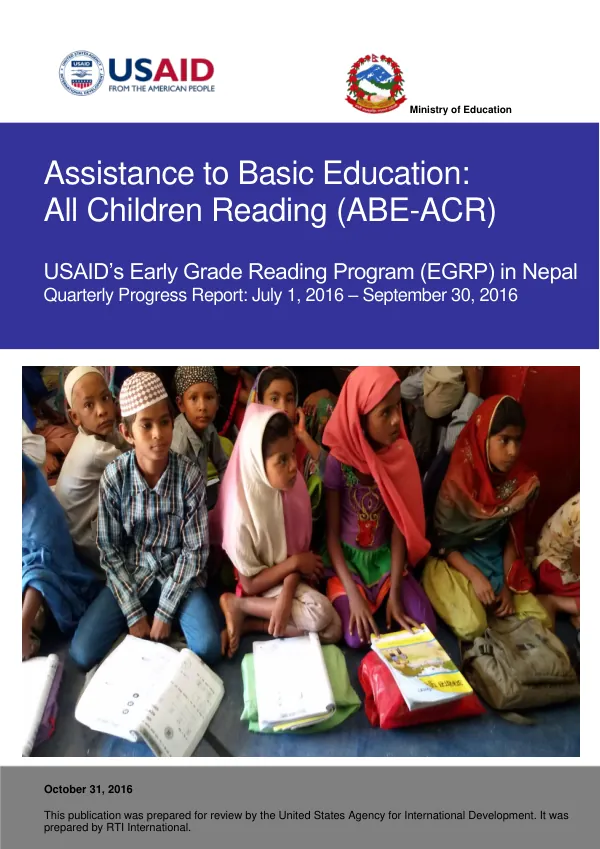
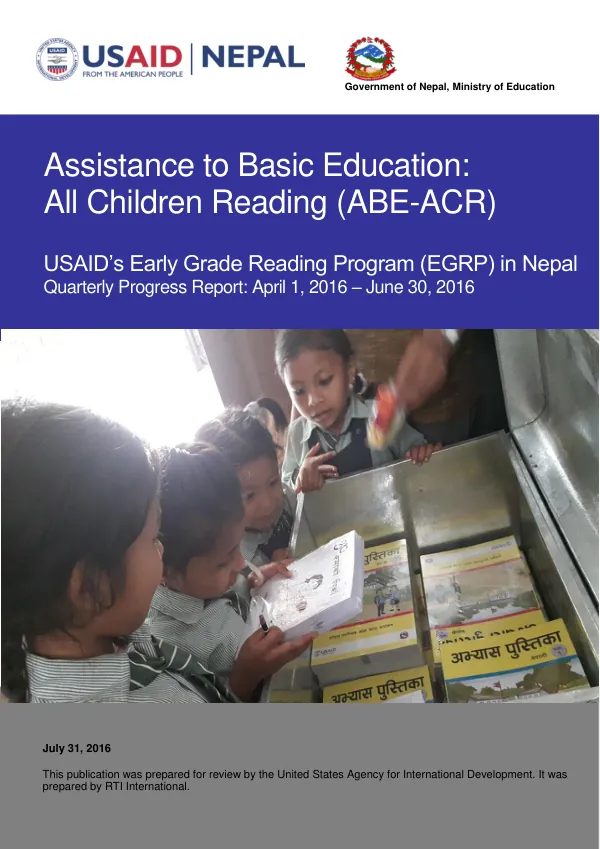
Assistance to Basic Education: All Children Reading (ABE-ACR) USAID's Early Grade Reading Program (EGRP) in Nepal Quarterly Progress Report July 1 through September 30, 2019
Sign inRTI INTERNATIONAL
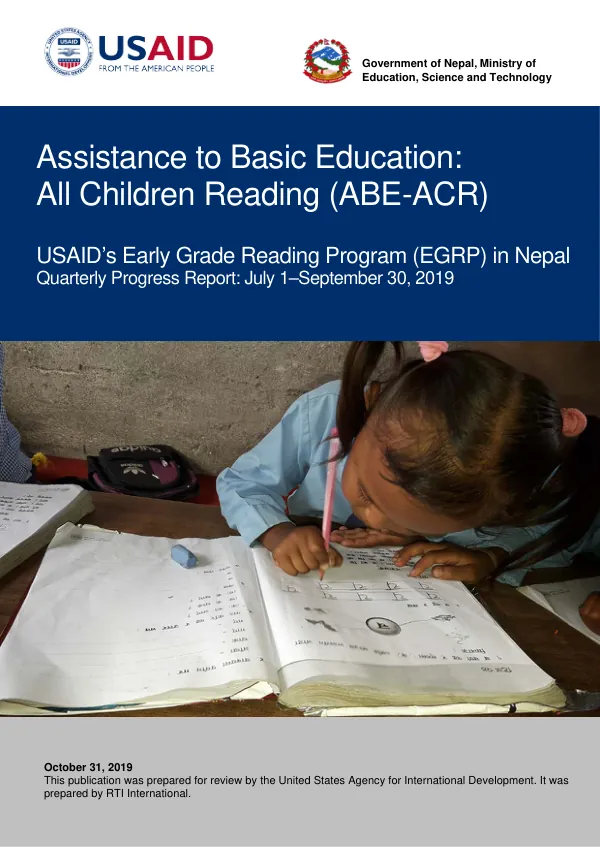
Assistance to Basic Education: All Children Reading (ABE-ACR) USAID's Early Grade Reading Program (EGRP) in Nepal Quarterly Progress Report July 1 through September 30, 2019
The Early Grade Reading Program (EGRP) in Nepal is a USAID-funded initiative aimed at improving early grade reading instruction, national and district early grade reading service delivery, and family and community support for early grade reading.
2019 · 99 pages
Sign in to readA free account is required to download.
Abstract
The program is implemented by RTI International and is supported by the Ministry of Education, Science and Technology (MOEST) and other stakeholders. The program's primary objective is to improve early grade reading outcomes in Nepal, with a focus on Grades 1-3. To achieve this goal, EGRP has established a comprehensive framework that includes training for teachers, development of reading materials, and support for school management and community engagement. The program also emphasizes the importance of monitoring and evaluation to track progress and identify areas for improvement. EGRP has made significant progress in the past quarter, with notable achievements in teacher training and development of reading materials. The program has conducted training sessions for over 1,000 teachers, with a focus on improving their instructional skills and knowledge of reading pedagogy. Additionally, EGRP has developed a range of reading materials, including textbooks, workbooks, and storybooks, which are being used in schools across the country. The program has also made progress in improving national and district early grade reading service delivery. EGRP has worked closely with the MOEST and other stakeholders to develop a comprehensive plan for improving early grade reading outcomes, which includes the establishment of a national early grade reading program and the development of a district-level early grade reading plan. The program has also supported the development of a monitoring and evaluation framework to track progress and identify areas for improvement. In terms of family and community support for early grade reading, EGRP has made significant progress in engaging with parents and communities to promote reading and literacy. The program has conducted a range of activities, including parent-teacher meetings, community events, and literacy campaigns, to raise awareness about the importance of reading and literacy. EGRP has also worked with local organizations to develop a range of reading materials and resources for families and communities. The program has also made progress in addressing constraints and opportunities, including the development of a comprehensive plan to address the needs of children with disabilities and the establishment of a partnership with the MOEST to support the development of a national early grade reading program. EGRP has also identified opportunities for collaboration with other stakeholders, including the Ministry of Social Development and local organizations, to promote reading and literacy. In terms of implementation progress, EGRP has made significant progress in the past quarter, with notable achievements in teacher training, development of reading materials, and support for school management and community engagement. The program has also made progress in improving national and district early grade reading service delivery and engaging with families and communities to promote reading and literacy. The program's management and administrative structure is led by a Chief of Party, who is responsible for overseeing the implementation of the program. The program also has a range of technical staff, including education specialists, monitoring and evaluation specialists, and communication specialists, who work closely with the MOEST and other stakeholders to implement the program. In terms of lessons learned, EGRP has identified a range of key lessons, including the importance of engaging with families and communities to promote reading and literacy, the need for a comprehensive framework for improving early grade reading outcomes, and the importance of monitoring and evaluation to track progress and identify areas for improvement. Overall, EGRP has made significant progress in the past quarter, with notable achievements in teacher training, development of reading materials, and support for school management and community engagement. The program continues to work closely with the MOEST and other stakeholders to promote reading and literacy in Nepal.
Related documents