USAID DEC
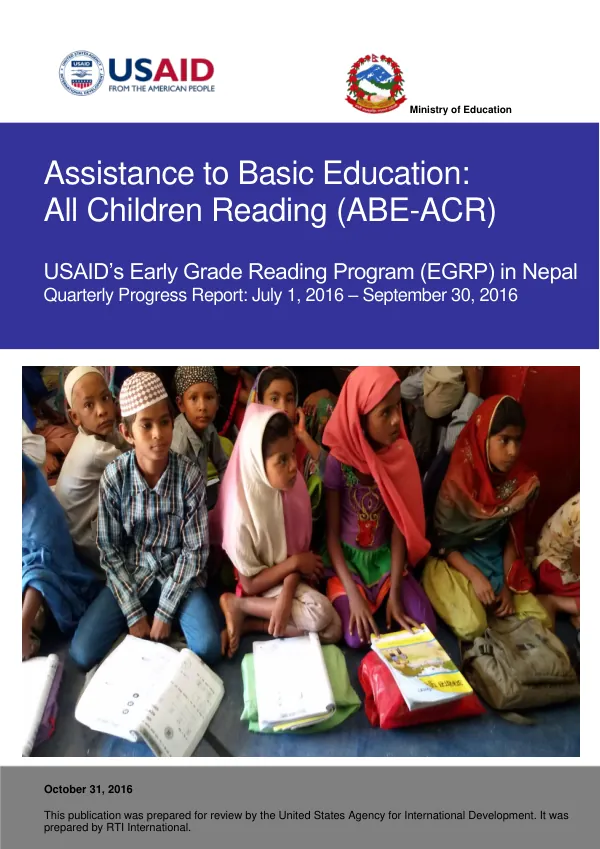
USAID's Early Grade Reading Program in Nepal, Quarterly Progress Report, July - September 2016
Sign inMINISTRY OF EDUCATION
USAID's Early Grade Reading Program in Nepal, Quarterly Progress Report, July - September 2016
The Early Grade Reading Program (EGRP) in Nepal is a USAID-funded initiative aimed at improving early grade reading instruction.
2016 · 81 pages
Sign in to readA free account is required to download.
Abstract
The program is part of the Assistance to Basic Education: All Children Reading (ABE-ACR) initiative, which seeks to address the global challenge of low reading proficiency among children in developing countries. The EGRP in Nepal began in 2015 and is implemented by RTI International in partnership with the Government of Nepal and other stakeholders. The program focuses on three key intermediate results: improved early grade reading instruction, improved national and district early grade reading service delivery, and increased family and community support for early grade reading. To achieve these results, the program has implemented various activities, including training for teachers and education officials, provision of teaching and learning materials, and community mobilization. One of the key achievements of the program is the training of over 2,500 teachers and education officials in the use of the Early Grade Reading Assessment (EGRA) tool. The EGRA tool is used to assess the reading skills of children in grades 1-3 and provides a baseline for measuring progress. The program has also provided training to over 1,000 community mobilizers, who work with local communities to promote early grade reading and provide support to families. The program has also made significant progress in improving the availability and quality of teaching and learning materials. Over 1 million copies of reading materials have been distributed to schools, and the program has established a system for monitoring and evaluating the use of these materials. In addition, the program has worked with local NGOs to establish community learning centers, which provide a safe and supportive environment for children to learn and practice reading. The program has also made progress in improving the capacity of the Government of Nepal to deliver early grade reading services. The program has provided training to education officials and has worked with the Ministry of Education to develop a national early grade reading policy. The program has also supported the development of a national early grade reading curriculum and has provided technical assistance to the Government of Nepal to improve the quality of early grade reading instruction. The program has also made significant progress in increasing family and community support for early grade reading. The program has worked with local communities to establish parent-teacher associations and has provided training to parents on how to support their children's reading development. The program has also established a system for monitoring and evaluating the impact of the program on family and community support for early grade reading. The program has also made progress in addressing the constraints and opportunities identified in the previous quarter. The program has worked to address the constraints related to the availability of teaching and learning materials and has made progress in improving the quality of these materials. The program has also worked to address the opportunities related to the use of technology to support early grade reading instruction and has established a system for monitoring and evaluating the use of technology in the program. The program has also made progress in implementing cross-cutting activities, including gender and special needs education. The program has worked to ensure that the program is inclusive and accessible to all children, regardless of their gender or ability. The program has also established a system for monitoring and evaluating the impact of the program on gender and special needs education. The program has also made progress in addressing management and administrative issues. The program has established a system for monitoring and evaluating the use of resources and has worked to ensure that the program is implemented in a transparent and accountable manner. The program has also established a system for reporting on progress and has provided regular updates to stakeholders. The program has also made progress in lessons learned and has identified areas for improvement. The program has worked to document lessons learned and has established a system for sharing these lessons with other stakeholders. The program has also identified areas for improvement and has developed a plan to address these areas in the next quarter. Overall, the EGRP in Nepal has made significant progress in improving early grade reading instruction and has established a strong foundation for continued progress in the future. The program has worked to address the constraints and opportunities identified in the previous quarter and has made progress in implementing cross-cutting activities. The program has also made progress in addressing management and administrative issues and has established a system for monitoring and evaluating progress.
Related documents