INTERNATIONAL ORGANIZATION FOR MIGRATION
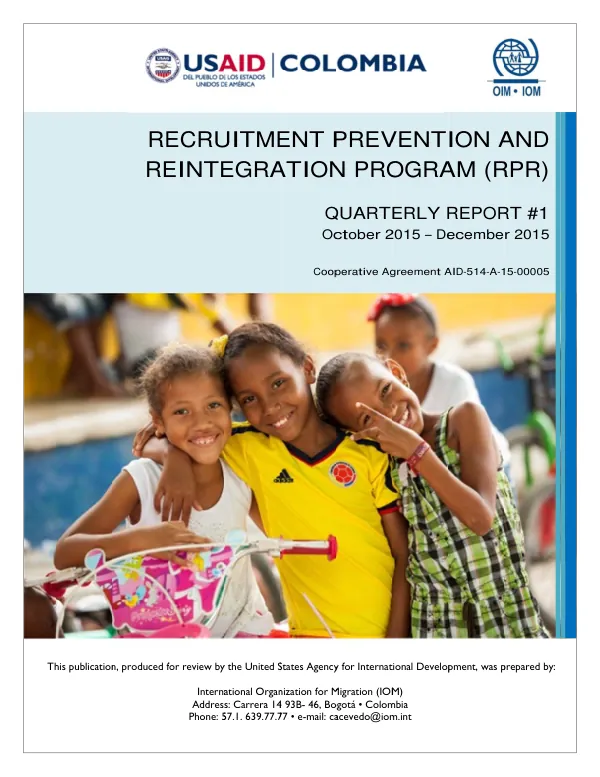
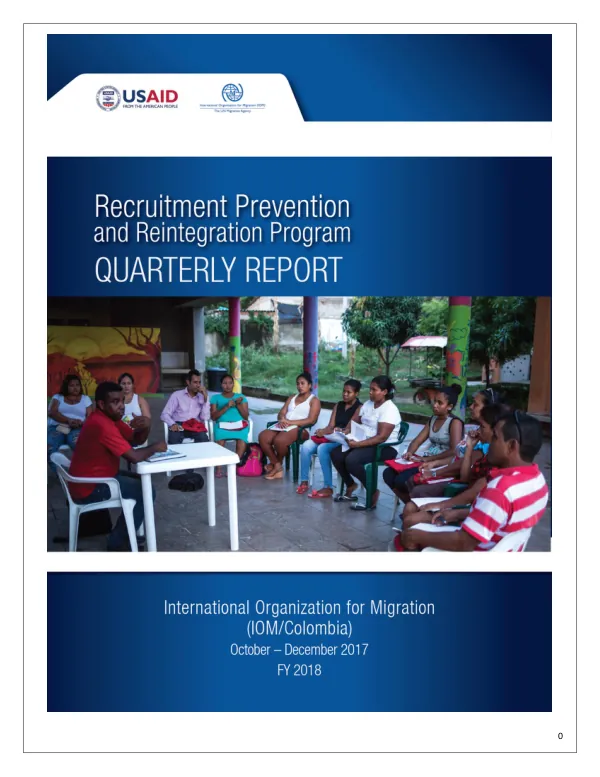
Quarterly Report #9 of RPR Program for FY2018
The Recruitment Prevention and Reintegration (RPR) Program of the International Organization for Migration (IOM) aims to support the Government of Colombia (GOC) in fostering sustainable and inclusive reintegration for ex-combatants and disengaged children, while preventing further recruitment.
2018 · 49 pages
Sign in to readA free account is required to download.
Abstract
The program's Strategic Objective is to minimize recidivism and prevent new recruitment of adolescents and youth. The RPR Program is divided into four Result Areas: Roll-out, Prevention, Reintegration, and Coordination and Communication. The Roll-out Result Area focuses on providing strategic technical assistance to support the early reintegration efforts of the GOC during the demobilization roll-out phase. This includes support to national and/or international verification initiatives. The Prevention Result Area aims to support the GOC implementation of strategies for prevention of recruitment of children and re-recruitment of adults and children in conflict-affected areas. This includes linking services of the Colombian Institute for Family Welfare (ICBF) and the Colombian Agency for Reincorporation and Normalization (ARN) to private sector initiatives in rural and urban areas. The Reintegration Result Area supports GOC efforts to advance legal processing and service delivery to ex-combatants and disengaged children in rural and urban conflict areas in a participatory, tailored, and community-focused manner. This includes providing assistance to address GOC institutional capacity constraints and priorities. The Coordination and Communication Result Area supports GOC knowledge management, information systems, and communication efforts to clarify the judicial status of ex-combatants, with special emphasis on reintegration processes. This includes facilitating inter-institutional coordination and engagement of the private sector. During the first quarter of FY2018 (October-December 2017), the RPR Program achieved several key results. The program provided technical assistance to support the early reintegration efforts of the GOC, including support to national and/or international verification initiatives. The program also supported the GOC implementation of strategies for prevention of recruitment of children and re-recruitment of adults and children in conflict-affected areas. The program's Monitoring, Evaluation, and Learning (MEL) framework was used to track progress against indicators and identify areas for improvement. The program also conducted a midterm evaluation to assess progress towards the program's Strategic Objective. The RPR Program's Performance Against Indicators showed significant progress in all four Result Areas. The program's Principal Progress by Result Area highlighted key achievements in each area, including the roll-out of reintegration services, prevention of recruitment, and coordination and communication efforts. The program's Cross-cutting themes integration highlighted progress in addressing the needs of vulnerable populations, including women, children, and indigenous communities. The program's Sustainability Plan outlined strategies for ensuring the long-term impact of the program. The RPR Program's Financial Report showed that the program was on track to meet its budget targets. The program's Conclusions and Next Steps outlined key recommendations for the next quarter, including continued support for the GOC's reintegration efforts and further development of the program's MEL framework. The annexes to the report included the Program Results Framework, examples of RPR in the News, knowledge management products and ad-hoc reports, a beneficiary Human Interest Story, and visits of USAID representatives to IOM/RPR activities.
Related documents
Documents in this collection
 2019
2019USAID DEC
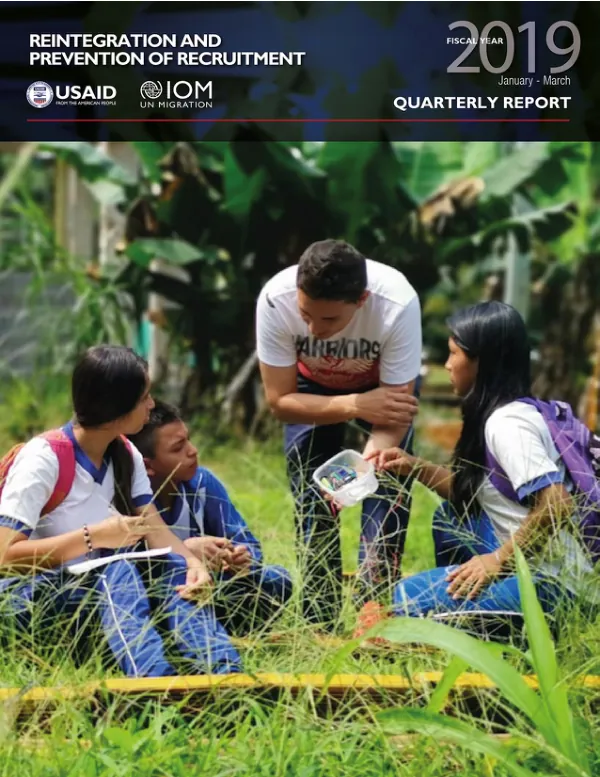
Reintegration of former combatants and prevention of recruitment are both critical components of a successful peace process, and are instrumental to advancing reconciliation among victims, former combatants, and citizens.
Open record 2018
2018USAID DEC