INTERNATIONAL FERTILIZER DEVELOPMENT CENTER
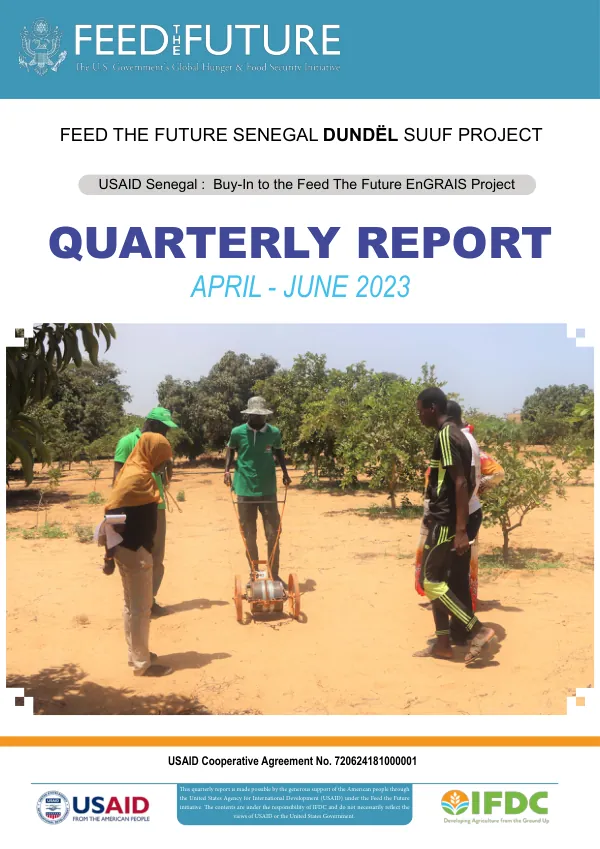
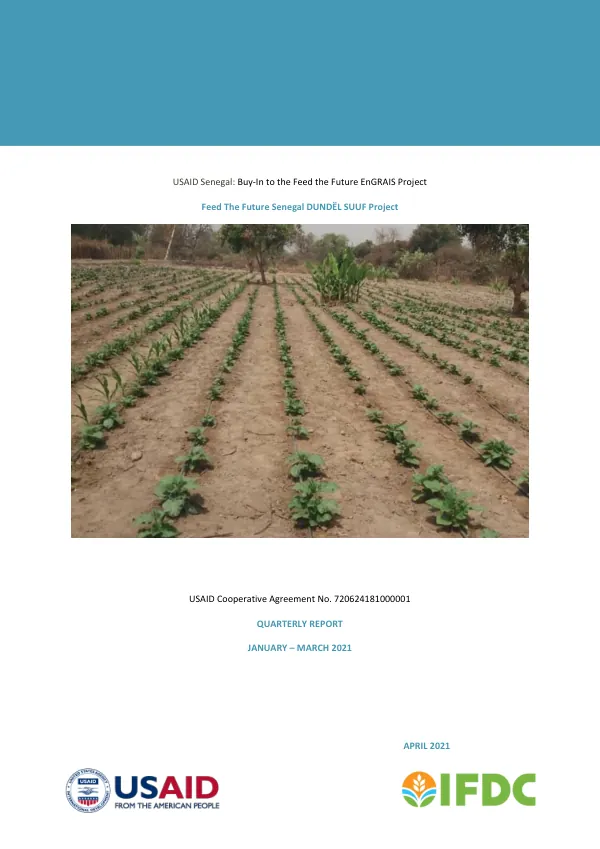
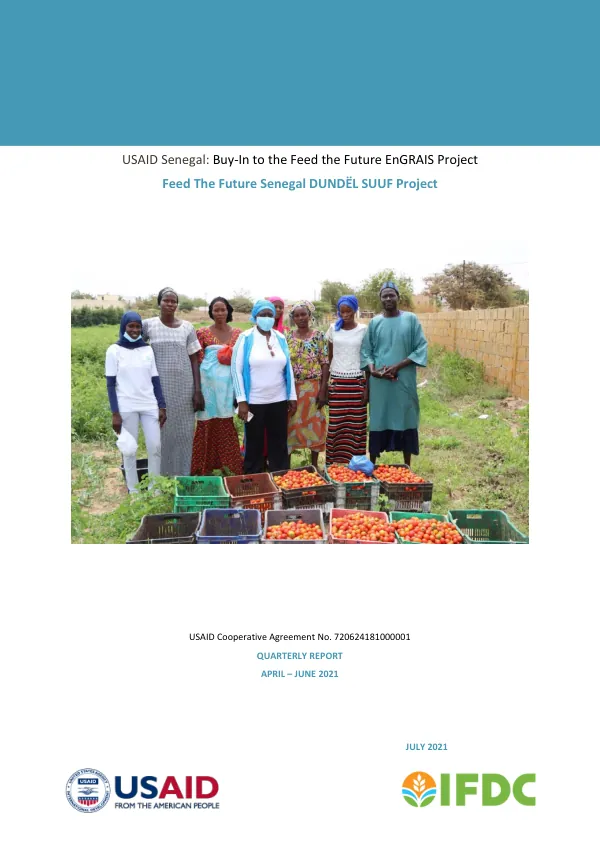
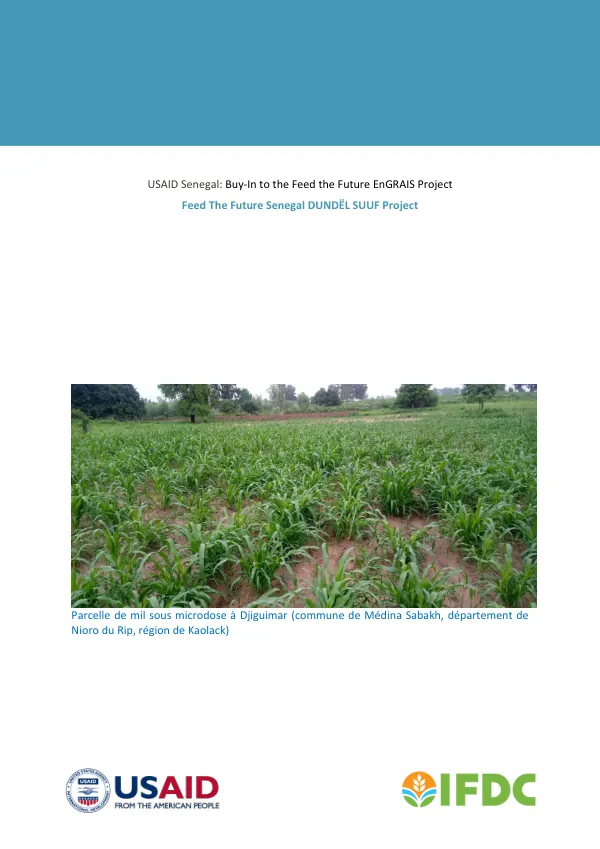
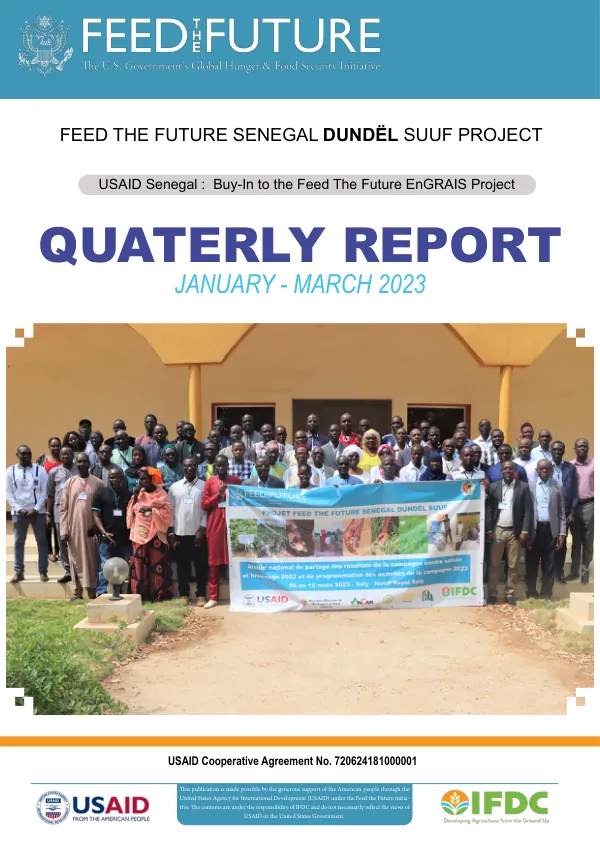
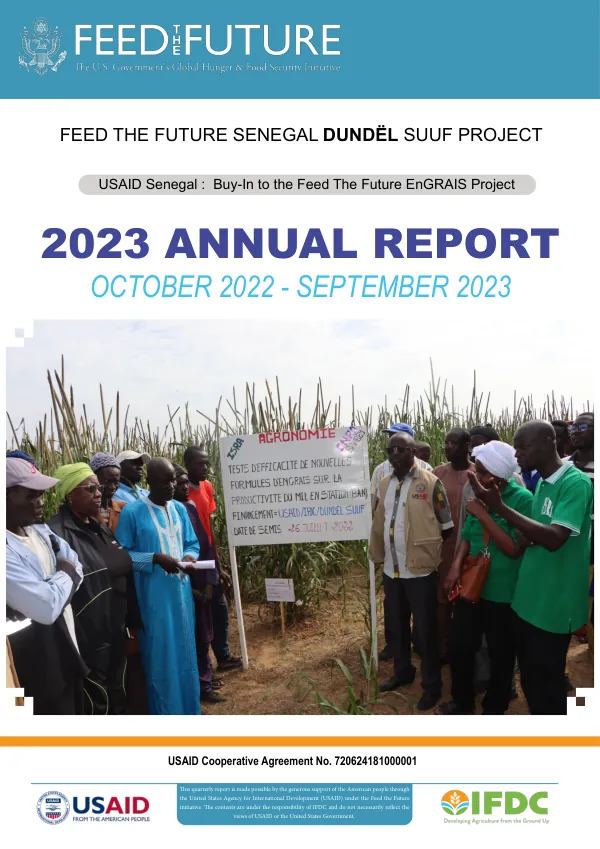
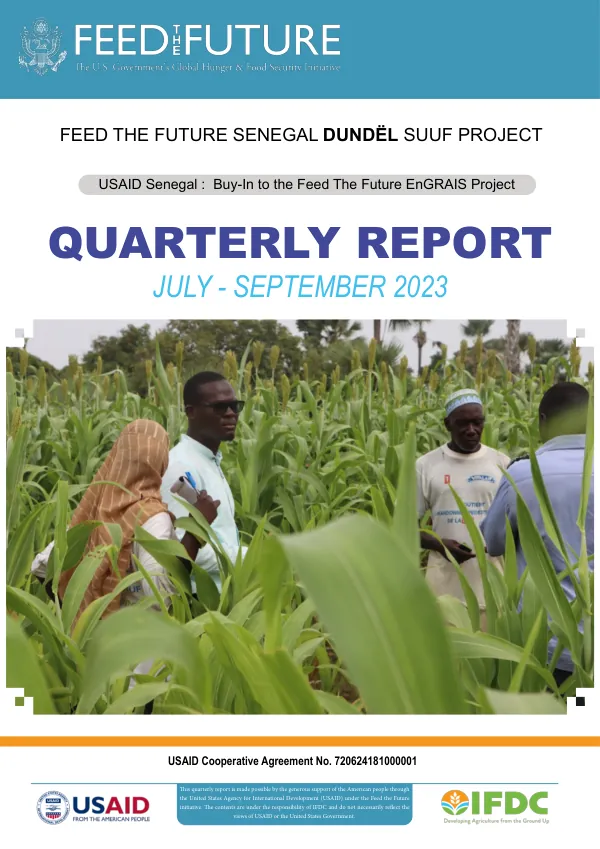
Quarterly Report: Feed the Future Senegal Dundël Suuf Project
The Feed the Future Senegal Dundël Suuf Project is a three-year initiative funded by USAID/Senegal at the request of the Government of Senegal.
2023 · 20 pages
Sign in to readA free account is required to download.
Abstract
The project is being implemented by the International Fertilizer Development Center (IFDC) as part of the larger Feed the Future "Enhancing Growth through Regional Agricultural Input Systems" (En-GR AIS) project in West Africa. The project's goal is to increase agricultural productivity to foster inclusive and sustained reduction in poverty and hunger in Senegal. The project's main objective is to improve fertilizer use efficiency and availability in Senegal, with a focus on smallholder farmers. To achieve this objective, the project is implementing three intermediate results (IRs): IR1, IR2, and IR3. IR1 aims to develop and make available improved and appropriate fertilizer formulas to farmers. IR2 focuses on disseminating and upscaling proven and environmentally sound fertilizer products and technologies. IR3 seeks to improve the fertilizer policy and regulatory environment. IR1 involves analyzing nutrient deficiencies and mapping fertilizer soil requirements to develop fertilizer formulas based on soil profiles and crop needs. The project has made significant progress in this area, with demonstration plots established in 15 communities showing yield improvements of 60% when applying the recommended practices. Community feedback indicates strong adoption of composting and crop rotation methods, while irrigation techniques face implementation barriers due to equipment costs. IR2 aims to increase adoption of fertilizer products and technologies for targeted crops and to increase private sector-driven supply and distribution of fertilizer products. The project has achieved significant results in this area, with increased adoption of fertilizer products and technologies for targeted crops. Private sector-driven supply and distribution of fertilizer products have also increased, with fertilizer price variations over the quarter showing a decrease in prices. IR3 focuses on improving the fertilizer policy and regulatory environment. The project has made progress in this area, with planned activities and level of implementation indicating a high level of achievement. The project has also implemented cross-cutting activities, including gender, youth, communication, and environmental mitigation and monitoring. These activities aim to ensure that the project's benefits are equitably distributed and that the project's environmental impact is minimized. The project has also made significant progress in management and general coordination, with a high level of achievement in planned activities and level of implementation. However, the project has faced challenges, including equipment costs and private sector-driven supply and distribution of fertilizer products. Despite these challenges, the project remains on track to achieve its objectives and contribute to the reduction of poverty and hunger in Senegal.