CHEMONICS
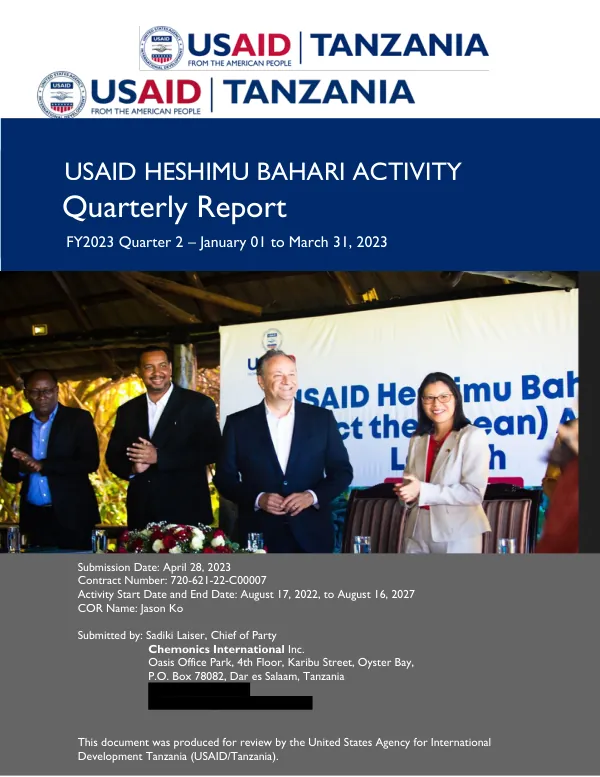
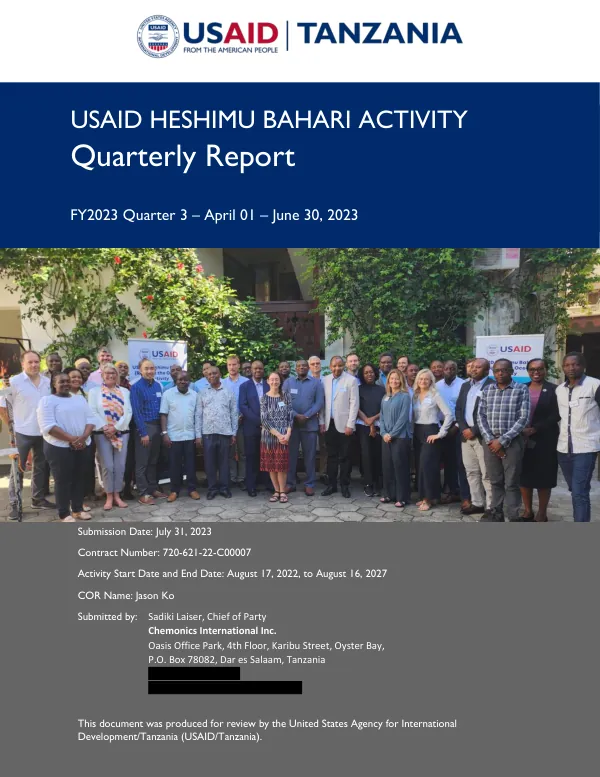
Quarterly Report: Heshimu Bahari Activity, January 1, 2023 - March 31, 2023
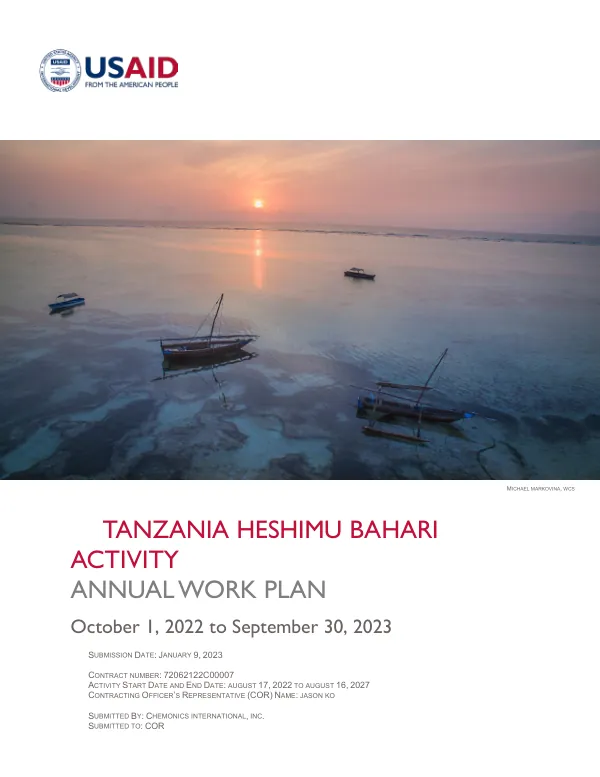
The Heshimu Bahari Activity is a USAID-funded initiative aimed at promoting marine conservation and sustainable fisheries management in Tanzania.
2023 · 35 pages
Sign in to readA free account is required to download.
Abstract
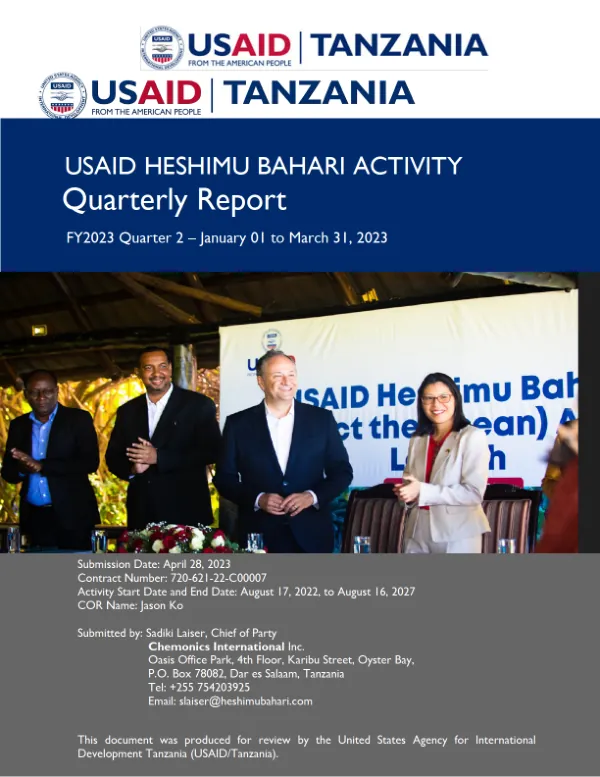
The activity began on August 17, 2022, and is set to conclude on August 16, 2027. Chemonics International Inc. serves as the prime implementing partner, with The Nature Conservancy and Wildlife Conservation Society as subcontractors. The activity focuses on four main objectives: expanding the collaborative network of resilient marine protected areas and fisheries replenishment zones, strengthening community co-management of marine protected areas and wild-caught fisheries, expanding private sector investment in marine protected areas and wild-caught fisheries, and integrating relevant science into marine protected area and fisheries management. Implementation progress has been made in the first quarter of 2023, with the activity conducting foundational activities, policy engagement, and advocacy. The activity established protocols for data collection, collation, and analysis to inform policy establishment and support decision-making. Policy engagement was conducted through forums with government entities, partners, and stakeholders to define areas of collaboration and partnership. The activity also conducted a formal launch event on March 30, 2023, at the Sea Cliff hotel in Dar es Salaam, which fostered visibility locally and globally. The event was attended by government stakeholders, including representatives from the Ministry of Blue Economy and Fisheries, Ministry for Livestock and Fisheries, and the US Embassy. Key highlights during the first quarter of 2023 include the official launch event, a workshop to co-develop a protocol for benthic ecological surveys and monitoring endangered, threatened, and protected species, and the release of two requests for applications under the activity's Grants Under Contract. The surveys will cover the shallow water sections of the Zanzibar channel and the Pemba-Tanga channel, and will include the districts of Bagamoyo, Pangani, and Mkinga on the mainland, as well as the eastern Wete district in Pemba. Data from these surveys will help identify fisheries replenishment zones and select the final seascapes targeted by the activity. The activity has also made progress in integrating cross-cutting issues and USAID forward priorities. The activity has conducted stakeholder consultations and established protocols for data collection, collation, and analysis. The activity has also conducted policy engagement through forums with government entities, partners, and stakeholders to define areas of collaboration and partnership. The activity has furthered its advocacy goals through the formal launch of the activity, which effectively fostered visibility locally and globally. The activity has also made progress in management and administrative issues. The activity has established protocols for data collection, collation, and analysis to inform policy establishment and support decision-making. The activity has also conducted stakeholder consultations and established protocols for data collection, collation, and analysis. The activity has furthered its advocacy goals through the formal launch of the activity, which effectively fostered visibility locally and globally. The activity has also made progress in addressing comments from the last quarterly report. The activity has established protocols for data collection, collation, and analysis to inform policy establishment and support decision-making. The activity has also conducted stakeholder consultations and established protocols for data collection, collation, and analysis. The activity has furthered its advocacy goals through the formal launch of the activity, which effectively fostered visibility locally and globally.