INSTITUTE OF NUTRITION OF CENTRAL AMERICA AND PANAMA
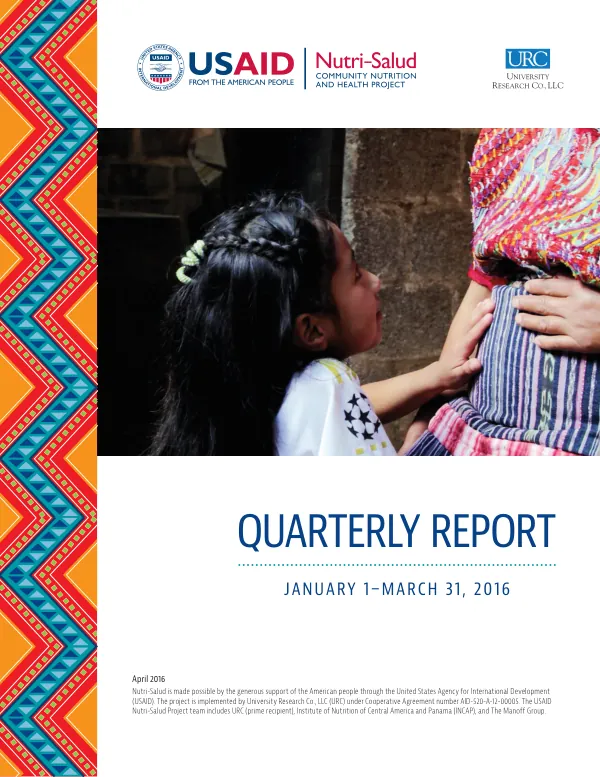
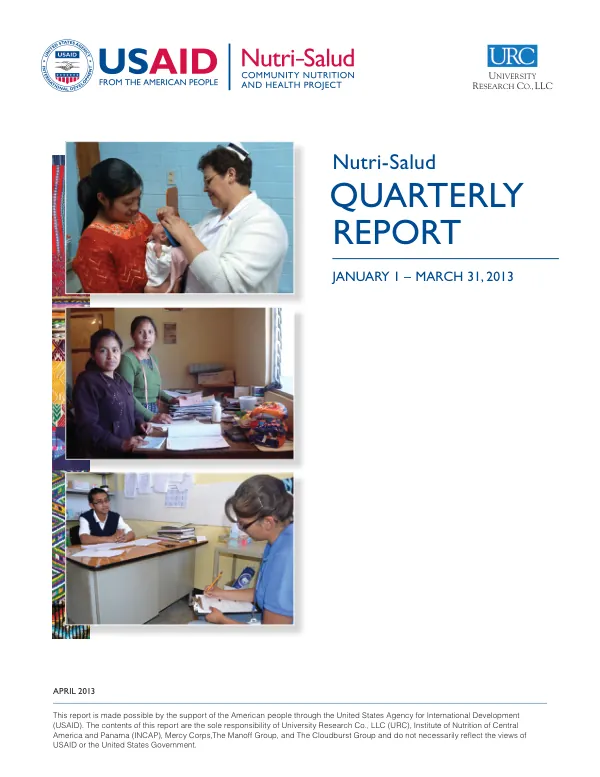
Quarterly Report: Nutri-Salud Community Nutrition and Health Project
The Nutri-Salud Community Nutrition and Health Project in Guatemala began implementing its activities in January 2013.
2013 · 58 pages
Sign in to readA free account is required to download.
Abstract
The project focuses on institutionalizing an improved package of essential nutrition and maternal, neonatal, and child health care actions in communities, particularly in health posts and service delivery NGOs. The project is divided into four components: prevention of chronic malnutrition, maternal, neonatal, and child health care, family planning, and community mobilization. Component 1, Prevention of Chronic Malnutrition, aims to address the root causes of malnutrition through improved nutrition practices and access to nutritious food. Component 2, Maternal, Neonatal, and Child Health Care, focuses on improving the quality of care for pregnant women, newborns, and children under the age of five. Component 3, Family Planning, aims to increase access to family planning services and promote healthy reproductive behaviors. Component 4, Community Mobilization, seeks to engage communities in the project's activities and promote behavior change. Integrated activities are implemented across all components, with a focus on increasing investment in nutrition and health by municipalities. The project also engages the private sector and civil society to leverage resources and expertise. Establishing alliances with universities and training schools is another key strategy to build capacity and promote knowledge sharing. Monitoring and evaluation are critical components of the project, with a focus on tracking progress towards indicator targets. Social and behavior change communication (SBCC) is also a key area of focus, with the aim of promoting behavior change and improving health outcomes. Quality improvement (QI) and logistics are also essential to ensure the effective delivery of project activities. The project has made significant progress in its first quarter, with activities planned for the next quarter focusing on building on this momentum. Key behaviors to promote during the 1,000-day window of opportunity are also being identified and prioritized. The project's financial report for the second quarter of fiscal year 2013 indicates a strong financial position, with a focus on ensuring compliance with USAID environmental guidelines. The project's work plan progress table for the second quarter of fiscal year 2013 highlights the project's achievements and challenges. The performance management plan indicator targets for the second quarter of fiscal year 2013 outline the project's goals and objectives. The project's training events and communication materials developed and distributed in the second quarter of fiscal year 2013 demonstrate the project's commitment to capacity building and knowledge sharing. The project's staffing changes and short-term technical assistance in the second quarter of fiscal year 2013 highlight the project's efforts to build capacity and leverage expertise. The project's financial report for the second quarter of fiscal year 2013 provides a comprehensive overview of the project's financial position and compliance with USAID environmental guidelines.
Related documents