INSTITUTE OF NUTRITION OF CENTRAL AMERICA AND PANAMA
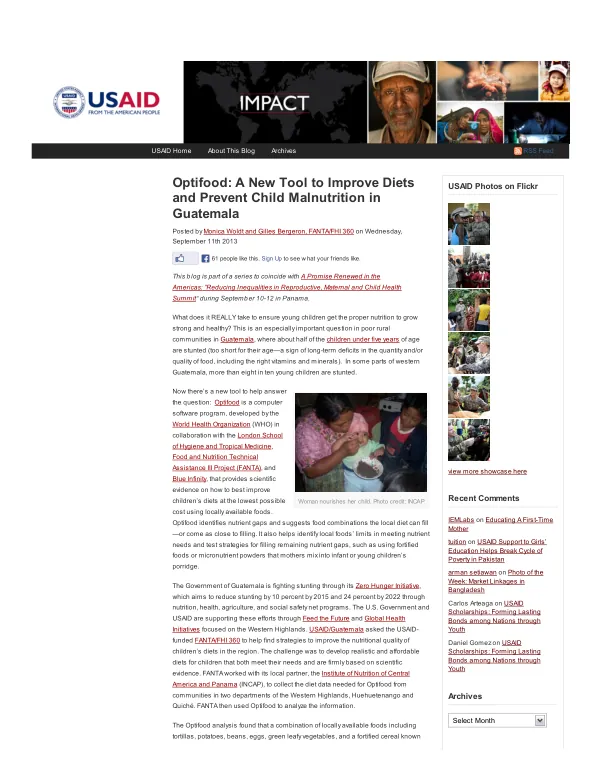
Optifood: A New Tool to Improve Diets and Prevent Child Malnutrition in Guatemala
The agricultural development initiative in Guatemala began with the launch of the Zero Hunger Initiative by the Government of Guatemala, aiming to reduce stunting by 10 percent by 2015 and 24 percent by 2022 through nutrition, health, agriculture, and social safety net programs.
2013 · 2 pages
Sign in to readA free account is required to download.
Abstract
The U.S. Government and USAID are supporting these efforts through Feed the Future and Global Health Initiatives focused on the Western Highlands. USAID/Guatemala asked the USAID-funded FANTA/FHI 360 to help find strategies to improve the nutritional quality of children's diets in the region. FANTA worked with its local partner, the Institute of Nutrition of Central America and Panama (INCAP), to collect diet data from communities in two departments of the Western Highlands, Huehuetenango and Quiché. FANTA then used Optifood, a computer software program developed by the World Health Organization (WHO) in collaboration with the London School of Hygiene and Tropical Medicine, Food and Nutrition Technical Assistance III Project (FANTA), and Blue Infinity, to analyze the information. The Optifood analysis found that a combination of locally available foods, including tortillas, potatoes, beans, eggs, green leafy vegetables, and a fortified cereal known as Incaparina, along with mother's breast milk, could satisfy children's nutrient needs, except for two nutrients required for children 6-8 months—iron and zinc. Optifood results showed that adding a micronutrient powder, known locally as Chispitas, would help make sure these very young children get enough iron and zinc. The Guatemalan Ministry of Health already provides Chispitas in some areas, but it does not yet reach all parts of the country where it is needed. FANTA then found out how much this diet would cost and whether families in the Western Highlands could afford it. Optifood found that it would cost about 25 to 50 U.S. cents a day to give this improved diet to a child 6–23 months old in Guatemala. At first, this may not seem like much money, but for the 51 percent of the population in the Western Highlands who earn less than US$3.15 a day, it amounts to 8 percent to 15 percent of their daily earnings. Next steps in the process include testing the diet to see whether mothers can really feed it to their young children. FANTA will work with partners to develop a strategy and plan to promote the recommended foods in the right combination, quantity, and frequency to improve children's diet intake as well as promote the use of Chispitas to help meet iron and zinc needs. FANTA is also working with the Government of Guatemala, USAID, development partners, and the private sector to make fortified foods for young children even better and test their nutrient levels with Optifood. FANTA is collaborating with the Guatemalan Ministry of Agriculture and Livestock to develop extension messages and materials to support production of the nutritious foods identified by Optifood, disseminate messages, and improve practices through USAID-funded Feed the Future demonstration sites. Optifood, which will soon be available for free download on the WHO website, is a truly powerful tool that can strengthen Guatemala's ability to help its children thrive and reach their full potential. The initiative aims to reduce stunting in children under five years of age, with a focus on the Western Highlands region. The project involves collaboration between FANTA, the Government of Guatemala, USAID, development partners, and the private sector to promote the use of Optifood and improve the nutritional quality of children's diets in the region.
Related documents
Documents in this collection
 2016
2016USAID DEC
Improving Dietary Diversity to Enhance Women's and Children's Nutritional Status in Guatemala's Western Highlands: Recommendations for the Guatemalan Agriculture Sector
Open record 2011
2011USAID DEC