JSI RESEARCH & TRAINING INSTITUTE, INC
Quick Reference: Logistics System Design and Implementation
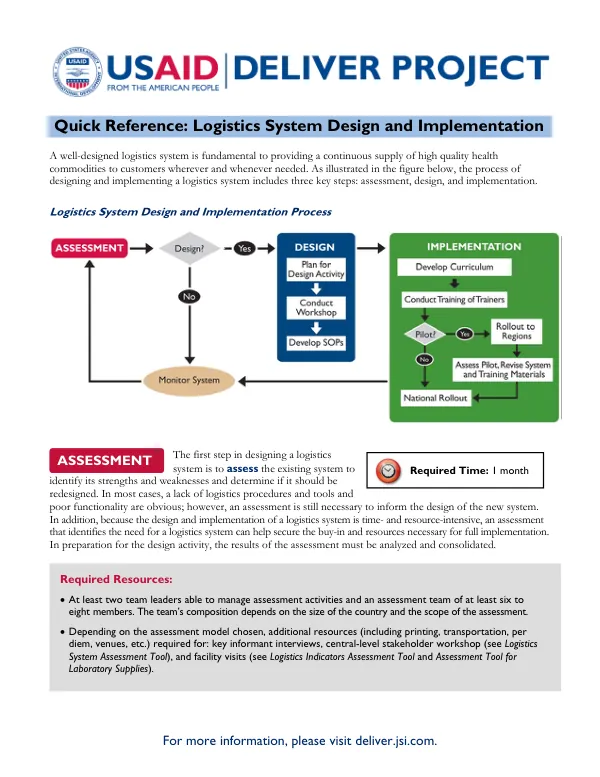
A well-designed logistics system is fundamental to providing a continuous supply of high quality health commodities to customers wherever and whenever needed.
2011 · 2 pages
Sign in to readA free account is required to download.
Abstract
The process of designing and implementing a logistics system includes three key steps: assessment, design, and implementation. The first step in designing a logistics system is to assess the existing system to identify its strengths and weaknesses and determine if it should be redesigned. This assessment is a critical component of the logistics system design and implementation process, as it informs the design of the new system and helps secure the buy-in and resources necessary for full implementation. The assessment process typically involves analyzing the results of the assessment and consolidating them into a comprehensive report. This report serves as a foundation for the design activity, which includes the development of a logistics management information system (LMIS), an inventory control system, and procedures for storage and distribution. A standard operating procedures (SOP) manual is developed based on the designed system, providing instructions on how to use the system and describing the roles and responsibilities of all participants in the system. The implementation of a logistics system involves training all staff with logistics responsibilities on how to use the system. A training curriculum is developed based on the SOPs, and is used to train staff on how to use the SOPs to accomplish their logistics tasks. Master trainers are trained on the use of this curriculum during a training-of-trainers (TOT) workshop, and then facilitate trainings for staff throughout the country. Some programs choose to pilot their logistics system, implementing it only in a select number of facilities or particular regions before the national rollout. The entire process of designing and implementing a logistics system can take anywhere from 12 to 24 months, depending on a variety of factors, including the complexity of the system design, size of the country, and number of facilities in the system. The type of system may also impact the timeline, with certain parts of the system design process historically proving to be more time-consuming than others. For example, gaining political buy-in, reaching consensus, and implementing major policy and/or structural changes can require significant time and follow-up.
Related documents