USAID DEC
Rapid Behavior Change Communication Assessment on Community-Based Surveillance in South Sorong
Sign inTETRA TECH
Rapid Behavior Change Communication Assessment on Community-Based Surveillance in South Sorong
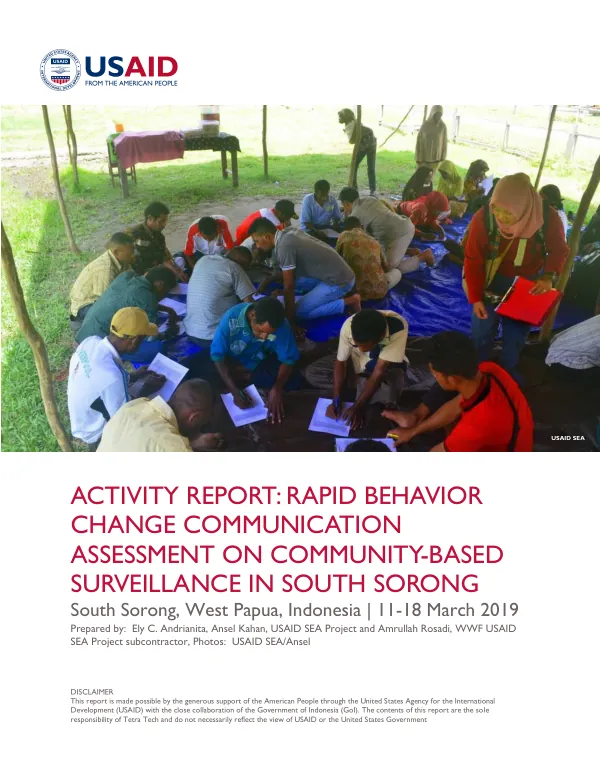
The rapid behavior change communication assessment on community-based surveillance in South Sorong was conducted from 11-18 March 2019.
2019 · 26 pages
Sign in to readA free account is required to download.
Abstract
The study sites were Konda and Kokoda sub-districts in South Sorong District, West Papua, Indonesia. The assessment aimed to identify the context and entry points for behavior change communication (BCC) to support community-based surveillance in the region. The study employed a mixed-methods approach, combining quantitative and qualitative data collection and analysis methods. A total of 150 respondents were interviewed, including fishermen, community leaders, and government officials. The assessment also involved focus group discussions and observations of community-based surveillance activities. The results of the assessment highlighted the importance of community-based surveillance in maintaining the health of marine and fisheries resources in the region. Respondents identified several threats to local marine and fisheries resources, including overfishing, destructive fishing practices, and pollution. The majority of respondents reported that they had not reported any illegal or destructive fishing activities in the past six months, citing fear of retaliation from fishing communities as a major barrier. The assessment also identified several potential multipliers and pressure points for behavior change communication, including community leaders, fishermen's associations, and government agencies. Respondents reported that they had received information about community-based surveillance through various channels, including word of mouth, community meetings, and government announcements. The assessment highlighted the need for behavior change communication to support community-based surveillance in the region. Respondents reported that they were motivated to participate in community-based surveillance activities by a desire to protect their livelihoods and the environment. However, they also reported several barriers to participation, including lack of knowledge about community-based surveillance, fear of retaliation, and limited resources. The assessment recommended several strategies to support behavior change communication and community-based surveillance in the region, including training community leaders and fishermen on community-based surveillance, establishing a network of community-based surveillance groups, and providing support for community-based surveillance activities through government agencies and non-governmental organizations. The assessment also highlighted the importance of community-based surveillance in maintaining the health of marine and fisheries resources in the region. The results of the assessment provide valuable insights for policymakers and practitioners working to support community-based surveillance and behavior change communication in the region. Community-based surveillance groups, such as POKMASWAS, play a crucial role in maintaining the health of marine and fisheries resources in the region. These groups are composed of community members who work together to monitor and report on fishing activities and protect marine and fisheries resources. The assessment highlighted the importance of supporting these groups through behavior change communication and providing them with the necessary resources and training to effectively carry out their duties. The assessment also identified several channels of information dissemination that could be used to support behavior change communication and community-based surveillance in the region. These channels include community meetings, government announcements, and word of mouth. The assessment recommended that these channels be used to disseminate information about community-based surveillance and behavior change communication to community members.
Related documents