USAID DEC
Status of Coral Reefs and Reef Fish in 13 Marine Protected Areas in Maluku, North Maluku and West Papua Provinces
Sign inGOVERNMENT OF INDONESIA
Status of Coral Reefs and Reef Fish in 13 Marine Protected Areas in Maluku, North Maluku and West Papua Provinces
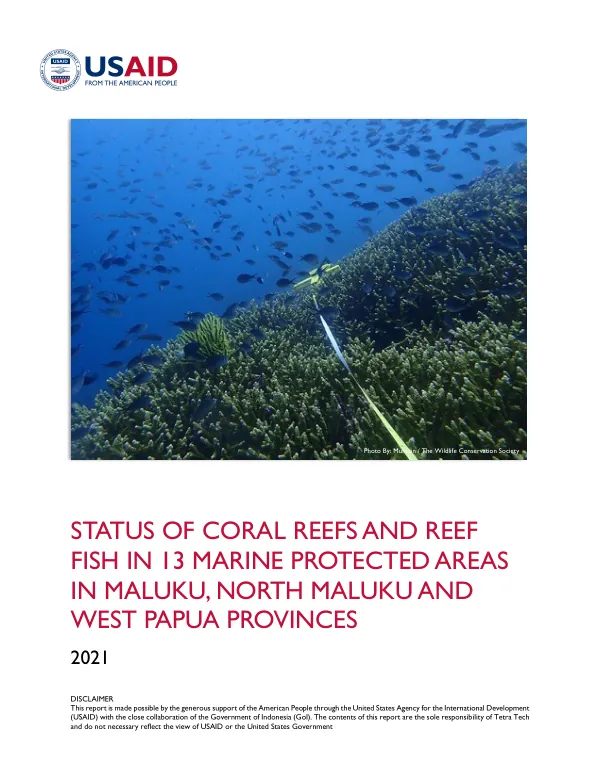
The coral reefs and reef fish in 13 marine protected areas in Maluku, North Maluku, and West Papua Provinces were assessed in 2021.
2021 · 226 pages
Sign in to readA free account is required to download.
Abstract
The assessment was conducted to evaluate the status of coral reefs and reef fish in these areas, which are designated as marine protected areas (MPAs) under the USAID SEA Project. The MPAs are located in the eastern part of Indonesia and are known for their rich marine biodiversity. The assessment was conducted using a combination of survey methods, including point intercept transects (PIT) and underwater visual census (UVC). The PIT method involved recording the presence and abundance of benthic life forms, such as coral, algae, and invertebrates, at regular intervals along a transect line. The UVC method involved counting the number of fish individuals in a given area. The surveys were conducted at multiple sites within each MPA, and the data were analyzed to determine the status of coral reefs and reef fish in each area. The results of the assessment showed that the coral reefs in the MPAs were in a relatively healthy state, with an average live hard coral cover of 40% in the no-take zones. However, there were significant differences in coral cover between the different MPAs, with some areas showing higher levels of coral cover than others. The assessment also found that the reef fish communities in the MPAs were diverse, with a total of 150 species recorded during the surveys. The assessment also evaluated the effectiveness of the MPAs in protecting coral reefs and reef fish. The results showed that the MPAs were effective in reducing fishing pressure and protecting coral reefs, with an average increase in live hard coral cover of 10% in the no-take zones. However, the assessment also found that some MPAs were more effective than others in protecting coral reefs and reef fish, and that there were significant differences in the effectiveness of the MPAs in different regions. The assessment also evaluated the impacts of the USAID SEA Project on the coral reefs and reef fish in the MPAs. The results showed that the project had a positive impact on the coral reefs and reef fish in the MPAs, with an average increase in live hard coral cover of 15% in the no-take zones. The assessment also found that the project had a positive impact on the reef fish communities in the MPAs, with an average increase in biomass of 20% in the no-take zones. The assessment concluded that the coral reefs and reef fish in the MPAs were in a relatively healthy state, and that the MPAs were effective in protecting coral reefs and reef fish. However, the assessment also found that there were significant differences in the effectiveness of the MPAs in different regions, and that further research was needed to determine the effectiveness of the MPAs in protecting coral reefs and reef fish. The assessment also recommended that the MPAs be continued and expanded to protect the coral reefs and reef fish in the region. The assessment was conducted by a team of researchers from Tetra Tech, in collaboration with the Government of Indonesia and the USAID SEA Project. The assessment was funded by the USAID SEA Project and was conducted in accordance with the project's performance management indicator (PMI) framework. The assessment was designed to evaluate the effectiveness of the MPAs in protecting coral reefs and reef fish, and to provide recommendations for the continued management and protection of these resources.