USAID DEC
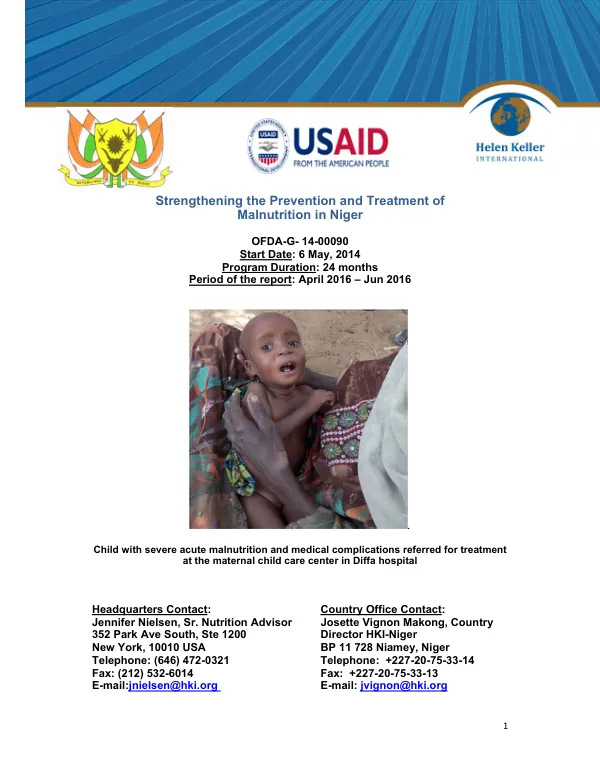
Rapport Trimestre 2 CMAM-OFDA: Strengthening the Prevention and Treatment of Malnutrition in Niger
Sign inHELLEN KELLER INTERNATIONAL
Rapport Trimestre 2 CMAM-OFDA: Strengthening the Prevention and Treatment of Malnutrition in Niger
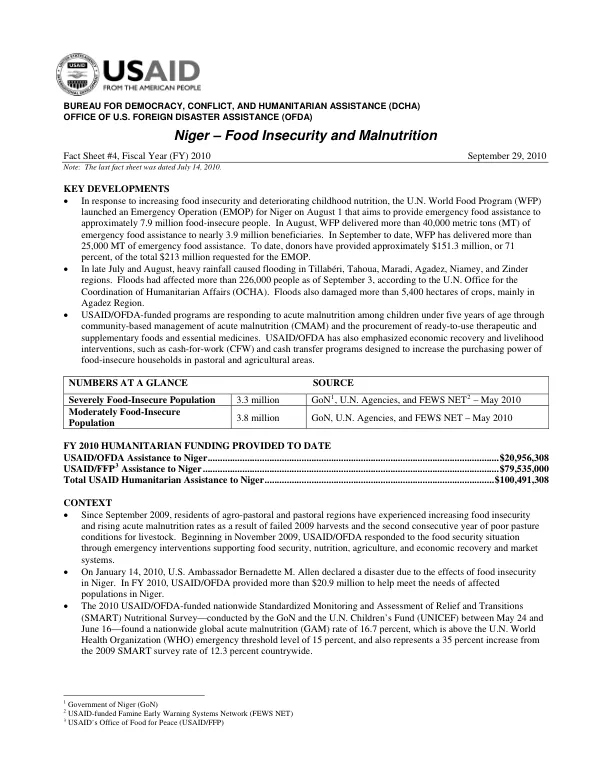
Niger is a landlocked nation with an economy centered on subsistence agriculture, livestock, and uranium.
2015 · 7 pages
Sign in to readA free account is required to download.
Abstract
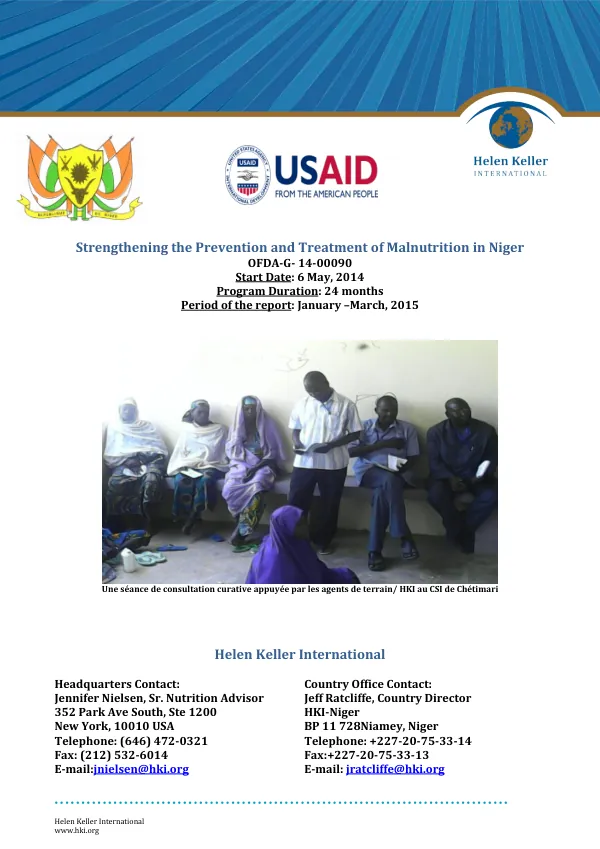
The country has faced significant challenges, including drought, desertification, and strong population growth, which have undercut its economy. Since 2005, acute malnutrition in children under five has consistently been above the alert threshold. The Diffa region is one of the most underserved regions of the country due to its remote location, insecurity, and climactic challenges. The most recent estimates of prevalence among children under five in the Diffa region include 12.3% global acute malnutrition (GAM), 3.9% severe acute malnutrition, 42.3% chronic malnutrition, and 88% anemia. This project targets 80 villages in Diffa district, aiming to strengthen the prevention and treatment of malnutrition through community-based interventions. The program works at departmental, facility, community, and household levels to improve prevention and management of acute malnutrition. It uses the Essential Nutrition Actions (ENA) framework to promote preventive practices, regular screening activities, referral of acutely malnourished pregnant and lactating women and children under five to health centers for treatment, and follow-up to recovery. The program also emphasizes the promotion of optimal water, sanitation, and hygiene (WASH) practices in coordination with government and other local sanitation strategies. The project focuses on three key areas: management of moderate acute malnutrition (MAM), management of severe acute malnutrition (SAM), and strengthened supervision. For MAM, the program aims to train health care providers and volunteers in prevention and management, establish and rehabilitate sites for inpatient and outpatient care, and provide treatment to children under five. For SAM, the program focuses on training health care providers and volunteers, establishing and rehabilitating sites for inpatient and outpatient care, and providing treatment to children under five. The project also aims to strengthen supervision systems, including formative supervision visits to health centers and community structures, and joint formative supervision visits by district health teams and HKI staff. The program targets a range of indicators, including the number of sites managing MAM and SAM, the number of beneficiaries admitted to MAM and SAM services, the number of health care providers and volunteers trained, and the recovery/cure rate among children under five treated for MAM and SAM. The project's monitoring indicators include the number of sites managing MAM and SAM, the number of beneficiaries admitted to MAM and SAM services, the number of health care providers and volunteers trained, and the recovery/cure rate among children under five treated for MAM and SAM. The program also tracks the dropout rate among children under five treated for MAM and SAM, and the mortality rate among children under five treated for MAM and SAM. The project's overall goal is to reduce all forms of undernutrition in target zones, with a focus on improving the health and well-being of children under five and their families. The program's approach is based on the ENA framework, which emphasizes the importance of community-based interventions and the promotion of optimal WASH practices. The project's monitoring and evaluation framework is designed to track progress towards its goals and objectives, and to identify areas for improvement.
Related documents