NATIONAL ENVIRONMENTAL PROTECTION AGENCY
Recycling of Solvent Wastes
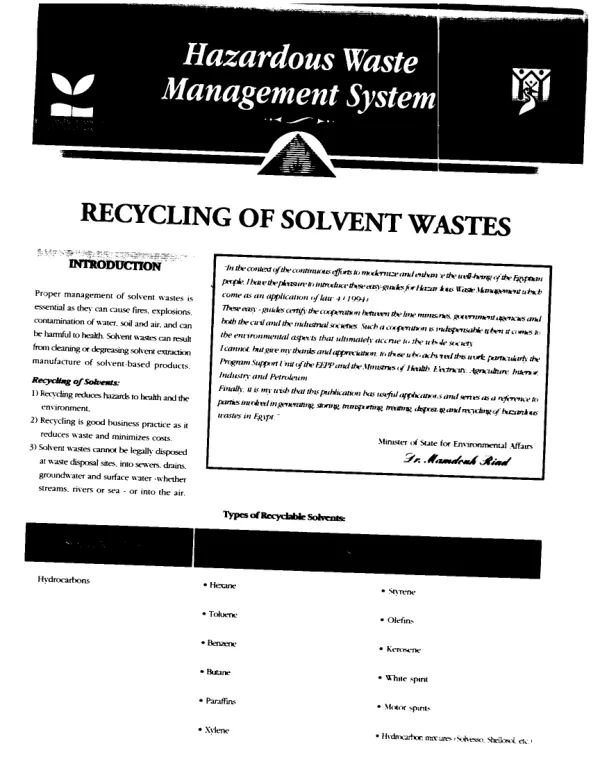
Proper management of solvent wastes is essential as improper disposal can cause fires, explosions, contamination of water, soil, and air, and be harmful to health.
2009 · 16 pages
Sign in to readA free account is required to download.
Abstract
Solvent wastes result from cleaning or degreasing operations, manufacture of solvent-based products, and other industrial processes. Recycling of solvents is beneficial as it reduces hazards to health and the environment. Recycling is also a good business practice as it reduces waste and minimizes costs. Solvent wastes cannot be legally disposed of as hazardous waste disposal sites, into sewers, drains, groundwater, and surface water, or into the air. The recycling of spent solvents involves the collection, transportation, and processing of spent solvents to produce reusable solvents. Methods of spent solvent recycling include distillation, which involves the separation of solvents from other components through heating and cooling. Distillation can be performed using simple distillation units, fractional distillation units, and thin film evaporators. Simple distillation units are the most common method, where the solvent waste is heated, and the solvent is driven off in vapor form, which is then collected and condensed back into liquid form. The still bottom or waste remaining in the bottom of the still is then collected and disposed of. Fractional distillation units produce a higher purity of recycled solvent by separating the solvent into its pure components. These units are generally more expensive to operate and are generally required for larger volumes. Fractional distillation units are usually batch units, where the solvent waste is heated, and the solvent is separated from other components through a series of plates or packing materials. Thin film evaporators involve running a thin film of dirty solvent down a heated cylindrical surface, where it is vaporized and condensed back into liquid form. Thin film evaporators are generally required for use in high-volume, continuous processes. Thin film evaporation requires the dirty solvent to have a low suspended solid content to work well. A typical distillation column contains several major components, including a mechanical shell where the separation of liquid components is carried out, column internals such as trays or packings which are used to enhance component separations, a reboiler which provides the necessary heat to drive off the solvent, and a condenser which cools the vapor and condenses it back into liquid form. When selecting a recycler, several factors should be considered, including the potential services offered, the quality of the recycled solvent, the quality of the spent solvent, the quantities of spent solvent, disposal costs of the still bottoms or unrecovered portion of the waste stream, transportation costs, and the type of solvent. Before selecting a recycler, an inspection of the facility should be conducted to ensure compliance with regulations is being taken seriously. Before purchasing any solvent recycling equipment, several possible limitations should be considered, including the cost of purchasing and maintaining the equipment, the cost of training and staffing equipment operators, whether the amount of spent solvent recycled justifies the costs of recycling, potential fire and/or explosion hazards, and whether the final product of the recycling process is usable in the original process. Safety considerations should also be taken into account, including explosion or fire hazard conditions, and the need to meet OSHA requirements for ventilation and employee safety, as well as local fire regulations.
Related documents