AMHARA DEVELOPMENT ASSOCIATION
Regional Agricultural Development Program-South January 2014 Monthly Report
The Regional Agricultural Development Program-South (RADP-S) aims to improve food and economic security for rural Afghans in the provinces of Kandahar, Helmand, Zabul, and Uruzgan.
2014 · 14 pages
Sign in to readA free account is required to download.
Abstract
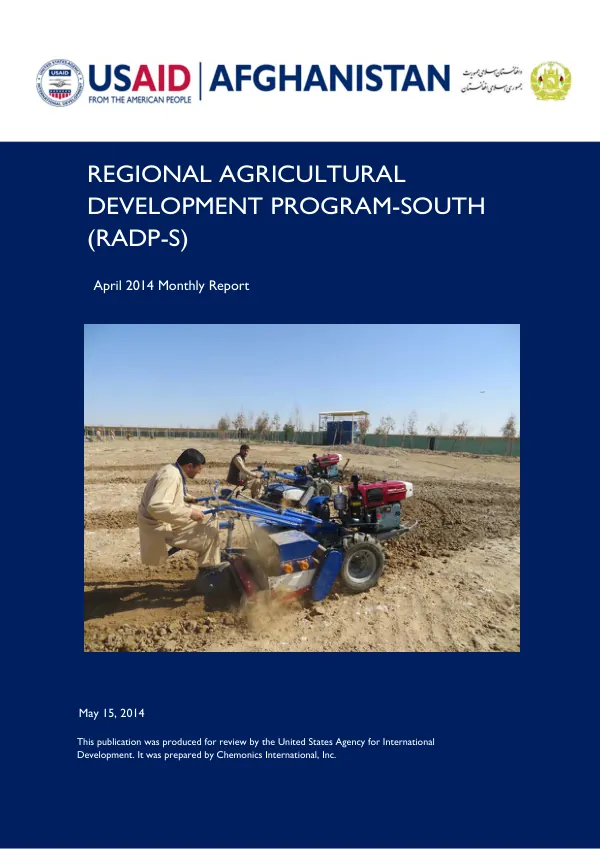
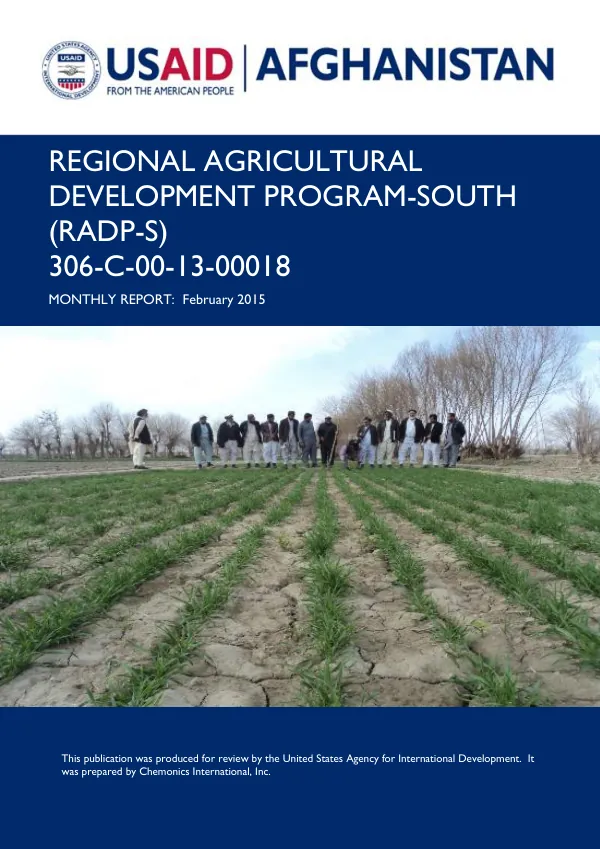
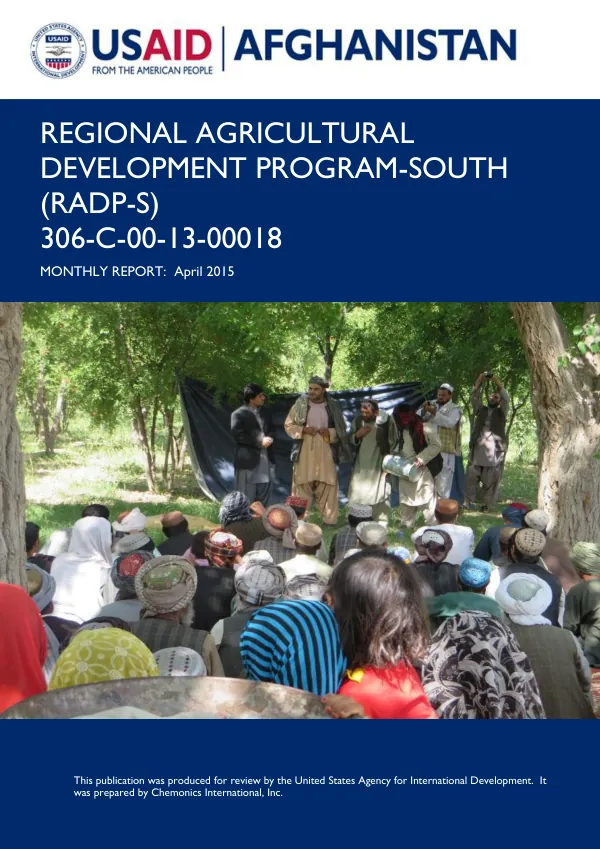
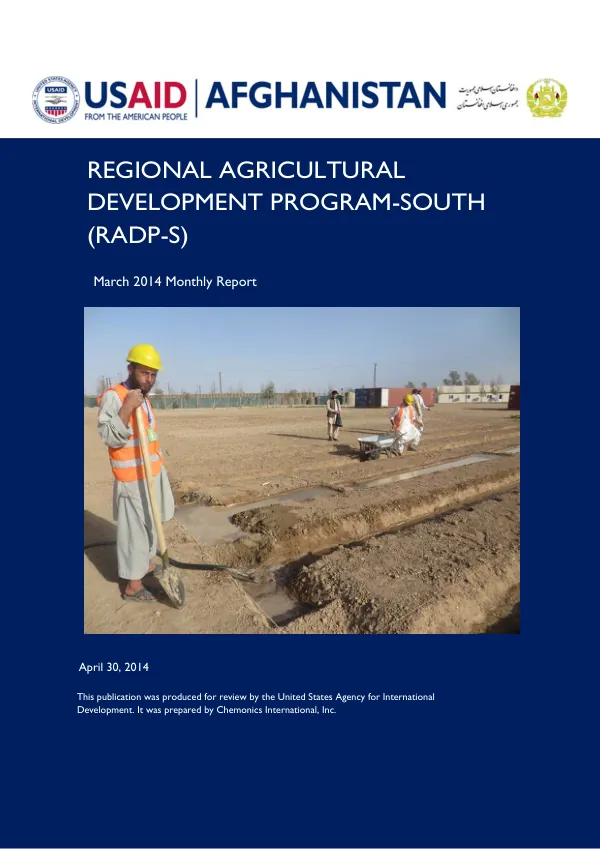
The program focuses on improving the productivity and profitability of the wheat, high value crops, and livestock value chains, while addressing policy, legal, and regulatory constraints affecting value chain development. RADP-S supports the consolidation of licit economies to fuel sustainable long-term economic growth, including providing alternatives to poppy cultivation. The implementation approach of RADP-S dovetails with Afghan and U.S. government strategies in its focus on advancing food security, regenerating agribusiness, and increasing agriculture sector jobs and incomes. RADP-S aims to strengthen the capacity of producers, associations, traders, and agribusinesses to respond to market demands; facilitate lasting market linkages between value chain actors; and support an enabling environment that allows the private sector to thrive. The program places Afghan organizations at the forefront of implementation and addresses key cross-cutting issues of women's empowerment, agribusiness value chain facilitation, and alternative development in all facets of the program. In January, RADP-S initiated a transition from start-up operations to program implementation as the project entered its second quarter. Over the course of the month, RADP-S authorized its key implementing partners (KIPs) to incur costs related to team mobilization and administrative start-up; continuously refined the project's technical approach in close coordination with USAID to integrate a robust value chain facilitation component; and hired crucial program staff who were oriented to put RADP-S value chain, enabling environment, and gender activities in motion. RADP-S continued to open doors for strategic partnership with provincial leadership, generating buy-in for program activities. In January, the program sent an envoy to Helmand and Uruzgan to introduce RADP-S' goals and technical approach to each province's governor and Directorate of Agriculture, Irrigation and Livestock (DAIL). RADP-S additionally coordinated introductory collaborative meetings with the Department of Women's Affairs in Uruzgan and Kandahar. These meetings successfully laid the initial groundwork for future support and cooperation which will facilitate the program's ability to create positive, sustainable impact. RADP-S program staff also made headway in the establishment of the AMTEX Technical Training Facility, which will contain a demonstration farm for the primary purpose of training key implementing partners (KIPs) in technical agricultural skills. The facility will include a 4275 square meter demonstration farm for training staff in technical skills such as drip irrigation, utilization of greenhouses, field cooling and cold storage, and post-harvest handling. Wheat and target high value crops such as grapes, vegetables, and orchard crops will also be cultivated and maintained on the site. The program's progress toward indicators is being closely monitored, with a focus on achieving key milestones in the wheat, high value crops, and livestock value chains. RADP-S is working to strengthen the capacity of producers, associations, traders, and agribusinesses to respond to market demands; facilitate lasting market linkages between value chain actors; and support an enabling environment that allows the private sector to thrive. The program's efforts are aimed at creating a sustainable and inclusive agricultural economy in the region.