USAID DEC
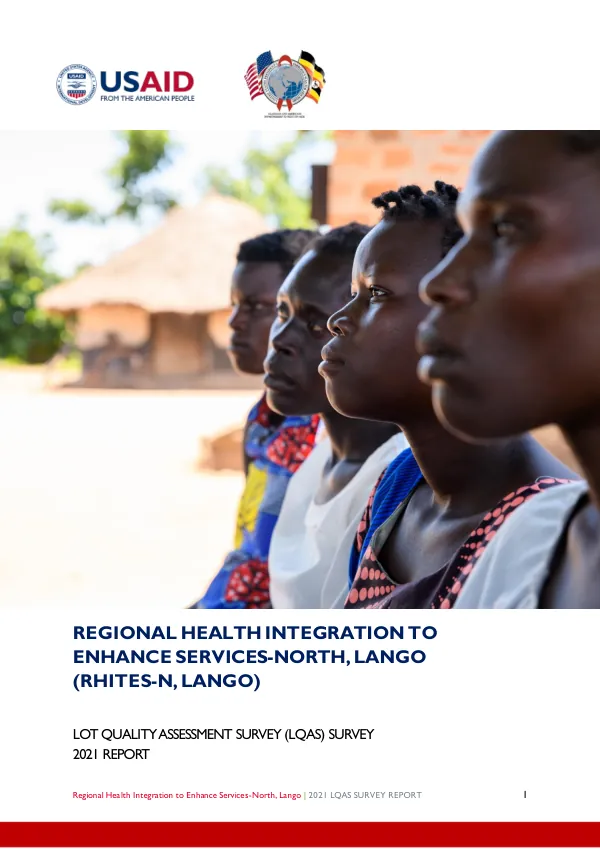
Regional Health Integration to Enhance Services-N, Lango I FY21 Annual Progress Report
Sign inJOHN SNOW INTERNATIONAL
Regional Health Integration to Enhance Services-N, Lango I FY21 Annual Progress Report
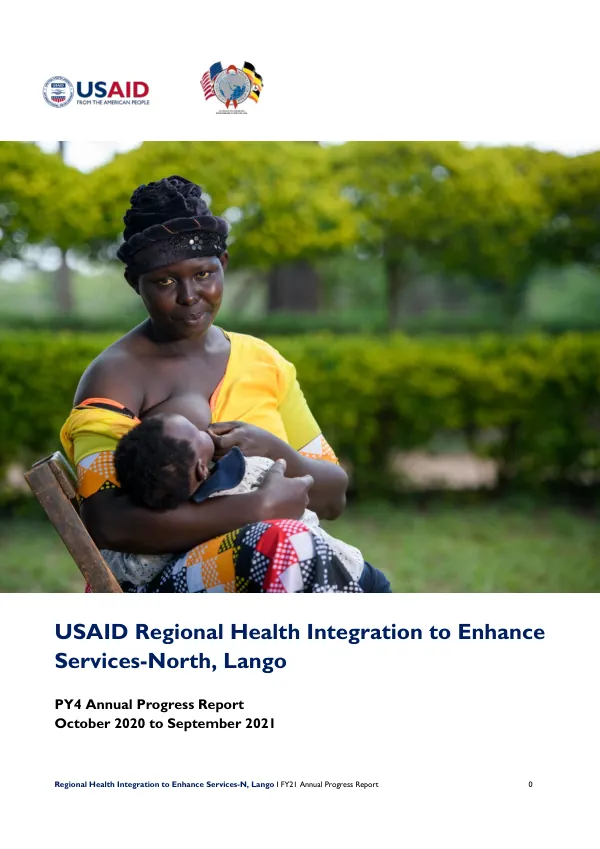
The USAID Regional Health Integration to Enhance Services-North, Lango project supports the health needs of the Lango sub-region in Uganda.
2021 · 170 pages
Sign in to readA free account is required to download.
Abstract
The project's main purpose is to increase the availability and accessibility of health services, improve health systems, promote the adoption of healthy behaviors, and increase the use of strategic information. The project focuses on several key areas, including HIV prevention and treatment, tuberculosis control, maternal and newborn health services, child health, malaria control, nutrition, and water, sanitation, and hygiene (WASH). The project also aims to strengthen regional response to COVID-19 and improve health system capacity. In the area of HIV prevention and treatment, the project has made significant progress. The number of individuals tested for HIV has increased, and the number of individuals on antiretroviral therapy (ART) has also increased. The project has also implemented voluntary medical male circumcision (VMMC) services, which have resulted in a significant increase in the number of men circumcised. The project has also made progress in the area of maternal and newborn health services. The number of women receiving skilled delivery care has increased, and the number of newborns receiving essential newborn care has also increased. The project has also implemented community-based maternal and newborn health services, which have resulted in a significant increase in the number of women and newborns receiving care. In the area of child health, the project has implemented several interventions, including immunization services, malaria control, and nutrition programs. The project has also implemented community-based child health services, which have resulted in a significant increase in the number of children receiving care. The project has also made progress in the area of WASH. The number of households with improved latrines has increased, and the number of households with hand washing facilities has also increased. The project has also implemented community-based WASH services, which have resulted in a significant increase in the number of households receiving care. In terms of health system strengthening, the project has made significant progress. The number of skilled health care providers has increased, and the number of health facilities with functional laboratory systems has also increased. The project has also implemented several interventions to improve supply chain systems, including the distribution of essential medicines and medical supplies. The project has also made progress in the area of strategic information. The project has implemented several interventions to improve data collection and analysis, including the use of electronic health records and data management systems. The project has also implemented several interventions to improve the use of data for decision-making, including the development of dashboards and scorecards. Overall, the USAID Regional Health Integration to Enhance Services-North, Lango project has made significant progress in improving the health of the Lango sub-region. The project has increased the availability and accessibility of health services, improved health systems, promoted the adoption of healthy behaviors, and increased the use of strategic information. The project has also made significant progress in several key areas, including HIV prevention and treatment, maternal and newborn health services, child health, malaria control, nutrition, and WASH. The project has also implemented several interventions to improve health system capacity, including the distribution of essential medicines and medical supplies, and the development of dashboards and scorecards. The project's success can be attributed to several factors, including the strong partnership between the project and the government of Uganda, the commitment of the project staff, and the effective use of resources. The project has also made significant progress in several key areas, including the use of electronic health records and data management systems, and the development of dashboards and scorecards. The project's impact has been significant, with several key indicators showing improvement. The number of individuals tested for HIV has increased, and the number of individuals on ART has also increased. The number of women receiving skilled delivery care has increased, and the number of newborns receiving essential newborn care has also increased. The number of households with improved latrines has increased, and the number of households with hand washing facilities has also increased. The project's success has also been recognized by several stakeholders, including the government of Uganda and USAID. The project has received several awards and recognition for its work in improving the health of the Lango sub-region. Overall, the USAID Regional Health Integration to Enhance Services-North, Lango project has made significant progress in improving the health of the Lango sub-region. The project has increased the availability and accessibility of health services, improved health systems, promoted the adoption of healthy behaviors, and increased the use of strategic information. The project's success can be attributed to several factors, including the strong partnership between the project and the government of Uganda, the commitment of the project staff, and the effective use of resources.