MANAGEMENT SYSTEMS INTERNATIONAL
Religious and Ethnic Minority Health Needs Assessment Briefing Note: Jordan
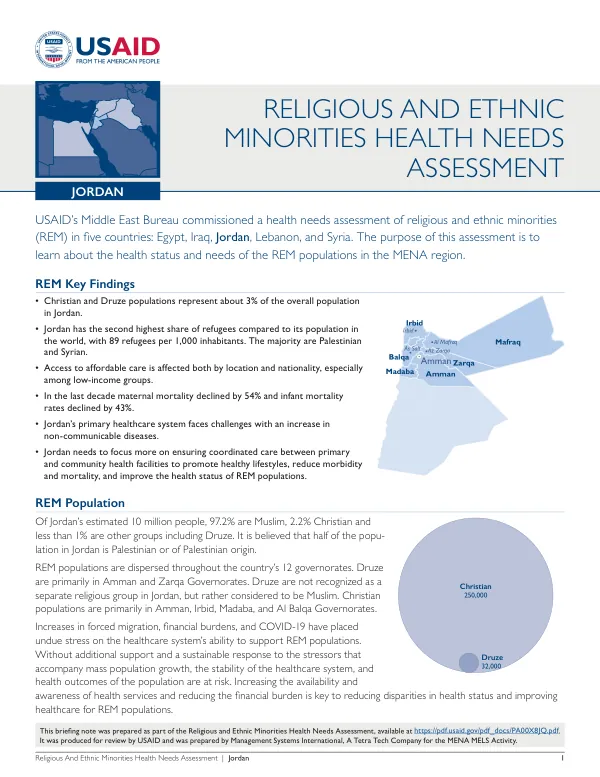
The Religious and Ethnic Minorities Health Needs Assessment in Jordan highlights the health status and needs of the country's religious and ethnic minority populations.
2021 · 3 pages
Sign in to readA free account is required to download.
Abstract
Christian and Druze populations represent approximately 3% of Jordan's overall population, with the majority residing in Amman, Irbid, Madaba, and Al Balqa governorates. The assessment notes that Jordan has the second highest share of refugees compared to its population in the world, with 89 refugees per 1,000 inhabitants, primarily consisting of Palestinians and Syrians. The health system in Jordan faces challenges, including retaining and expanding its health workforce, strengthening and expanding health services, controlling out-of-pocket costs, and ensuring access to services for vulnerable populations. The healthcare system is strained due to the influx of refugees, particularly as they leave camps and move to urban and rural areas. The assessment highlights disparities in health indicators across regions and governorates, disproportionately affecting vulnerable populations, including refugees. Non-communicable diseases are increasing in Jordan, with cardiovascular disease being the leading cause of premature mortality in 2017. The under-five mortality rate has declined, but disparities exist between Syrian and Jordanian children. The maternal mortality rate has also declined, from 59 per 100,000 in 2010 to 29.4 per 100,000 in 2017. However, the rate of skilled deliveries, antenatal visits, and vaccinations has increased across all populations. The assessment notes that mental health is a significant concern, with 43% of the population assessed feeling distress, including loss of interest, fear, anger, hopelessness, avoidance, and reduced functionality. Limited livelihood opportunities and displacement increase the risks of gender-based violence, with 70% of GBV survivors who received services being Syrian, 23% Jordanian, and 7% other nationalities. Jordan's economic growth rate has not increased in three years, and the unemployment rate was 19% in 2019. Taxes have increased by 42% compared to the tax rate prior to the Syrian refugee influx, making it difficult for vulnerable populations to afford health services. The assessment concludes that Jordan needs to focus on ensuring coordinated care between primary and community health facilities to promote healthy lifestyles, reduce morbidity and mortality, and improve the health status of religious and ethnic minority populations. The estimated number of refugees by national origin is as follows: Palestinians (2,200,000), Syrians (657,068), Iraqis (67,225), Yemenis (15,000), Sudanese (6,000), and others (2,500). The assessment highlights the need for a sustainable response to the stressors accompanying mass population growth to ensure the stability of the healthcare system and health outcomes of the population. Increasing the availability and awareness of health services and reducing the financial burden is key to reducing disparities in health status and improving healthcare for religious and ethnic minority populations.