CATHOLIC RELIEF SERVICES ORGANIZATION
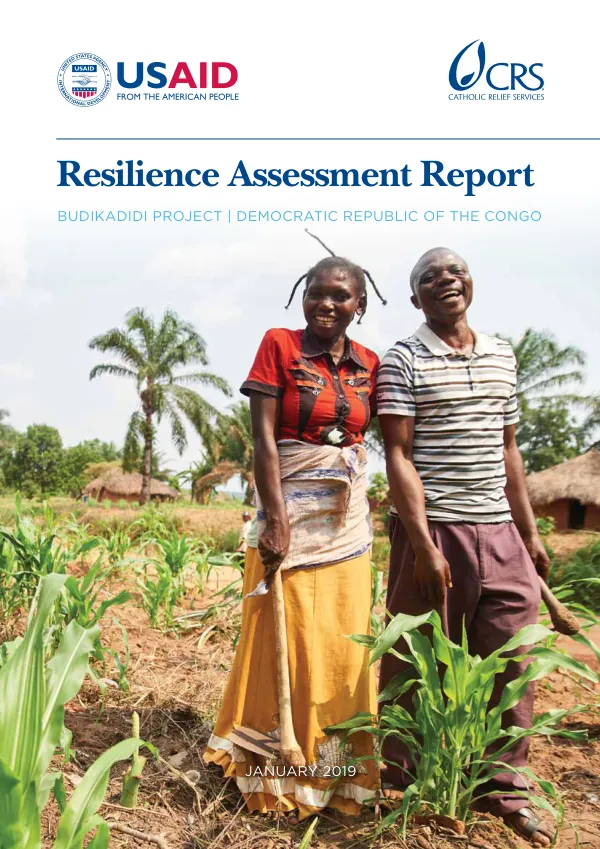
Resilience Assessment Report
The Budikadidi Project in the Democratic Republic of the Congo aims to enhance the resilience of vulnerable households through a comprehensive approach.
2019 · 66 pages
Sign in to readA free account is required to download.
Abstract
The project focuses on improving agricultural productivity, market access, and natural resources management. The project area is characterized by limited access to markets, all-weather roads, and formal education, which exacerbates the vulnerability of households to shocks and stressors. The resilience assessment report highlights the importance of human agency in coping with shocks and stressors. Respondents reported that individual and community sensitivity to shocks and stressors is influenced by factors such as access to markets, all-weather roads, and formal education. The report also emphasizes the role of adaptive responses, including diversification into off-farm and non-agricultural activities, employment, and migration, in enhancing household resilience. The report identifies several key findings, including the prevalence of shocks and stressors, such as crop failure, livestock disease, and conflict, which negatively impact household well-being. Respondents reported that they often rely on coping actions, such as reducing food consumption, selling assets, and borrowing money, to respond to shocks and stressors. However, these coping actions often have negative consequences, such as increased debt and reduced food security. The report also highlights the importance of transformative strategies, including improving agricultural productivity, enhancing market access, and promoting natural resources management. The report notes that these strategies can help households build resilience and improve their overall well-being. The Budikadidi Project aims to implement these strategies through a range of interventions, including farmer training programs, infrastructure development, and market linkage facilitation. The report emphasizes the need for a multi-level transformational change approach to enhance household resilience. This approach involves addressing the root causes of vulnerability, such as limited access to markets and all-weather roads, and promoting adaptive responses, such as diversification and employment. The report also highlights the importance of integral human development outcomes, including improved food security, increased income, and enhanced well-being. The Budikadidi Project aims to achieve these outcomes through a comprehensive approach that addresses the needs of vulnerable households. The project focuses on improving agricultural productivity, market access, and natural resources management, while also promoting adaptive responses and transformative strategies. The project's success will depend on the effective implementation of these interventions and the ability of households to build resilience and improve their overall well-being. The report concludes by highlighting the importance of continued support for the Budikadidi Project. The project's findings and recommendations provide valuable insights into the challenges faced by vulnerable households in the Democratic Republic of the Congo and highlight the need for a comprehensive approach to enhance household resilience. The project's success will have a positive impact on the well-being of households and communities in the project area and will contribute to the achievement of the Sustainable Development Goals.
Related documents