INSTITUTE FOR INTERNATIONAL DEVELOPMENT, INC.
Resilience, Near Poverty and Vulnerability Dynamics
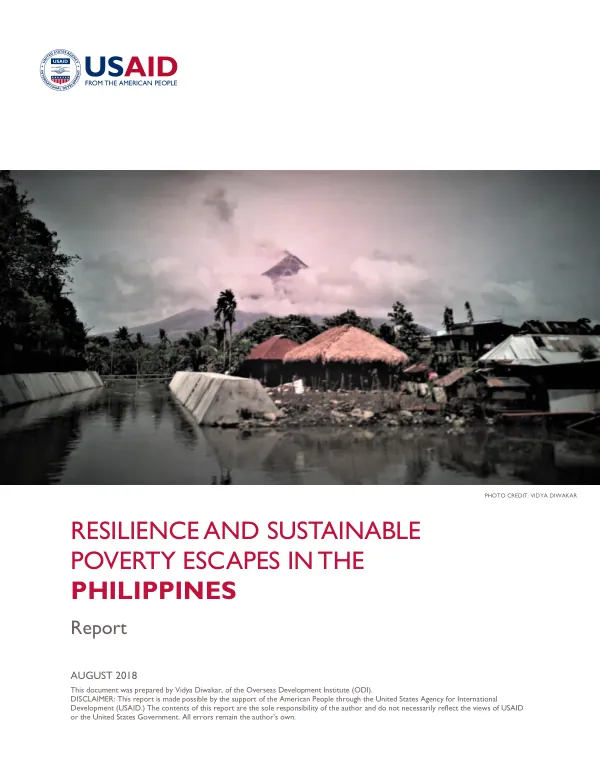
The research investigates the resilience of households above the poverty line in Uganda and the Philippines.
2019 · 34 pages
Sign in to readA free account is required to download.
Abstract
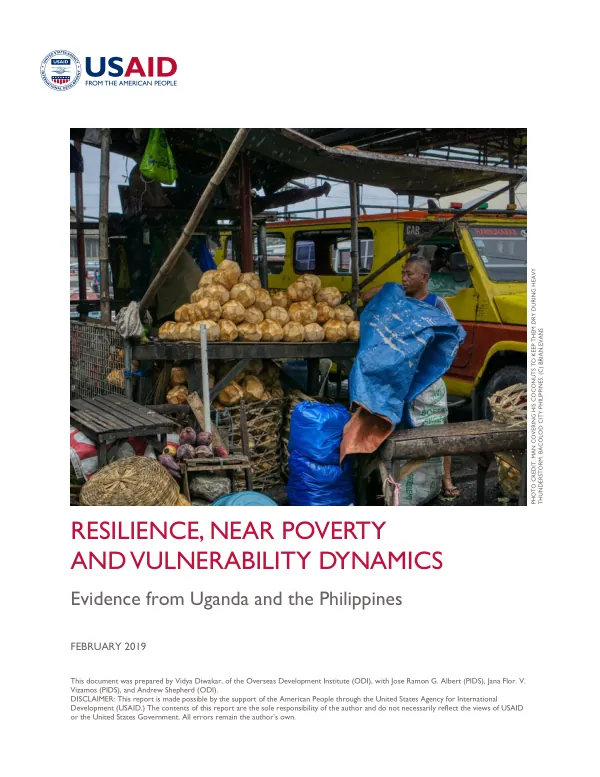
It aims to isolate the extent to which being 'near-poor' makes households vulnerable to falling into poverty in the future. The study explores whether the same sources of resilience that protect against transitory poverty escapes and promote sustained escapes from poverty function in similar ways for 'near-poor' and vulnerable households. Analysis of the Uganda National Panel Survey from 2009/10-2013/14 and the Philippines Family Income and Expenditure Survey from 2003-2009 reveals that as much as 77% of households in Uganda and 55% of households in the Philippines had per capita income above the poverty line but under two times the national poverty line in at least one of the survey years. Vulnerability was also high, with as much as 59% in Uganda in 2013/14 and 51% in the Philippines in 2009 estimated as being vulnerable to poverty, or more likely than the typical person to be poor in the subsequent period. The study suggests that policies should acknowledge the varied drivers of sustained escapes when measured by poverty but also vulnerability. This is because an assessment of vulnerability dynamics can help identify resilience capacities of households, by considering future expected poverty in addition to present poverty dynamics. Such an assessment suggests that there may be more drivers associated with sustained escapes from vulnerability than those for sustained escapes from poverty amongst the near-poor across countries. In Uganda, secondary education and some economic diversification from agriculture, particularly for households at higher levels of income, reduces vulnerability to poverty significantly. In the Philippines, a level of income which enables good use to be made of loans and enables greater health expenditure and increased dependency levels while avoiding impoverishment emerges as important in promoting resilience. At the same time, there are factors that undermine these sustained escapes and processes of resilience-building, such as alcohol consumption in the Philippines and urban residence in Uganda. The fieldwork in both countries also indicated that transitory escapes from poverty and impoverishment is more often a result of multiple shocks, though some single shocks can also impoverish by impairing resilience capacities. Examples range from high-intensity typhoons in the Philippines to severe disability in Uganda. Cash transfers significantly help with recovery from such devastating shocks, though should not operate in isolation. Certain enabling conditions for the near-poor to continue to make progress and build resilience include a substantial formal sector, more commercialized agriculture, reduced dependency burdens, improved conditions for female-headed households, and assistance to poor and near-poor households. Assistance, whether in the form of cash transfers or remittances, is associated with increasing the likelihood of sustained escapes amongst the near poor in Uganda and the Philippines, respectively. However, at the moment, cash transfers remain mainly targeted to households that are already poor. A renewed focus on social protection and assistance for the poorest but also extended to households near the poverty line would do well in these contexts.