USAID DEC
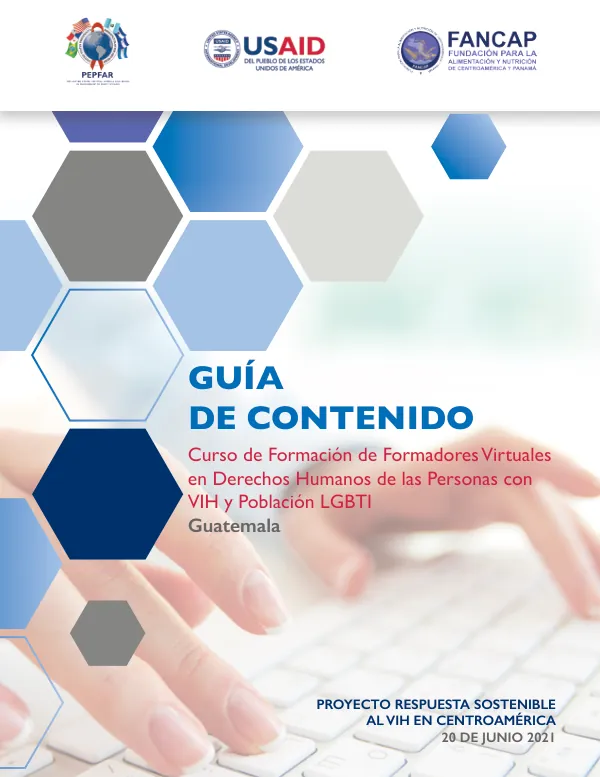
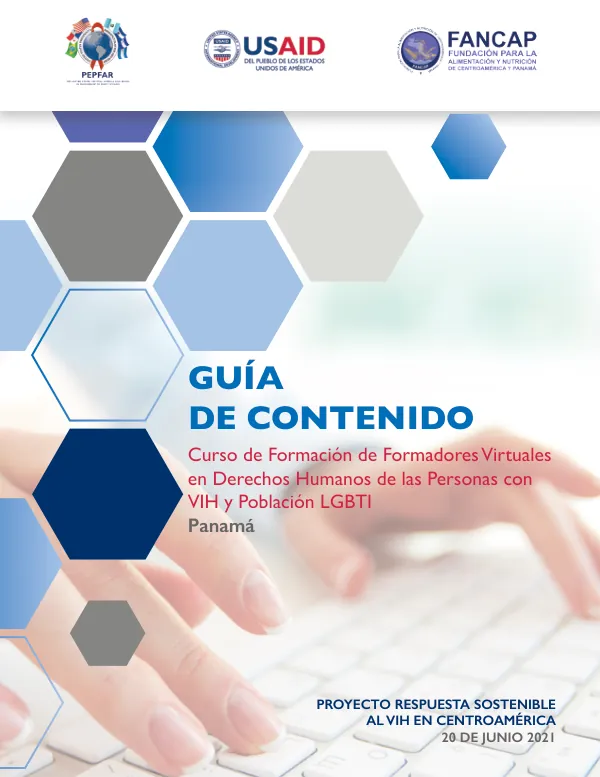
Respuesta Sostenible al VIH en Centroamérica: Guía de Contenido de Curso de Formación de Formadores Virtuales en Derechos Humanos
Sign inUSAID
Respuesta Sostenible al VIH en Centroamérica: Guía de Contenido de Curso de Formación de Formadores Virtuales en Derechos Humanos
The Proyecto Respuesta Sostenible al VIH en Centroamérica, a project funded by the United States Agency for International Development (USAID), aims to strengthen institutions working in the field of human rights to reduce stigma and discrimination against vulnerable populations affected by HIV.
2021 · 218 pages
Sign in to readA free account is required to download.
Abstract
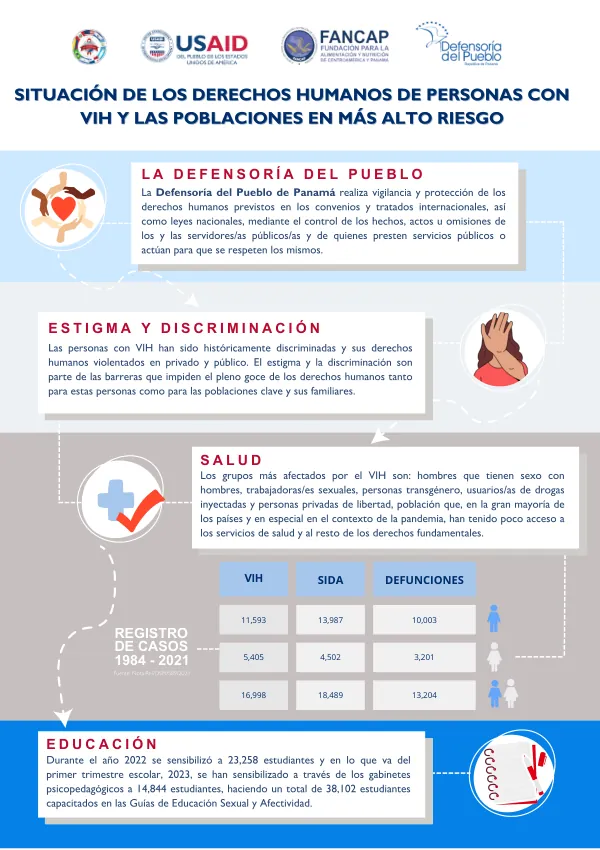
The project's objective is to fortify institutions that work on human rights to reduce stigma and discrimination of vulnerable and affected populations by HIV. The project's focus is on Panama, where a virtual training course for facilitators was developed to promote human rights awareness among individuals living with HIV and the LGBTI population. The course, titled "Curso de Formación de Formadores Virtuales en Derechos Humanos de las Personas con VIH y Población LGBTI," is designed to equip facilitators with the necessary skills to deliver training sessions on human rights, interseccionality, and stigma and discrimination. The course consists of seven modules, each addressing a specific aspect of human rights and HIV. Module 1 focuses on the manual for facilitators, providing an introduction to virtual education, the history of virtual education, and the use of virtual platforms. It also covers how to create activities, such as forums and tasks, and how to use resources, including archives, folders, and URLs. Module 2 addresses relevant terms and standards, including an introduction to human rights and interseccionality. Module 3 delves into the principles of Yogyakarta and international recommendations on human rights, while Module 4 explores stigma and discrimination. Module 5 examines national legislation regarding individuals living with HIV and the LGBTI population, and Module 6 discusses the right to health and HIV. The course also includes a glossary of terms, statistics on HIV, and a list of references and resources. The project's goal is to promote human rights awareness and reduce stigma and discrimination against vulnerable populations affected by HIV in Panama and the broader region. The course is designed to be delivered virtually, using a platform that allows facilitators to create and manage activities, resources, and communication tools. The platform includes features such as forums, tasks, and messaging, as well as tools for tracking progress and evaluating participant engagement. The project's approach is grounded in the principles of Yogyakarta and international recommendations on human rights, which emphasize the importance of promoting human rights awareness and reducing stigma and discrimination against vulnerable populations. By equipping facilitators with the necessary skills to deliver training sessions on human rights, interseccionality, and stigma and discrimination, the project aims to contribute to a more inclusive and equitable society in Panama and the broader region.