USAID DEC
Rice Production Best Practices
The agricultural practices outlined in the provided guidelines emphasize the importance of proper land preparation, seed selection, and crop management.
1 pages
Sign in to readA free account is required to download.
Abstract
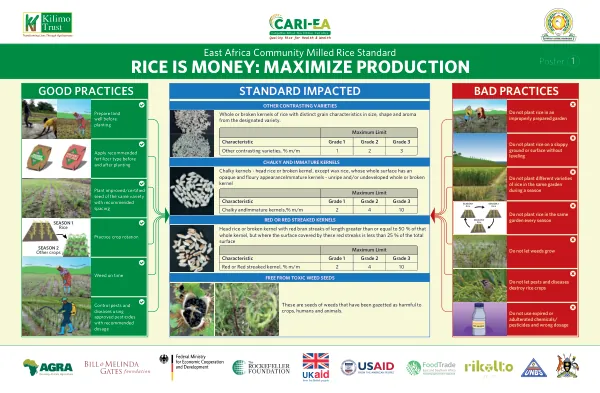
Rice cultivation is a key focus, with specific recommendations for maximizing production and minimizing losses. The guidelines stress the need to plant rice in a well-prepared field, free from weeds and pests, and to use recommended fertilizers and pesticides. The guidelines also highlight the importance of crop rotation and the need to avoid planting different varieties of rice in the same field during a single season. This approach is designed to prevent the buildup of pests and diseases that can damage rice crops. Additionally, the guidelines caution against planting rice in the same field every season, as this can lead to soil depletion and reduced yields. The guidelines also provide specifications for the quality of rice, including the maximum allowable percentage of chalky and immature kernels, red or red-streaked kernels, and weed seeds. The acceptable limits for these contaminants vary depending on the grade of rice, with Grade 1 rice having the lowest allowable levels of contaminants. The guidelines are likely intended for farmers and agricultural professionals working in the rice industry, particularly in the context of the Rice is Money initiative, which aims to maximize rice production in the region. The guidelines provide a framework for best practices in rice cultivation, including the use of improved seeds, proper fertilization and pest control, and the avoidance of common mistakes that can lead to reduced yields and lower quality crops. The guidelines also provide a framework for evaluating the quality of rice, with specific standards for the maximum allowable percentage of contaminants. These standards are likely intended to ensure that rice meets the requirements of the Rice is Money initiative and the standards of the Rice Community Milled Rice Standard. By following these guidelines, farmers and agricultural professionals can help to improve the quality and quantity of rice production in the region.