USAID DEC
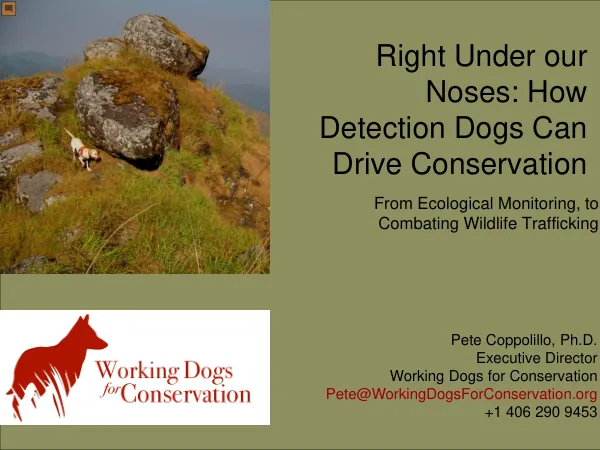
Right Under our Noses: How Detection Dogs Can Drive Conservation
Detection dogs have become a crucial tool in conservation efforts, playing a vital role in ecological monitoring and combating wildlife trafficking.
32 pages
Sign in to readA free account is required to download.
Abstract
These highly trained canines are capable of detecting a wide range of species, from endangered birds to invasive plants, with remarkable accuracy. Their ability to locate and identify specific species is unparalleled, making them an invaluable asset in conservation initiatives. The use of detection dogs in conservation is not limited to species identification. They are also employed in habitat monitoring, where they can detect subtle changes in vegetation and soil composition. This information is critical in understanding the impact of human activities on ecosystems and informing management decisions. For example, detection dogs have been used to monitor the spread of invasive species, such as zebra mussels and emerald ash borers, which can have devastating effects on native ecosystems. One of the most significant applications of detection dogs in conservation is in combating wildlife trafficking. These dogs are trained to detect the scent of protected species, such as rhinos and elephants, and can identify the presence of contraband goods, such as ivory and rhino horn. Their ability to detect these items has led to numerous seizures and convictions, making them a critical component in the fight against wildlife trafficking. In addition, detection dogs are also used to monitor the movement of wildlife, helping conservationists to track and protect endangered species. The use of detection dogs in conservation is not without its challenges. Training these dogs requires a significant investment of time and resources, and their effectiveness can be influenced by a range of factors, including the environment and the presence of other animals. However, the benefits of using detection dogs in conservation far outweigh the costs. They offer a non-invasive and highly effective means of monitoring ecosystems and detecting wildlife trafficking, making them an essential tool in the conservation toolkit. Working Dogs for Conservation, a non-profit organization, has been at the forefront of using detection dogs in conservation efforts. Founded by Pete Coppolillo, Ph.D., the organization has trained and deployed detection dogs in a range of conservation initiatives, from monitoring endangered species to combating wildlife trafficking. Their work has had a significant impact on conservation efforts, and their use of detection dogs has become a model for other organizations around the world.