USAID
Rural Value Chains Project
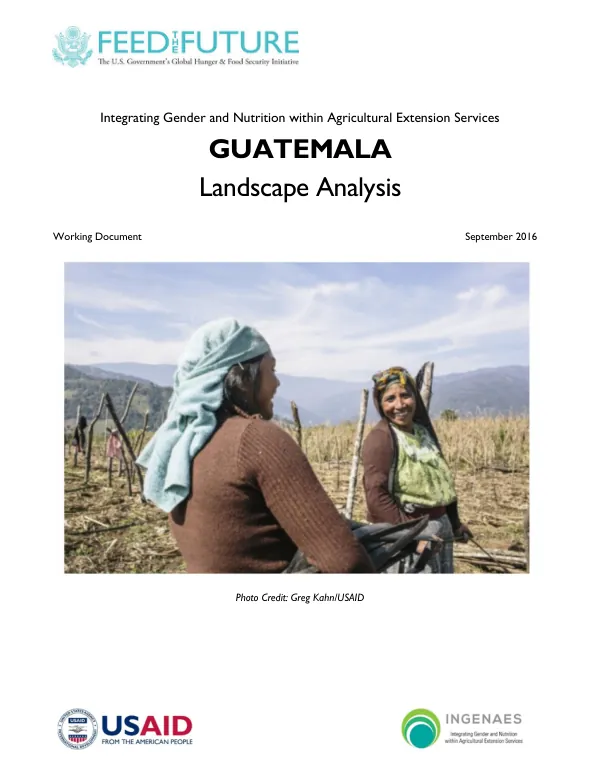
The Rural Value Chains Project (RVCP) is a five-year initiative implemented under the Feed the Future (FtF) framework, with the primary objective of reducing poverty and malnutrition rates in 22 municipalities located in the provinces of Huehuetenango and San Marcos, Guatemala.
2016 · 65 pages
Sign in to readA free account is required to download.
Abstract
The project is led by ANACAFE, a coffee producer organization, in partnership with other consortium organizations, including FEDECOCAGUA, FEDECOAG, ARTEXCO, FUNCAFE, and FUNDASISTEMAS. The project's two key objectives are to increase the household income of small producers from participating organizations in the coffee, horticulture, and handicraft value chains, and to produce deep-rooted behavioral change among small-scale producers and their families to ensure improvements to their nutritional wellbeing in the short, medium, and long terms. To achieve these objectives, RVCP implements activities under six components: Improved competitiveness along the value chains, Expanded participation in the value chains, Improved agricultural productivity, Expanded trade and increased markets, Improved food production and use, and Improvements to the handicrafts value chain. The project also includes crosscutting themes such as Education and Training, Entrepreneurial Development, Environmental Mitigation, Financial Services, Communications, and Engaging local and national government. The project's implementation strategy is flexible and dynamic, with activities institutionalized within producer organizations to ensure sustainability beyond the life of the project. Behavioral changes among small-scale producers and their families, as well as institutional and entrepreneurial innovation, are the driving forces behind RVCP activities. The project's implementation period concludes on May 30, 2017, and the consortium organizations have expressed their institutional intent to continue providing technical assistance and training to producers and their families to ensure the sustainability of project accomplishments. The project's exit strategy includes the development of institutionalized processes and the promotion of respective exit strategies within the consortium organizations. The project's expected results include increased producer income through innovative production techniques and better access to markets, as well as improved nutrition through behavioral changes among the target population. The project's geographic focus is on the provinces of Huehuetenango and San Marcos, with a specific emphasis on 22 municipalities. The project's timeframes are from 2012 to 2017, with the implementation period concluding on May 30, 2017. The project's recommendations include the continuation of technical assistance and training to producers and their families to ensure the sustainability of project accomplishments.