ACTION AGAINST HUNGER
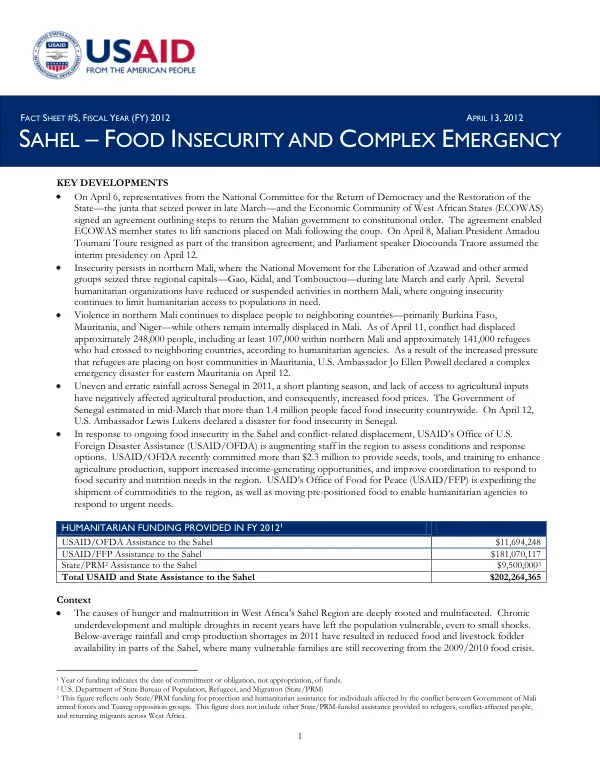
Sahel Food Insecurity Fact Sheet #5, Fiscal Year (FY) 2012
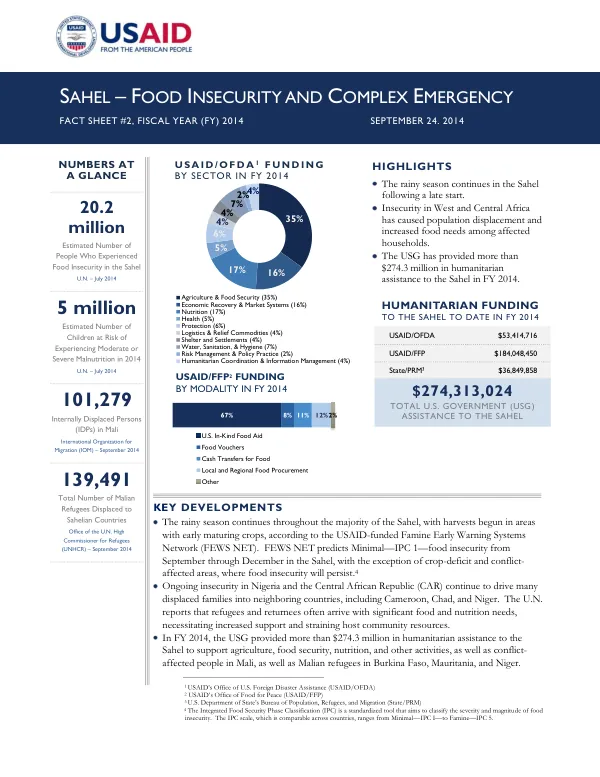
The Sahel region in West Africa is experiencing severe food insecurity, with over 15 million people at risk of food security.
2012 · 6 pages
Sign in to readA free account is required to download.
Abstract
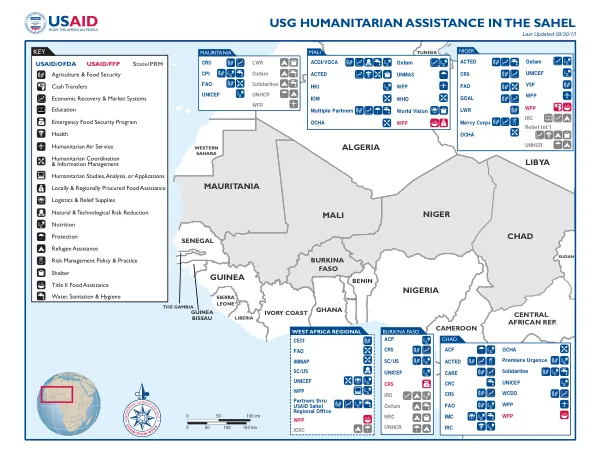
According to national government and U.N. data, 8 million people currently face severe food insecurity and may require emergency food assistance in 2012. The region's global acute malnutrition levels are consistently between 10 and 15 percent, with some localized areas exceeding the U.N. World Health Organization's emergency threshold level of 15 percent. In Chad, the U.N. Children's Fund estimates that approximately 127,000 children under five years of age in Chad's Sahel region will face severe acute malnutrition in 2012. Action Against Hunger reports that in Kanem Region in western Chad, therapeutic centers received approximately 2,000 children in one month, more than three times the number of admissions during the same month in 2011. The recent instability in Mali is expected to have negative impacts on food insecurity, with FEWS NET anticipating that the number of people experiencing Crisis-level food insecurity between April and September will likely increase. The U.S. Government is responding to the crisis through various initiatives. USAID's Office of U.S. Foreign Disaster Assistance (USAID/OFDA) has contributed $500,000 to support UNICEF's regional nutrition programming and response coordination efforts throughout the Sahelian countries. Additionally, USAID/OFDA has contributed $500,000 to the U.N. Office for the Coordination of Humanitarian Affairs (OCHA) to support the office's efforts to coordinate the humanitarian response to food insecurity in the Sahel. In Chad, USAID/OFDA has committed nearly $550,000 to World Concern Development Organization (WCDO) to improve agricultural production and promote economic recovery in the conflict- and drought-affected Goz Beïda area of eastern Chad. The program helps beneficiaries, including both host community members and IDP returnees, increase harvests through the distribution of tools and improved seeds and supports women's savings groups to help expand income-generating opportunities. In Mali, USAID/OFDA has provided approximately $750,000 to World Vision to support vulnerable, food-insecure communities in the Koulikoro Region, where many families have depleted household food supplies due to low agricultural production. The program is providing cash-for-work (CFW) opportunities to assist approximately 5,700 people to generate income during the lean season. CFW projects are rehabilitating critical community assets, such as clearing waterways used for agricultural irrigation. The Sahel region's food insecurity is a complex issue, with multiple factors contributing to the crisis. The U.S. Government's response is focused on providing emergency food assistance, supporting nutrition programming, and promoting economic recovery in affected areas.