MERCY CORPS INTERNATIONAL
SECOND QUARTERLY REPORT FOR USG FY 2011
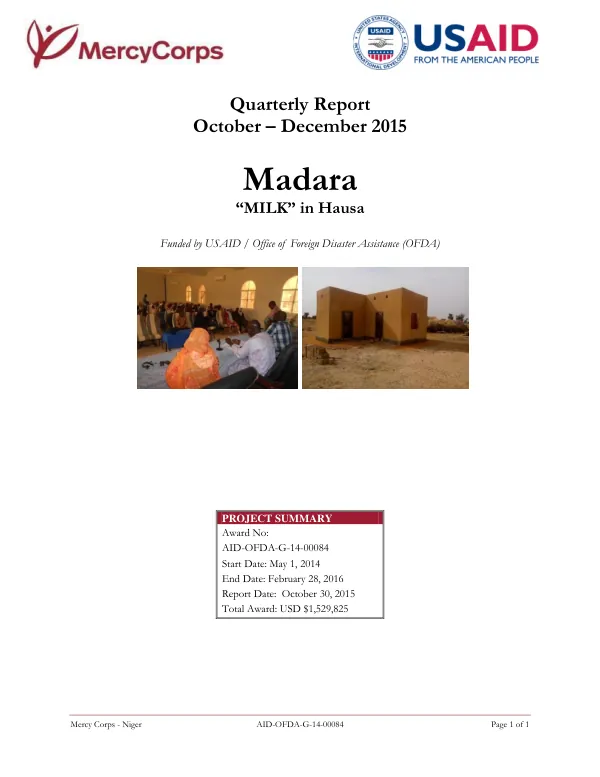
The Madara program, also known as "milk" in Hausa, was implemented in the Filingué Department of Niger to enhance food security and strengthen the livelihoods of vulnerable households.
2016 · 16 pages
Sign in to readA free account is required to download.
Abstract
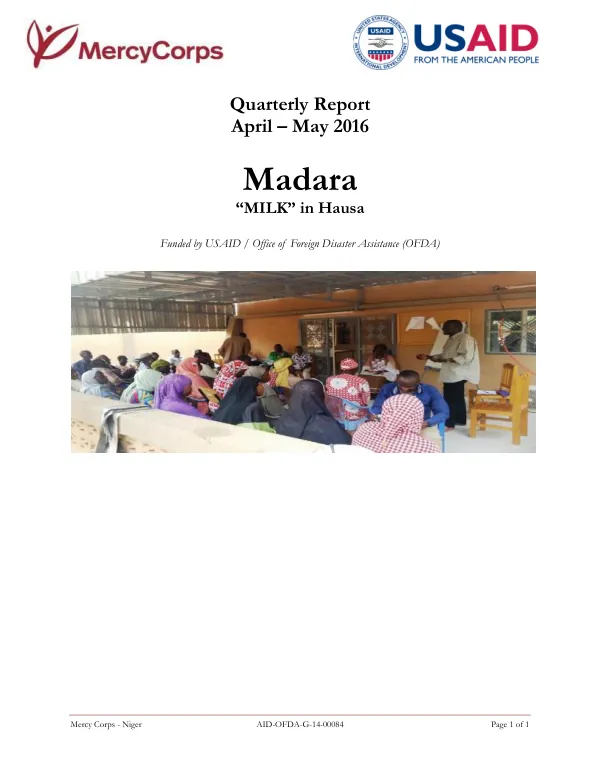
The program built on the achievements of previous OFDA-funded initiatives, including the PASTORAL I/II programs and the Wadata Makiyaya program. The program aimed to meet the early recovery needs and rebuild the livelihoods of 32,000 beneficiaries, consisting of 4,600 households, over a period of 25 months. During the reporting period of April to May 2016, most program activities were wound down, and program staff focused on final capacity building of beneficiaries and actions to ensure the sustainability of program interventions. One exception was the Cash for Work (CFW) program, which continued intensively until the penultimate week of the program. Highlights from this reporting period include the provision of monitoring and technical support for 15 auxiliary para-veterinarians, completion of 49 days of CFW by 1,300 beneficiaries, and disbursement and monitoring of a final round of 19 grants to microenterprises. The Madara program was designed to help food insecure households meet their immediate needs and rebuild their livelihoods, while simultaneously strengthening the dairy sector value chain to improve availability and access to nutritious milk products. The program aimed to work with communities to respond to the need for opportunities to rebuild savings and livelihoods following successive crises, sustainable rehabilitation of pastureland to improve access to fodder, improved access to nutritious animal feed during the dry and lean season, strengthened animal health and nutrition, and improved quality and quantity of milk production. The program's agricultural and food security activities focused on regular program monitoring and the rehabilitation of degraded pasture land through CFW activities. During the reporting period, 1,300 beneficiaries from vulnerable households completed 49 days of CFW labor, rehabilitating 377.64 hectares of land. The program also supported the treatment of animals from 653 households by auxiliary para-veterinarians, who treated a total of 9,261 animals, including cows, sheep, goats, camels, horses, and poultry. The Cash for Work program continued to support vulnerable households in meeting their basic needs during a period of food insecurity and before planting began for the new agricultural season. Cash for Work activities contributed to the rehabilitation of more than 400 hectares of degraded pastoral land over the course of the last three months of the program. Land rehabilitation has been one essential component in improving the availability of fodder for livestock in Madara's zone of intervention, as it permits the regrowth of natural grasses that nourish animals throughout the year. The program's CFW activities were observed by a number of other stakeholders during this reporting period, including the office of the Departmental Directorate of the Environment. The Directorate reported general satisfaction with the quality and quantity of the work carried out, while also noting that some beneficiaries were completing less than the prescribed three demi-lunes per day. Madara field agents subsequently took necessary steps to meet with beneficiaries and address any problems relating to construction techniques. The Madara program has made significant progress in improving the livelihoods of vulnerable households in the Filingué Department of Niger. The program's focus on agricultural and food security activities, including the rehabilitation of degraded pasture land and the treatment of animals, has contributed to improved access to nutritious milk products and strengthened the dairy sector value chain. The program's Cash for Work activities have also supported vulnerable households in meeting their basic needs during a period of food insecurity and before planting began for the new agricultural season.
Related documents