ADVENTIST DEVELOPMENT AND RELIEF AGENCY INTERNATIONAL
Seguridad Alimentaria e Higiene en el Corredor Seco de Honduras (SAHCS)
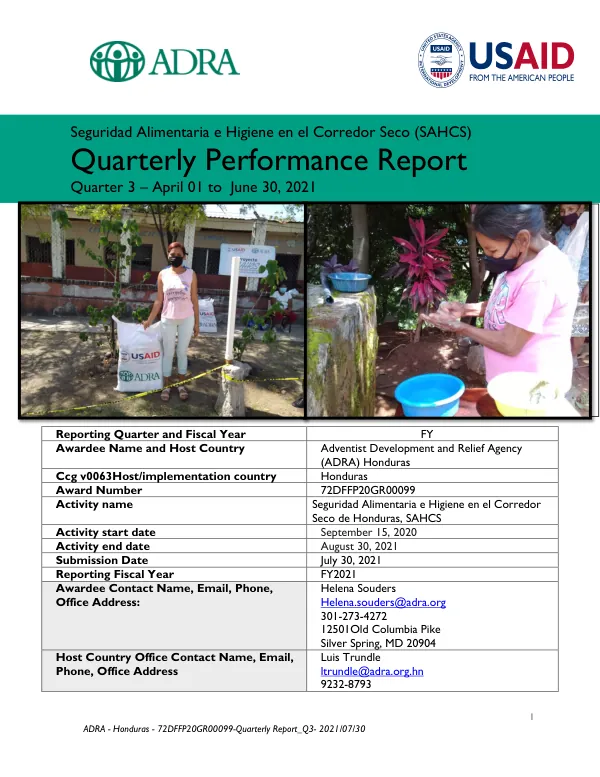
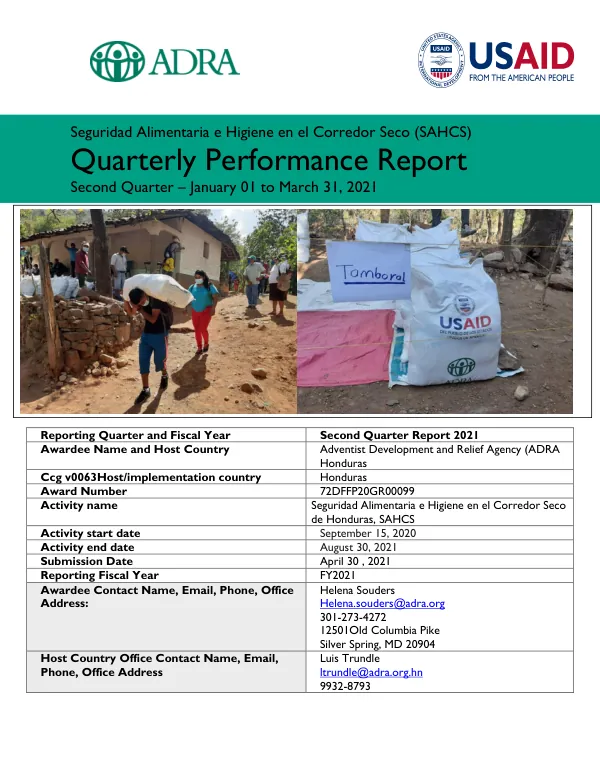
Seguridad Alimentaria e Higiene en el Corredor Seco (SAHCS) is a program aimed at addressing food security and hygiene concerns in Honduras.
2021 · 11 pages
Sign in to readA free account is required to download.
Abstract
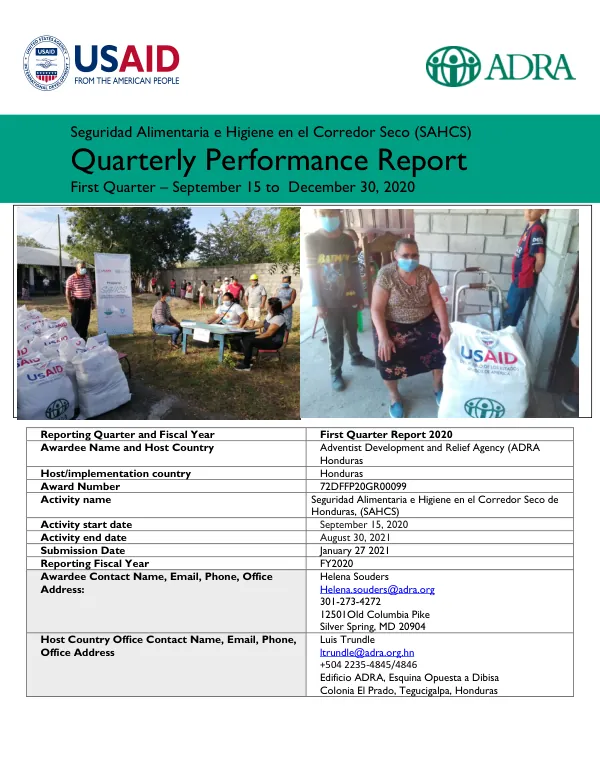
The program was launched in September 2018 with funding from USAID's Food Security Program. The initiative focused on six target municipalities, with the goal of reaching 23,870 individuals by the end of the project. The program's first quarter, spanning from September to December 2020, saw significant progress in achieving its objectives. A total of 4,774 families were selected to receive food assistance and hygiene promotion through a weighted survey that assessed vulnerability criteria. The first food distribution benefited 4,774 families in December, adhering to biosecurity measures recommended by the country's Health authorities and PAHO. However, the program faced challenges due to hurricanes and COVID-19-related restrictions. The hurricanes damaged access to some communities, while the restrictive mobility measures suspended in November and December led to a significant increase in COVID-19 infections. This situation may necessitate continuing with in-kind food distributions, as cash transfers are not feasible at present. The baseline survey, conducted before the beneficiary families received their first food rations, provided a reference point for the initial situation. The survey revealed that 78% of families had adequate food consumption, but also identified negative strategies such as consuming small portions of food and reducing meal times per day. The program's socialization activities, including the identification and selection of households, were completed within the established timeframe. ADRA's goal is to reach 23,870 individuals through SAHCS, and by the end of the registration process, there were a total of 24,945 individuals registered, exceeding the target by 5%. The interventions in the first quarter focused on the indicators of the Food Assistance sector, with 100% of the proposed objectives for the quarter being fulfilled. The progress table shows the achievements with reference to the first food rations distribution, including the number of households and individuals receiving food assistance. The program's performance in the first quarter is reflected in the following indicators: * 100% of households with poor, borderline, and adequate food consumption scores achieved the target. * 95% of households were satisfied with the quantity and quality of the food received. * 506.43 metric tons of food products were procured and distributed, exceeding the target. * 2,242.79 metric tons of food products were distributed, exceeding the target. The program's performance in the first quarter demonstrates its commitment to addressing food security and hygiene concerns in Honduras. Despite the challenges faced, the program has made significant progress in achieving its objectives and exceeding its targets.
Related documents