MIYAMOTO INTERNATIONAL, INC.
Semi-Annual Performance Report: PREPARE TT
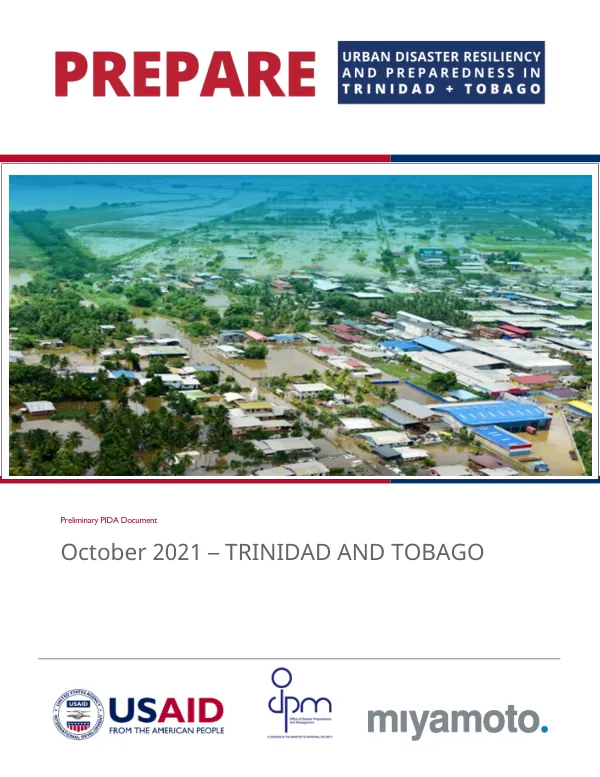
The PREPARE TT program in Trinidad and Tobago aims to provide a clearer picture of the probable impact of an earthquake disaster and facilitate advocacy and planning initiatives around strengthening seismic disaster risk reduction and preparedness measures in the country.
2021 · 14 pages
Sign in to readA free account is required to download.
Abstract
The program has three overarching objectives: to strengthen risk management, preparedness, and response planning of national and local institutions; to strengthen the capacity of national and local institutions in risk management and response; and to facilitate the incorporation of risk management and response best practices, strategies, and tools into critical national and local planning processes. To achieve its goal and objectives, the PREPARE TT program engaged in three core activities. The first activity involved a probabilistic seismic risk assessment for Port of Spain, which was completed in February 2021. The assessment indicated that approximately 63% of the buildings in the capital are at risk to damage or collapse. The research methodology and results were discussed with national stakeholders from urban planning and engineering sectors, and recommended actions are being pursued. The second activity involved structured stakeholder consultation on earthquake disaster scenario planning and priorities, as well as engagement of the private sector in disaster risk reduction and preparedness. This activity included discussions with 81 persons, of which 47 were new to the discourse, on three main risk reduction initiatives: simulation exercises to test the national earthquake plan, private sector engagement through the American Chamber of Commerce in Trinidad and Tobago, and peer review and discussion on the methodology and results for the probabilistic seismic risk assessment. The third activity involved the development of disaster risk reduction, preparedness, and response strategies, plans, and protocols. During this reporting period, the team and stakeholders worked on five risk management plans/protocols, which are still under development. The Road Map for Seismic Risk Management in Trinidad and Tobago, the updated and tested national earthquake plan, the National Disaster Debris Management Plan, adaptation of the Caribbean Disaster Emergency Management Agency's damage assessment and needs analysis continuum to T&T, and the standardization of the RDA protocol and tool for T&T are among the deliverables. The program has made significant progress in delivering on its objectives, particularly in the seismic risk assessment for Port of Spain. However, there are still challenges to be addressed, including the completion of tools and implementation of strategies to sustainably reduce identified risks. The program is set to meet and slightly exceed its results later this year. In terms of changes and amendments, there were no amendments to the contract, timeline, or activities during the reporting period. However, there was a change in approach due to the agreement between Miyamoto and CDEMA being still in discussion due to multiple unexpected emergencies. The ODPM is now leading the DANA Continuum actions instead. The program has made significant progress in measuring results, particularly in the number of people participating in discussions regarding national risk reduction strategies. The indicator tracking table shows that the program has achieved 216% of its target in this area. However, the program has not yet achieved its target in the number of hazard risk reduction plans, strategies, policies, disaster preparedness, and contingency plans developed and in place.
Related documents