DAI
Semi Annual Report #1: July 2012 – March 2013
The SERVIR Program Demand Activity is a semi-annual report covering the period from July 2012 to March 2013.
2013 · 22 pages
Sign in to readA free account is required to download.
Abstract
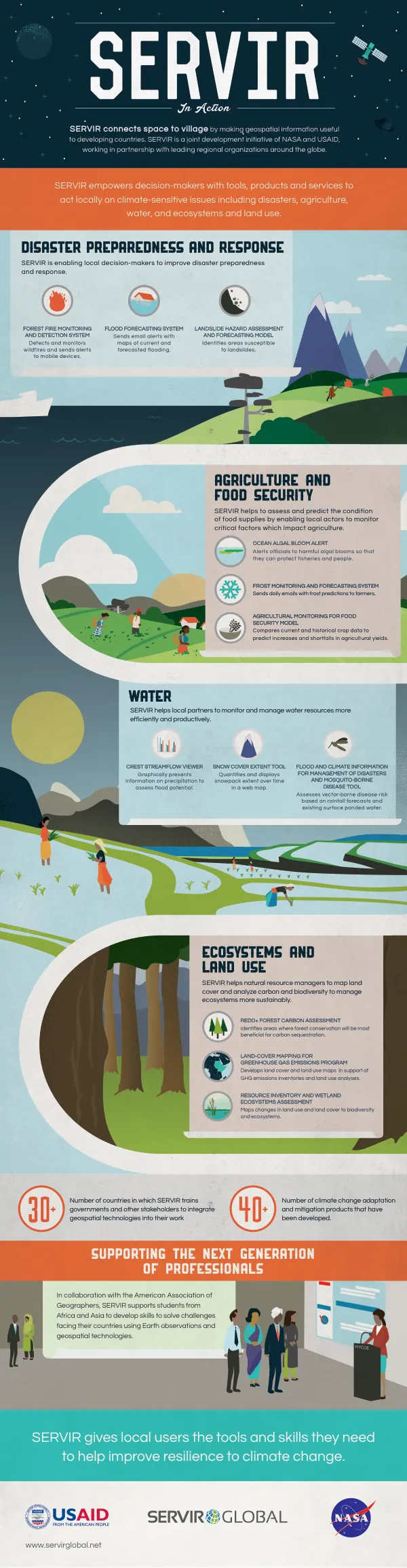
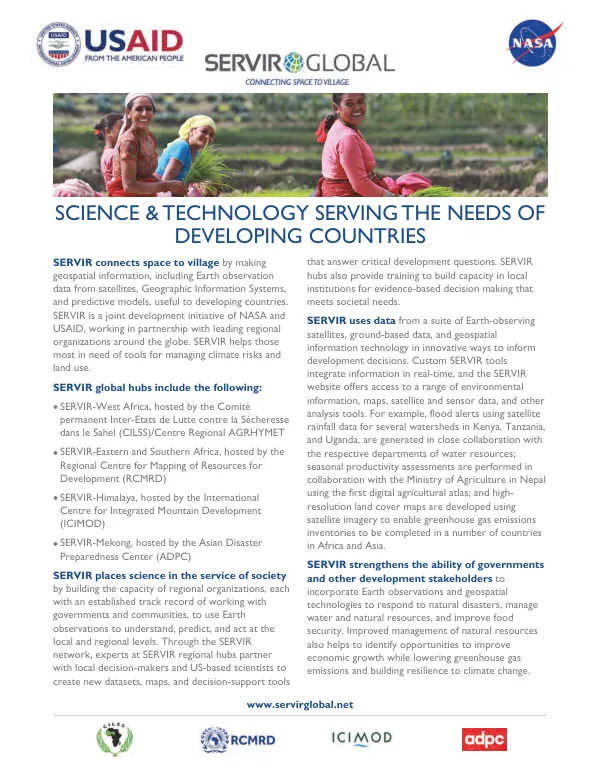
The overarching goal of the SERVIR Program is to improve environmental management and resilience to climate change on a global scale. Established in 2004, the program works to build the capacity of governments and other key stakeholders to integrate Earth observation information and geospatial technologies into development decision-making. The SERVIR Program partners with regional institutions in Kenya and Nepal, known as "hubs," and local and international scientists to develop decision-support products and trainings. The program provides a web-based geospatial platform for sharing, integrating, and mapping different kinds of information from various sources. The key objective of the Demand Activity is to help USAID cultivate the use of better information for development decision-making by strengthening capacity to utilize the geospatial tools and decision-support applications offered by the SERVIR program. The Demand Activity is comprised of six tasks: increasing demand for SERVIR Program tools and services, evaluating the impact of SERVIR Program hub activities to address climate change, implementing SERVIR Program outreach and communications activities, developing SERVIR Program hub sustainability plans, assisting USAID field missions with new SERVIR Program hubs, and administering Grants under Contract program. The SERVIR Results Framework guides this Activity, which maps the activities, outcomes, and results required to achieve SERVIR's goal of improved environmental management and resilience to climate change. During the reporting period, the Demand team completed several milestone deliverables, including the Program Year 1 Work Plan, Performance Monitoring Plan, and the Grants Implementation Manual. The team also initiated technical activity planning in collaboration with both SERVIR hubs in Nairobi, Kenya, and Kathmandu, Nepal. The past three quarters were an important information gathering and learning phase for the Demand team, which conducted initial assessments and took stock of the SERVIR Program as a whole. The team met with CATHALAC in Panama City, Panama, to gain a better understanding of the technical and operational capabilities of CATHALAC and their trajectory as a SERVIR-funded institution to "graduated" hub. The SERVIR Demand Activity has made significant progress in building awareness and capacity among the community of users, as well as improving the understanding of user needs within the program. The team has also initiated technical activity planning and completed several milestone deliverables. The SERVIR Results Framework provides a clear roadmap for achieving the program's goal of improved environmental management and resilience to climate change. The SERVIR Program has established partnerships with regional institutions in Kenya and Nepal, which serve as hubs for the program. These hubs provide access to satellite imagery, geospatial data, and mapping applications related to climate and environmental information. The program has also developed a web-based geospatial platform for sharing, integrating, and mapping different kinds of information from various sources. The SERVIR Demand Activity has focused on building awareness and capacity among the community of users, as well as improving the understanding of user needs within the program. The team has conducted initial assessments and taken stock of the SERVIR Program as a whole, and has met with CATHALAC in Panama City, Panama, to gain a better understanding of the technical and operational capabilities of CATHALAC and their trajectory as a SERVIR-funded institution to "graduated" hub. The SERVIR Results Framework provides a clear roadmap for achieving the program's goal of improved environmental management and resilience to climate change. The framework maps the activities, outcomes, and results required to achieve SERVIR's goal, and provides a clear understanding of the program's objectives and outcomes. The framework is guided by the SERVIR Program's overarching goal of improving environmental management and resilience to climate change on a global scale.