USAID
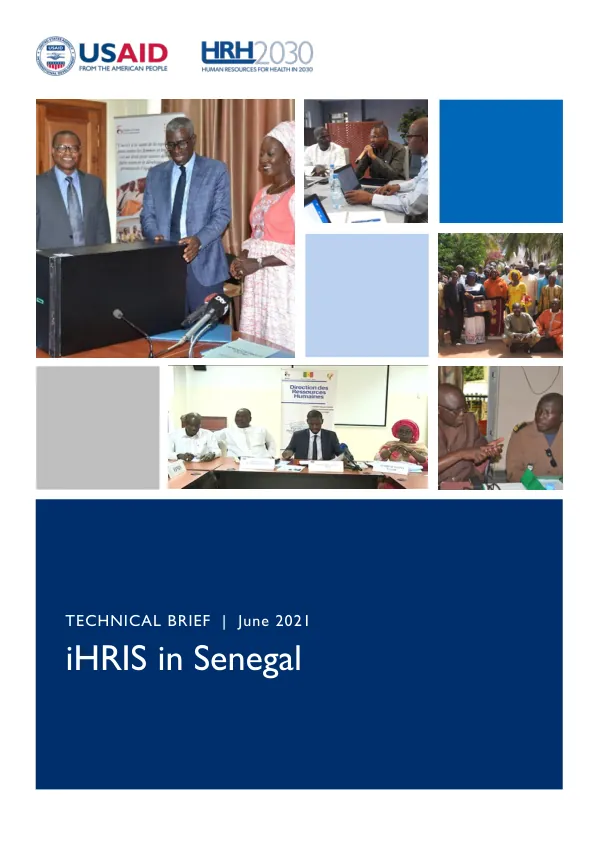
Senegal’s Community-based Health System Model: Structure, Strategies, and Learning
Senegal's Community-based Health System Model has made significant progress in improving key health indicators since the 1990s.
2019 · 12 pages
Sign in to readA free account is required to download.
Abstract
Maternal mortality dropped from 540 to 236 deaths per 100,000 live births between 1990 and 2017, and the percentage of fully vaccinated children increased from 58.7 percent to 75 percent in the same period. Child mortality more than halved from 121 to 56 deaths per live births between 2005 and 2017, with a reduction in disparity between urban and rural households. The country also made great strides in expanding access to modern family planning methods, with the percentage of married women using modern contraceptives more than doubling from 10.3 to 26.3 percent between 2005 and 2017. The Community-Based Health System Model Series briefs identify and discuss critical health system inputs and processes that have contributed to the implementation and expansion of community-based service delivery in different countries. Senegal was selected for its geographic diversity, type of service delivery model, and programmatic scale-up. This brief reviews Senegal's community health model to inform future policy, program design, and implementation in other countries. Senegal's investments to target health education and services to underserved areas contributed to these improvements, with the country prioritizing community health and promoting coordination among health and development partners. Senegal's health system structure has expanded access to underserved communities. The country's large rural population, poor infrastructure, arid climate, and long distances between communities and health facilities have historically impeded people's ability to access services. In the mid-1990s, the government decentralized the health system so that district and community authorities could plan and roll out context-specific approaches to improve service delivery. Today, each of the country's 76 health districts has at least one health center and several health posts, and a network of community-based health huts and outreach sites to extend services to communities that otherwise would not have access to them. Community health providers offer health information, education, and services from the health huts and outreach sites. The Ministry of Health and Social Action (MSAS) sets the community health agenda, provides programmatic oversight, and develops strategic and policy guidance. In 2009, MSAS launched the National Health Development Plan as a framework to achieve universal health coverage (UHC), which emphasizes scaling up key health interventions in partnership with communities. Several large-scale programs supported by the United States Agency for International Development (USAID) and other development partners in the past decade have also contributed to Senegal's progress.